



What We Do

Outstanding Features

Regulatory Guidance (EU, Germany, US)

Certification Support (RFNBO, RED II/III, CORSIA)

Regulatory Strategies for Clean Technologies and PtX

Risk Assessments for Hydrogen and E-Fuel Projects

Regulatory Strategies for Energy Market Entry

Impact Analysis of Policy and Regulatory Trends

Support with EU Funding Applications

Preparation of Position Papers and Consultation Responses

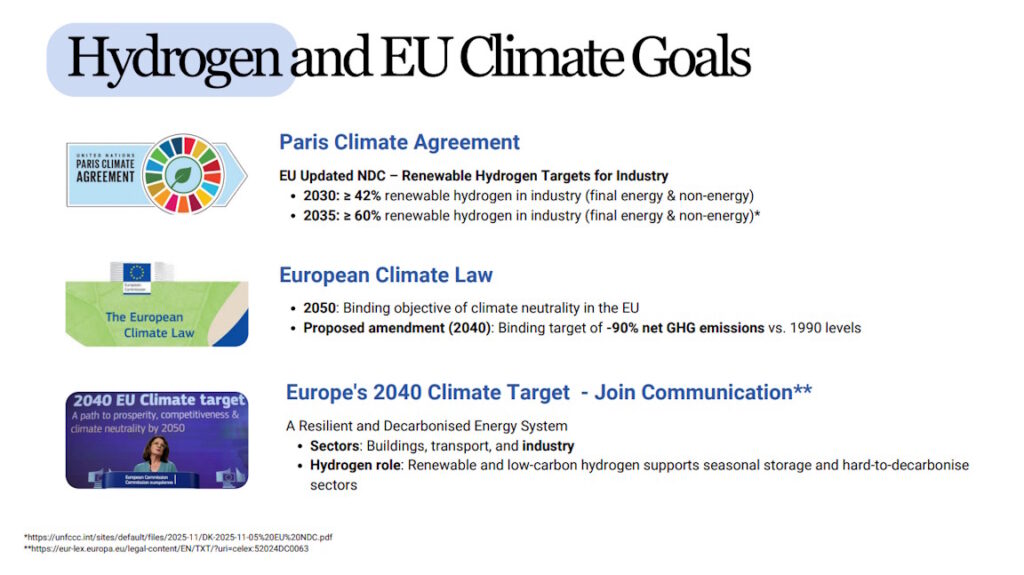
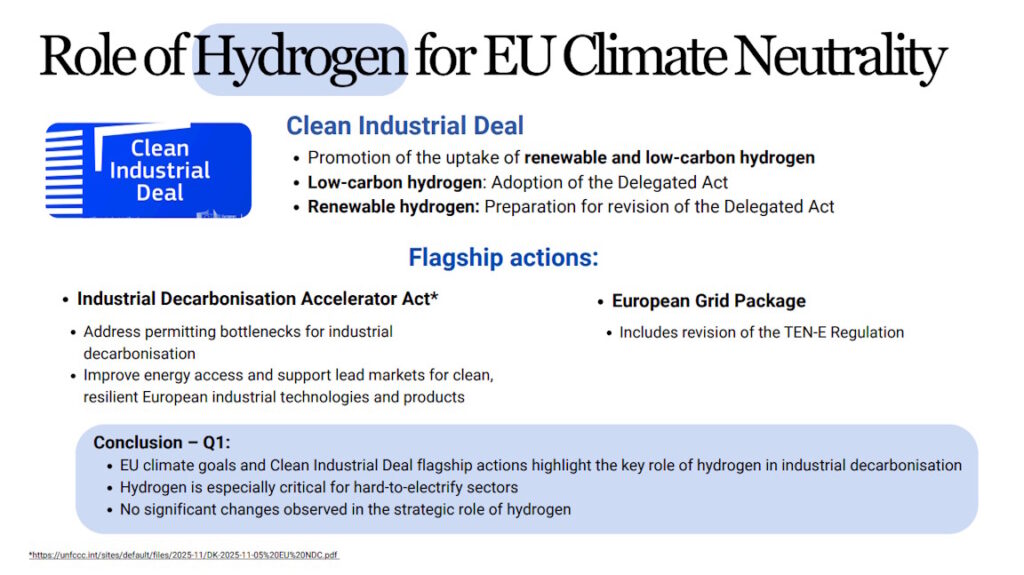
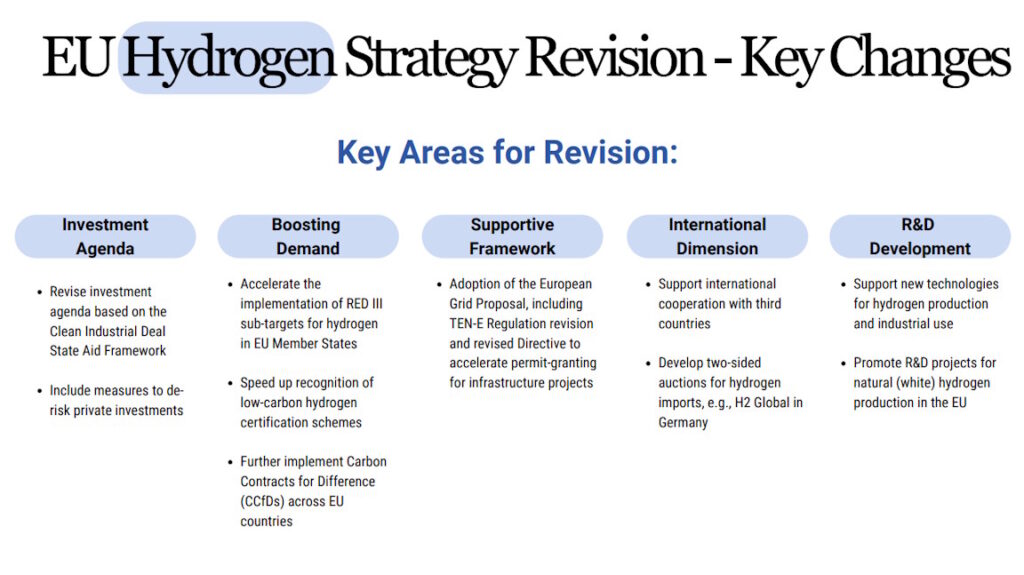
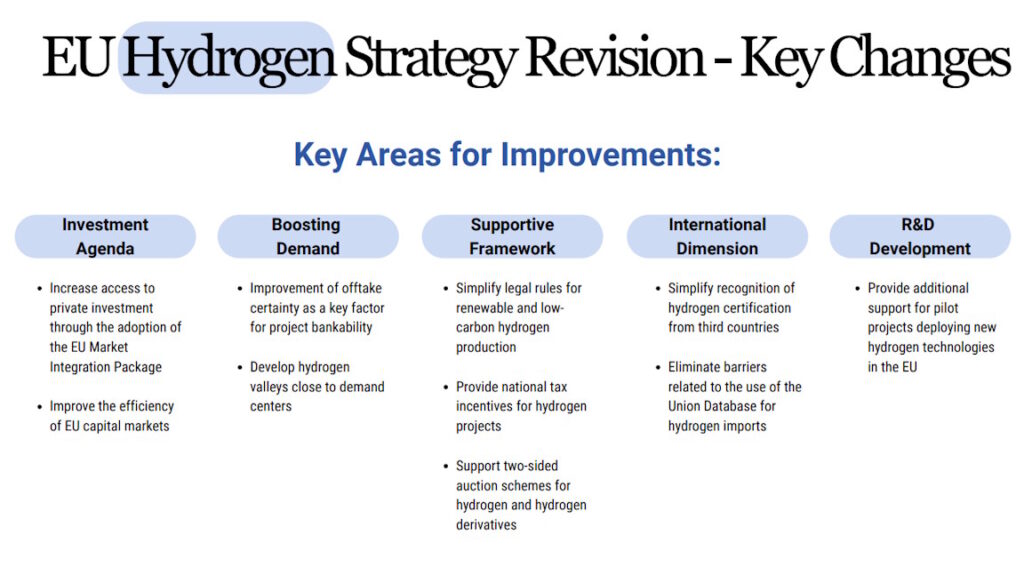
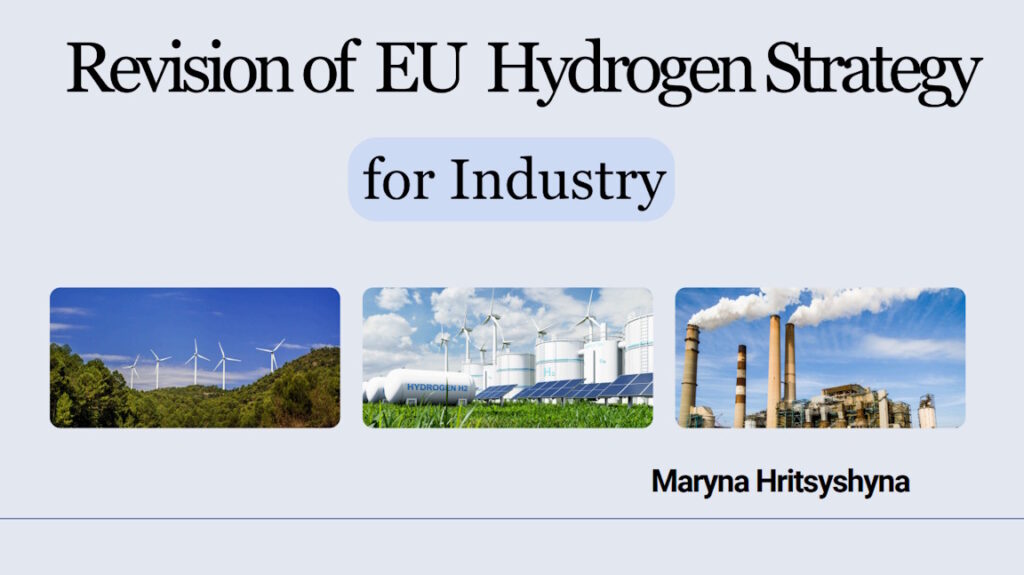
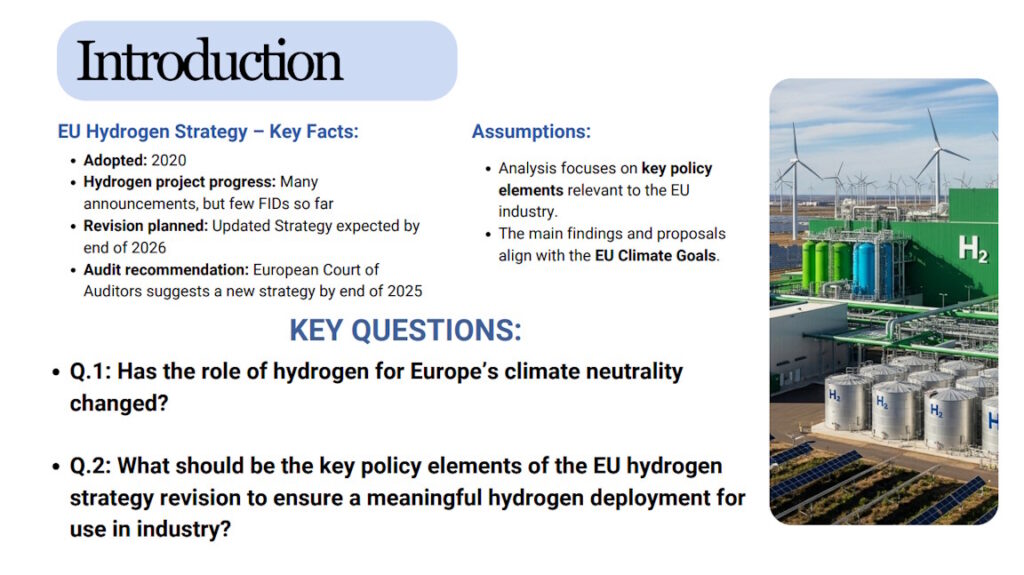
Revision of the EU Hydrogen Strategy for Industry

During my recent application process, I was asked to prepare a presentation on the revision of the EU Hydrogen Strategy.

In the end, another candidate turned out to be a better fit for the role. That happens, and it’s part of any competitive process.

At the same time, I remain confident that my qualifications and the strategic depth of my presentation were very strong. The task clearly demonstrated my ability to develop a structured, forward-looking policy strategy, grounded in regulation, market realities, and industrial needs.

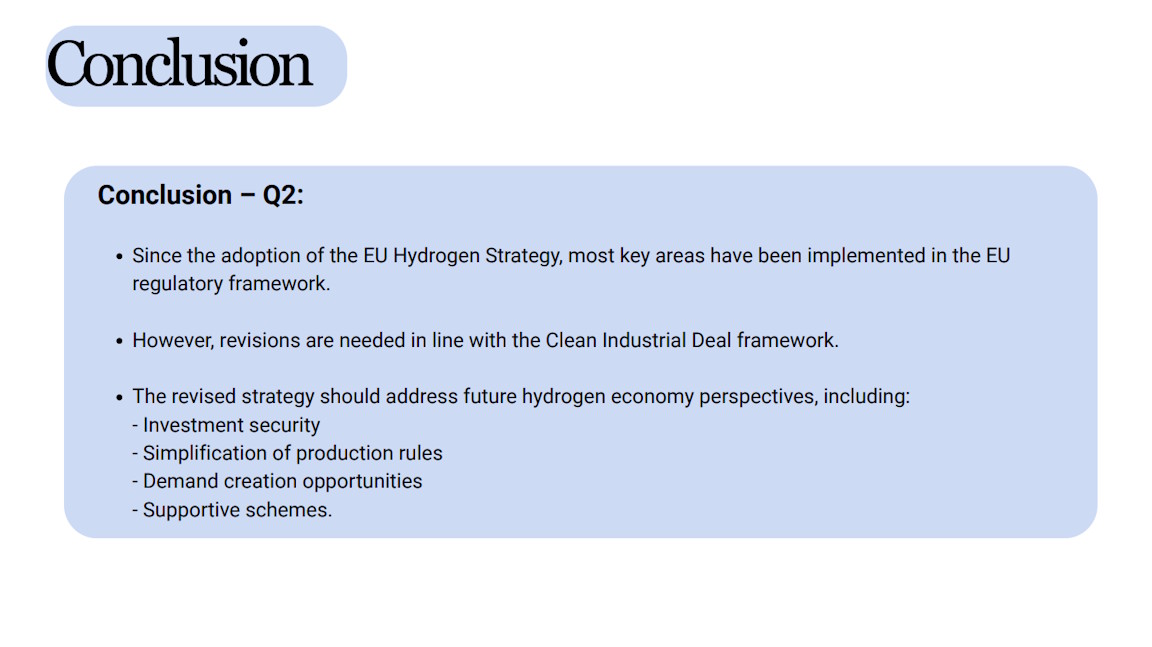
This exercise itself confirmed something important for me: the revision of the EU Hydrogen Strategy will be a decisive moment for Europe’s industrial decarbonisation.

So I’d like to briefly share a few reflections.

Since the adoption of the EU Hydrogen Strategy in 2020, we’ve seen:

  • strong political ambition,
  • an impressive number of project announcements,
  • but still too few final investment decisions.

This gap is no longer about vision. It’s about implementation, prioritisation, and bankability, and this is where strategic policy design becomes critical.

Looking ahead, a revised EU Hydrogen Strategy should focus less on targets alone and more on:

  • investment security and risk-sharing instruments
  • real demand creation and offtake certainty
  • simpler and more predictable rules for renewable and low-carbon hydrogen
  • alignment with the Clean Industrial Deal and industrial competitiveness
  • an effective international dimension, including imports and certification.

Hydrogen remains essential for hard-to-electrify industrial sectors. Its strategic role hasn’t diminished, but the policy framework now needs to mature from ambition to delivery.

Grateful for the opportunity to think this through and always happy to exchange views with others working on Europe’s hydrogen future.
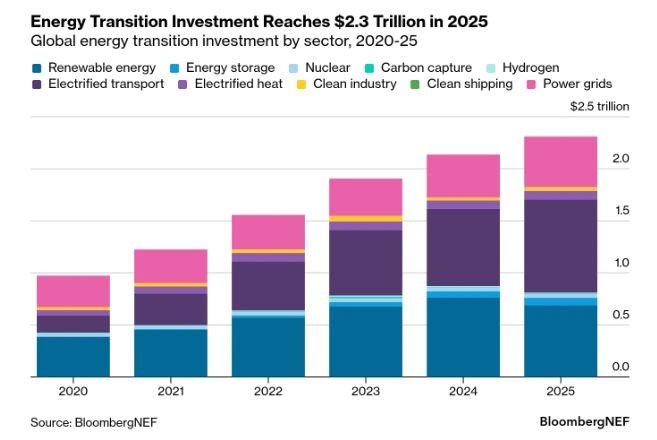
The Energy Transition Investment Trends Report

BloombergNEF. Global energy transition investment by sector, 2020-2025

Figure: Global energy transition investment by sector, 2020-2025

Source: BloombergNEF

The Energy Transition Investment Trends (ETIT) Report, released by BloombergNEF (BNEF), finds that global investment in the energy transition reached a record $2.3 trillion in 2025, up 8% from the prior year.

✅ Main Takeaways:

📌 The largest investment drivers were:

  • electrified transport – $893 billion;
  • renewable energy – $690 billion;
  • grid investment – $483 billion.

📌 Renewable energy investment fell 9.5% year-on-year due to changing power market regulations in China.

📌 Hydrogen ($7.3 billon) and nuclear ($36 billion) saw investment drop in 2025. All other sectors grew: energy storage ($71 billion), CCS ($6.6 billion), clean shipping ($4.2 billion), electrified heat ($84 billion) and clean industry ($34 billion).

📌 Clean energy supply investment outpaced fossil fuel supply for a second consecutive year in 2025, with the gap widening to $102 billion from $85 billion in 2024.

📌 While clean energy investment continued to grow, fossil fuel supply investment fell for the first time since 2020, declining by $9 billion year-on-year.

📌 Despite energy transition investment being at an all-time high, growth has slowed steadily, from 27% in 2021 to 8% in 2025.

📌 The regional changes:

  • China ($800 billion) is posting its first decline in investment since 2013.
  • The EU shrugged off headwinds to grow 18% to $455 billion, contributing the most to the global uptick.
  • US investment also moved up 3.5% to $378 billion, despite the Trump administration’s moves to slow the energy transition.

➡️ Source: BloombergNEF Finds Global Energy Transition Investment Reached Record $2.3 Trillion in 2025, Up 8% from 2024

Clean Energy Technology Observatory

Clean Energy Technology Observatory: Renewable Fuels of Non-Biological Origin in the European Union - 2025 Status Report on Technology Development, Trends, Value Chains and Markets

Clean Energy Technology Observatory: Renewable Fuels of Non-Biological Origin in the European Union – 2025 Status Report on Technology Development, Trends, Value Chains and Markets

✅ Some Key Takeaways:

📌 Technology status

  • RFNBO production technologies involve electrolysers and the downstream conversion of renewable hydrogen into synthetic fuels, mostly based on established industrial processes using fossil-based inputs, now adapted for renewable hydrogen and captured carbon CO2 or N2 as feedstocks.
  • Technology Readiness Levels (TRLs) vary from 5–7 for innovative variants, up to 8–9 for commercially ready pathways like e-methanol and e-CH₄.
  • Most RFNBO technologies are at pilot or early commercial scale, with no fundamental technical barriers, but with substantial economic and infrastructure challenges to overcome.
  • Installed capacity remains modest, with approximately 35 operational e-methane plants in 2024 and total EU e-fuel capacity below 0.5 Mt/year, although project pipelines (45 announced e-kerosene (SAF) projects and several Power-to-X (PtX) hubs) are expected to expand capacity to a few hundred thousand tons per year by 2030.
  • Cost trends indicate strong learning effects: CAPEX for synthesis plants is projected to decrease by 30–35% by 2050. By 2030, several studies estimated production costs at €1.6–2.3 per litre of diesel equivalent for e-methanol and over €3.5 per litre for Fischer–Tropsch fuels, but the current trend could push these costs higher.

📌 Investment and funding

  • Public funding for research and innovation under Horizon 2020 and Horizon Europe has reached €200 million for over 40 projects, focused on RFNBO production.
  • Other EU initiatives can also indirectly finance RFNBO projects by leveraging complementary funding streams, EU public support for innovation readiness, and private capital for commercialisation and scale-up.
  • Commercial-scale projects still rely heavily on public guarantees and offtake agreements.

📌 Value chain

  • The RFNBO value chain integrates renewable hydrogen production, CO2/N2 capture, chemical synthesis, and fuel distribution, spanning multiple industrial sectors.
  • Early deployment is concentrated in Germany, Denmark, the Netherlands, and Spain.
  • The economic potential is considerable: RFNBO could contribute over €40–60 billion annually to the EU economy by 2040, creating up to 200,000 direct and indirect jobs in the hydrogen, chemical, and transport sectors.

📌 EU positioning and global competitiveness

  • The EU maintains global leadership in RFNBO research, demonstration, and regulatory frameworks, but lags behind the US and China in commercial scale-up.
  • Under the Net-Zero Industry Act, the EU aims to secure 40% domestic production of strategic net-zero emission technologies by 2030.

➡️ Source: Clean Energy Technology Observatory: Renewable Fuels of Non-Biological Origin in the European Union – 2025 Status Report on Technology Development, Trends, Value Chains and Markets