Hydrogen Mechanism

πŸ”Ή New milestone for the EU hydrogen market! πŸ”Ή

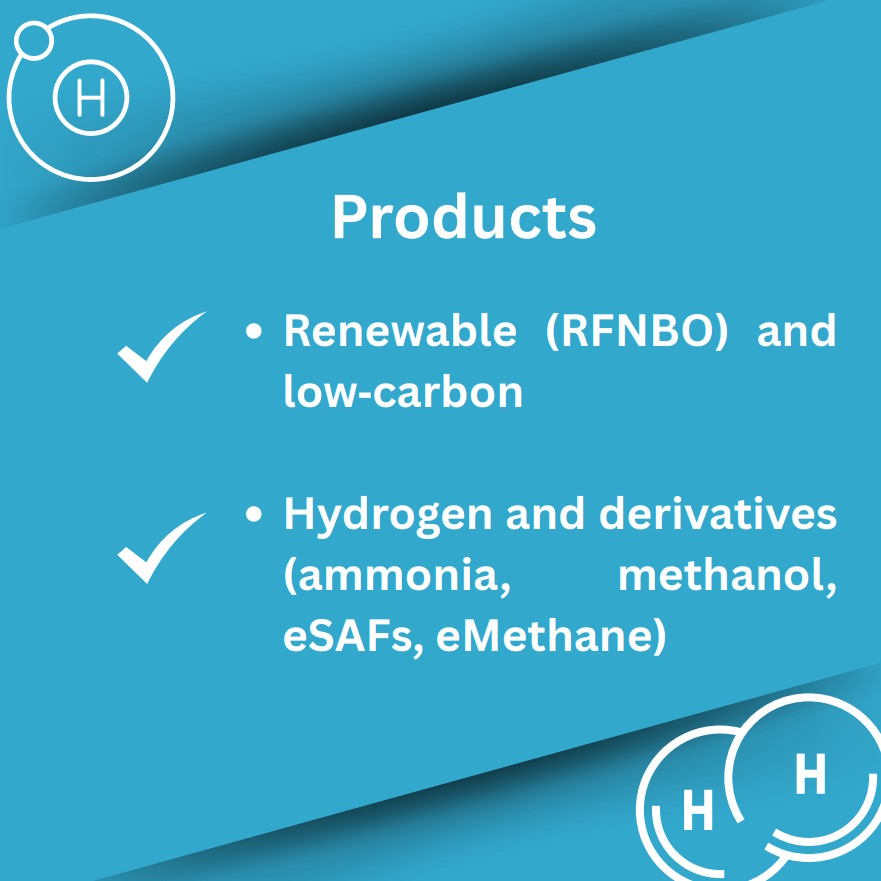
On 12 November, the European Commission launched the first call for interest under the Hydrogen Mechanism, which is a key step to connect potential suppliers and buyers of renewable and low-carbon hydrogen and its derivatives across the EU.

πŸ”— Official announcement

πŸ”— Hydrogen Mechanism platform

πŸ’‘ What is the Hydrogen Mechanism?

An online platform that supports market development for renewable and low-carbon hydrogen and its derivatives, such as ammonia, methanol, and electro-sustainable aviation fuel (eSAF).

πŸ“… Key timeline:

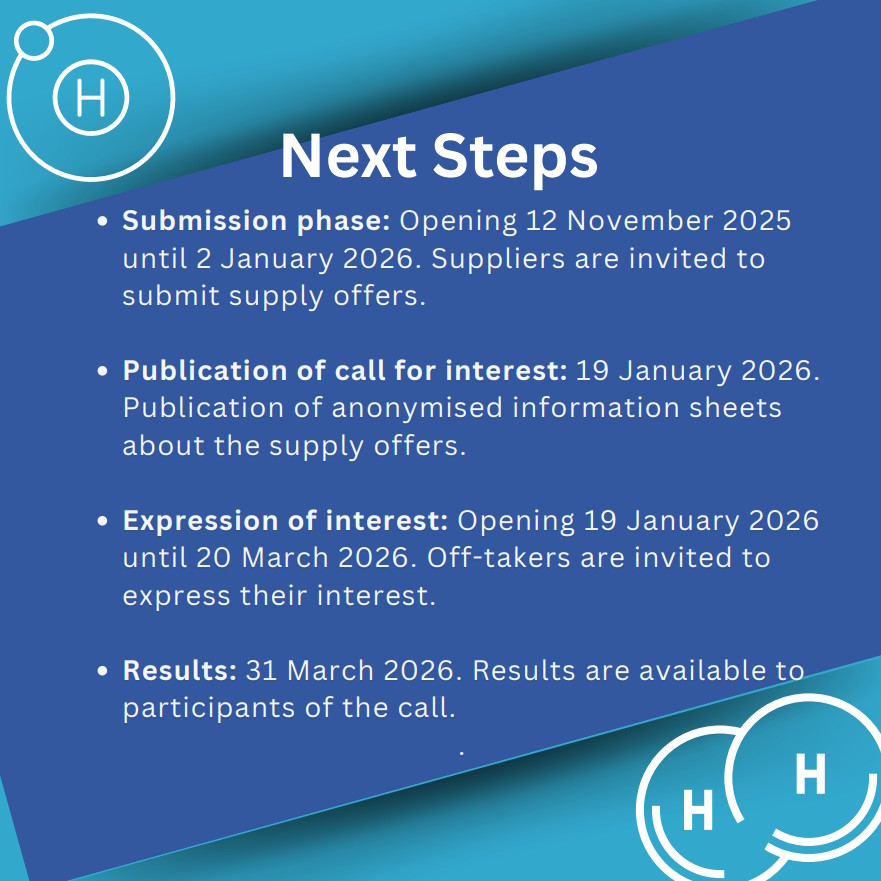
  • 12 Nov 2025 – 2 Jan 2026: Submission phase: Suppliers are invited to submit supply offers.
  • 19 Jan 2026: Publication of anonymised supply offers.
  • 19 Jan – 20 Mar 2026: Off-takers express their interest.
  • 31 Mar 2026: Results available to participants.

➑️ Why it matters:

  • Connects future demand and supply, reducing market uncertainty;
  • Increases transparency and visibility of potential partners;
  • Facilitates hydrogen infrastructure and financing access;
  • Encourages market engagement and new business opportunities.

The Hydrogen Mechanism is another important step toward building a hydrogen market.
IEA Report: Delivering Sustainable Fuels

International Energy Agency. Report. Delivering Sustainable Fuels. Pathways to 2035

Sustainable fuels mean liquid biofuels, biogases, low-emissions hydrogen and hydrogen-based fuels – offer multiple benefits for the energy sector.

With well-designed policies, sustainable fuels can achieve major lifecycle emissions reductions compared with conventional fuels.

βœ… IEA Policy Recommendations:

πŸ“Œ Establish roadmaps, targets and support policies that are tailored to regional contexts and aligned with broader energy goals, while keeping a technology-open approach.

πŸ“Œ Increase demand predictability to increase market confidence and attract investment.

πŸ“Œ Cooperate in developing transparent and robust carbon accounting methodologies to enhance comparability and future interoperability, and enable performance-based policies and incentives.

πŸ“Œ Support innovation to narrow cost gaps to accelerate economies of scale and cost reductions for emerging technologies.

πŸ“Œ Develop integrated supply chains and address infrastructure needs to unlock long-term economic development opportunities.

πŸ“Œ Make financing more accessible, especially in emerging and developing economies to de-risk investment and unlock the vast potential for sustainable fuels in these regions.

➑️ Source: International Energy Agency. Report. Delivering Sustainable Fuels. Pathways to 2035

Interaction of Certification and Standards for e-SAF Production

Last week, I had the opportunity to present my paper “Interaction of Certification and Standards for e-SAF Production” at a conference hosted by the Florence School of Regulation. This research is part of my broader PhD work on the interaction between law and technology in the regulation of Power-to-X (PtX) technologies.

βœ… Key Points of the Presentation:

πŸ“Œ General requirements

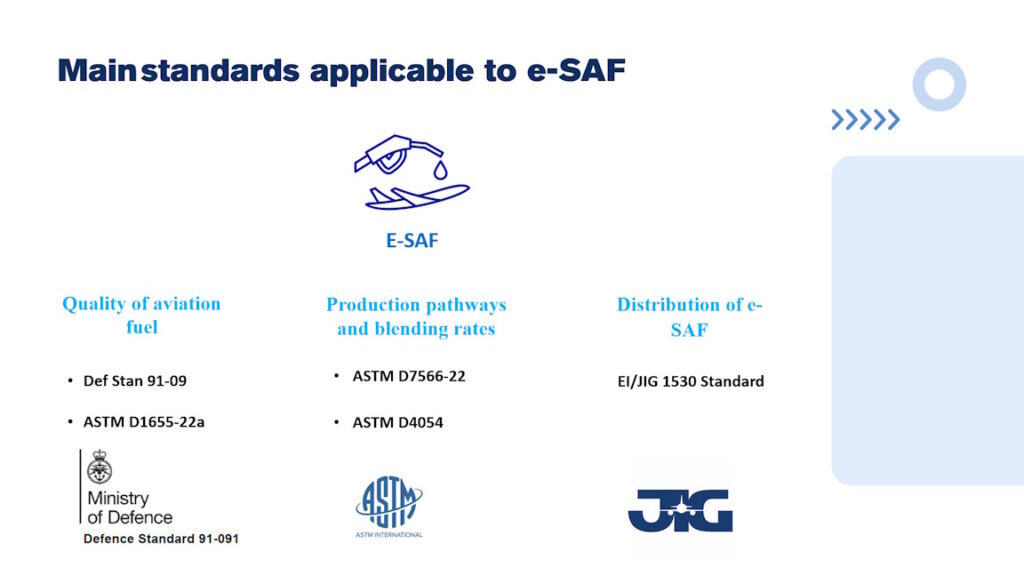
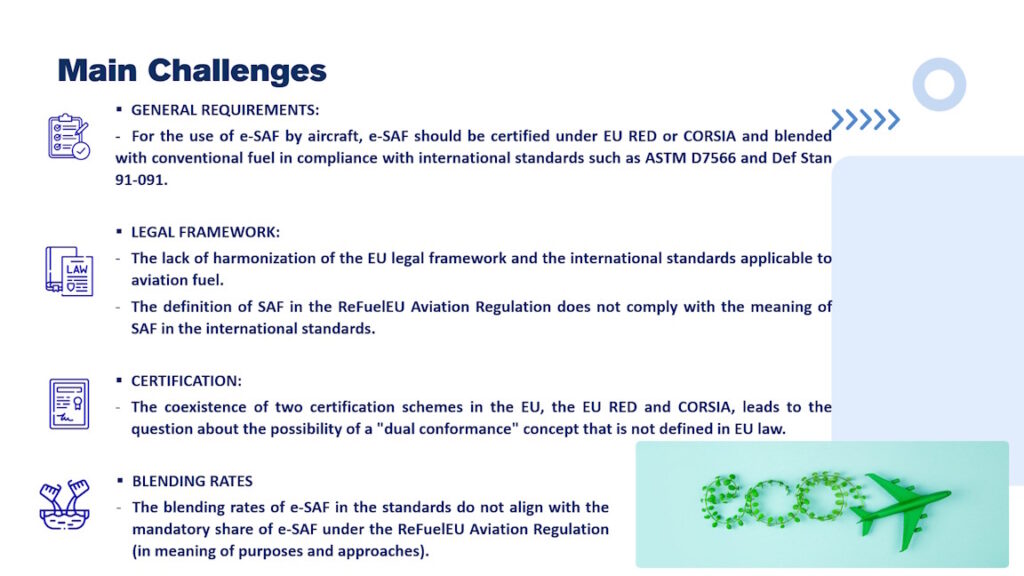
  • To be used in aviation, e-SAF must be certified under either the EU Renewable Energy Directive (RED) or the CORSIA scheme, and blended with conventional jet fuel in accordance with international standards such as ASTM D7566 and Def Stan 91-091.

πŸ“Œ Legal Framework

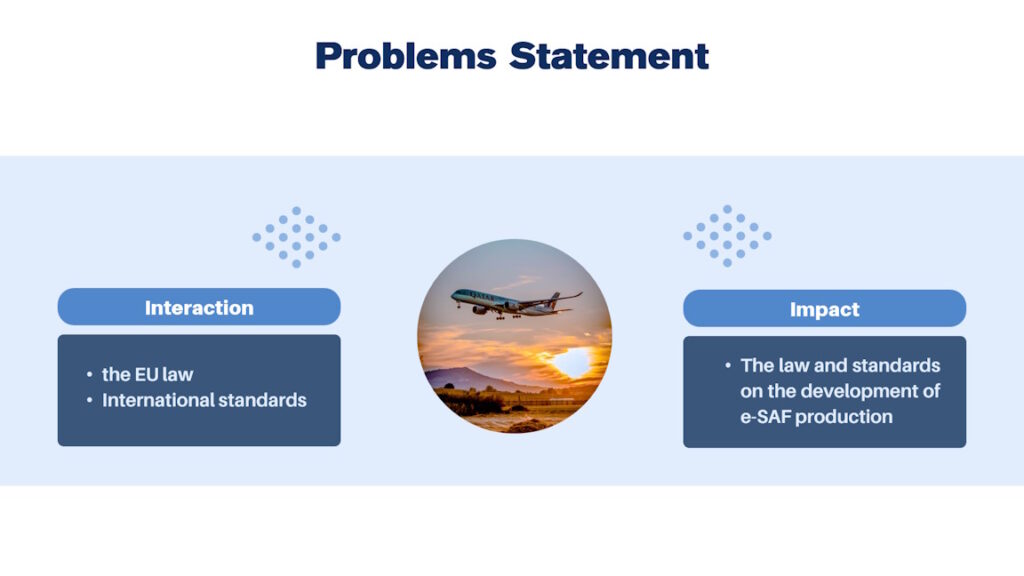
  • There is a lack of harmonization between the EU legal framework and international aviation fuel standards.
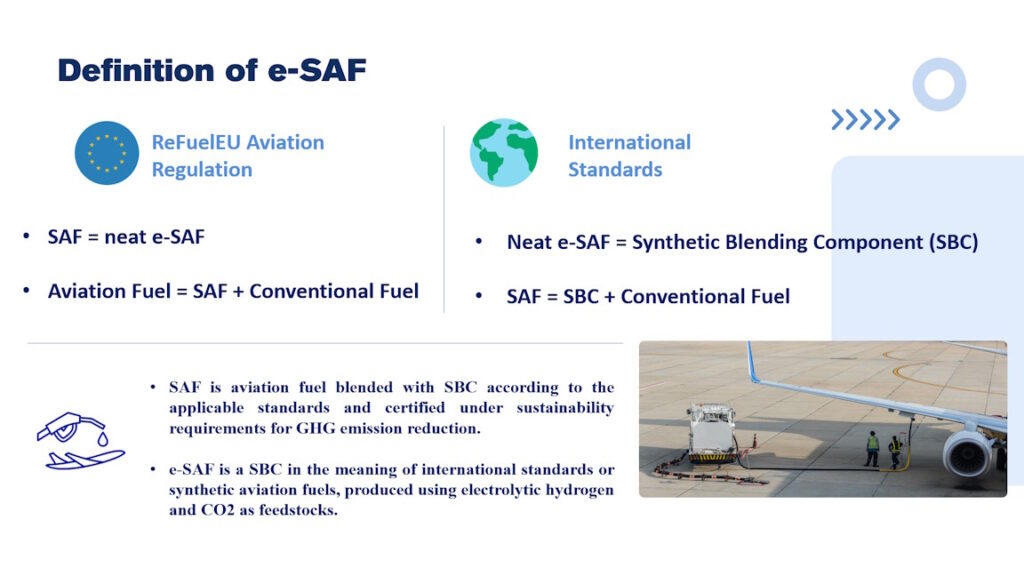
  • The definition of SAF in the ReFuelEU Aviation Regulation does not align with the definition used in international standards.

πŸ“Œ Certification

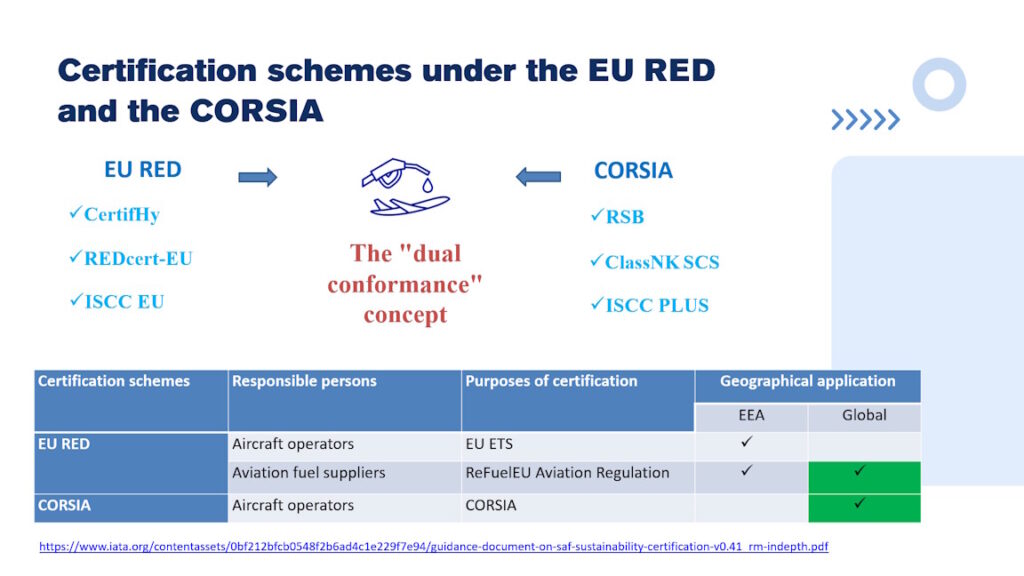
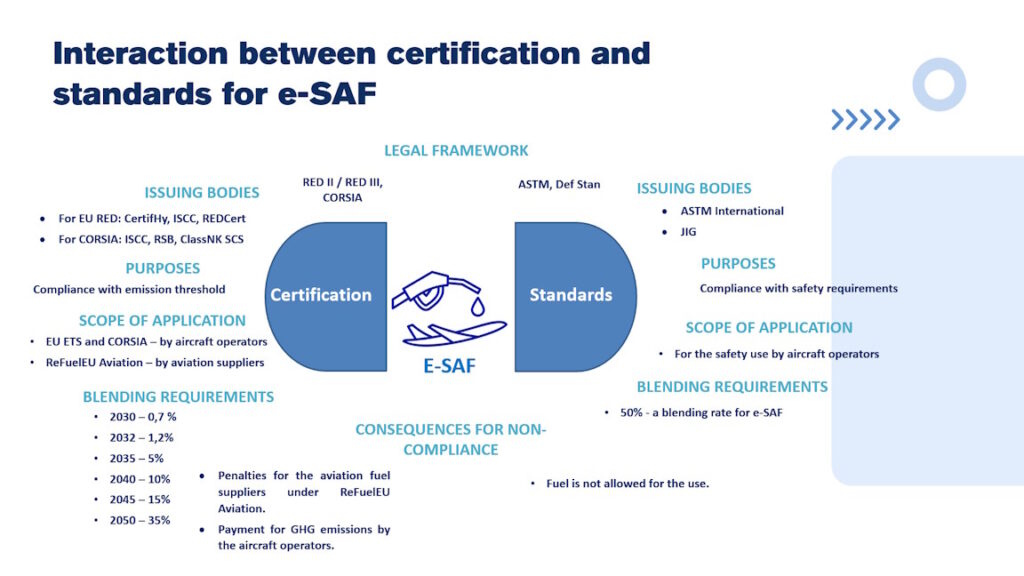
  • Particular attention should be given to the concept of β€œdual conformance” β€” i.e., a single batch of SAF being compliant with two different certification schemes (such as EU RED and CORSIA).
  • The coexistence of two certification schemes – EU RED and CORSIA within the EU raises questions about the feasibility of such dual conformance, a concept that is not yet defined under EU law.

β˜‘οΈ Conclusion

  • A harmonized and coherent legal framework is essential for scaling up e-SAF production and deployment in aviation.
  • Aligning EU regulations with international safety and sustainability standards will help remove existing regulatory barriers and support the widespread adoption of e-SAF across the EU.

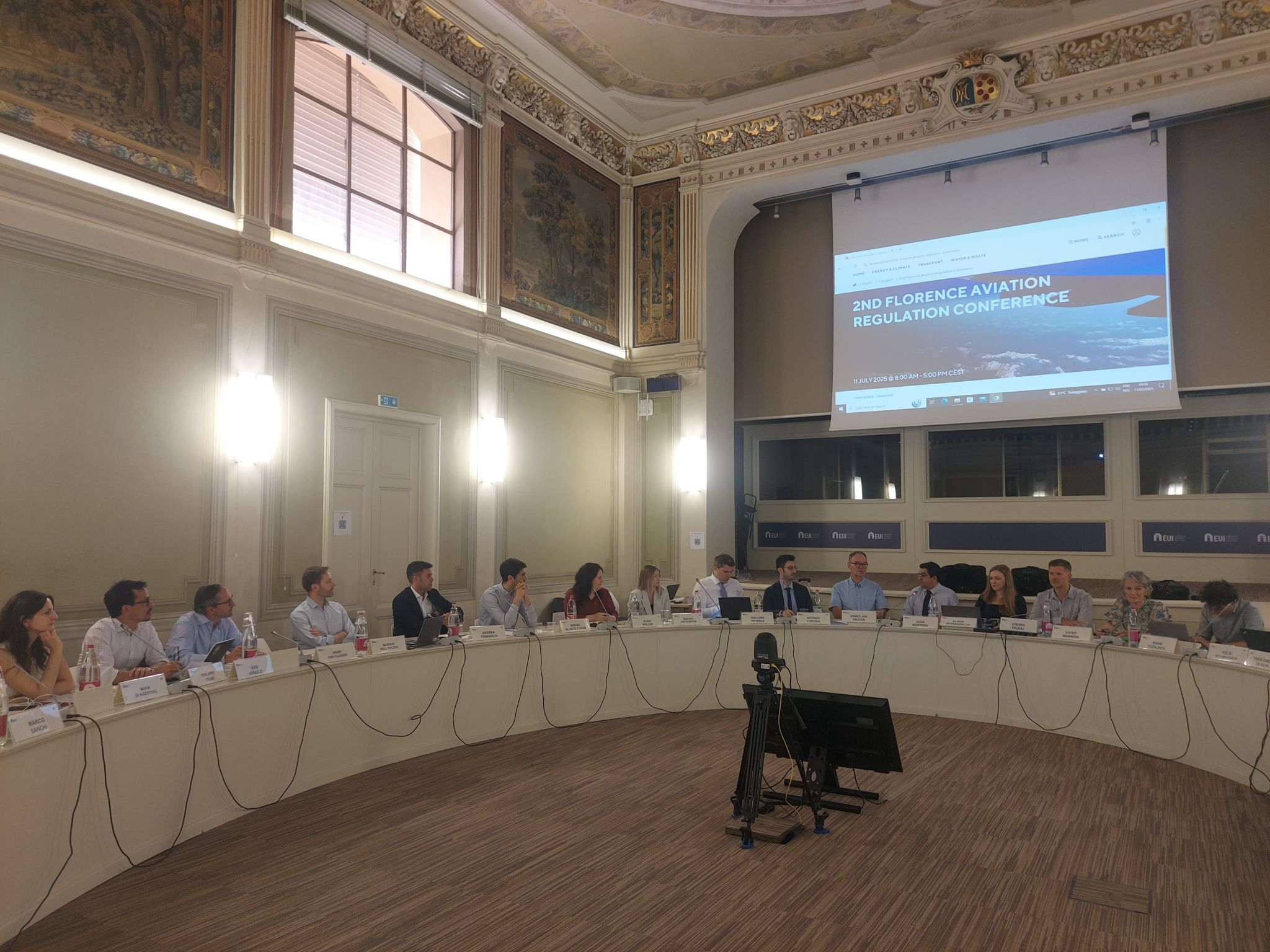
2nd Florence Aviation Regulation Conference

2nd Florence Aviation Regulation Conference, Florence School of Regulation

Just returned from the 2nd Florence Aviation Regulation Conference, co-organized by the International Institute of Air and Space Law (IIASL), Leiden University and the Florence School of Regulation.

It was an honor to contribute to such a high-level exchange of ideas shaping the future of aviation regulation.

I had the pleasure of presenting my paper on “Interaction of Certification and Standards for e-SAF Production”, exploring how regulatory frameworks and technical standards impact the uptake of sustainable aviation fuels in Europe.

The conference addressed a wide range of topics, including:

  • Interaction between CORSIA and the EU ETS
  • Implementation of the AI Act in aviation
  • Market incentives and social sustainability in the net-zero transition
  • Regulation of non-COβ‚‚ effects in aviation

Public Consultations. Delegated Act about reporting of CORSIA-eligible fuels

Delegated Act about reporting of CORSIA-eligible fuels

✈️ The European Commission conducts the Public Consultation regarding the draft of the Delegated Act about reporting of CORSIA-eligible fuels and CORSIA emissions unit cancellation reports.

πŸ“… Feedback Period – 01 April 2025 – 29 April 2025

βœ… What is the CORSIA?

The Carbon Offsetting and Reduction Scheme for International Aviation (CORSIA):

  • has been in operation since 2019 for monitoring, reporting and verification of carbon dioxide emissions.
  • is intended to be a globally applied market-based measure, which aims to offset international aviation carbon dioxide emissions from January 2021.

βœ… Key Points:

πŸ“Œ This Delegated Act aims to update the current rules to facilitate:

  • reporting of fuels eligible under the CORSIA; and
  • submission and verification of CORSIA emissions unit cancellation reports.

πŸ“Œ β€˜CORSIA eligible fuel’ means an aviation fuel certified as CORSIA (Carbon Offsetting and Reduction Scheme for International Aviation) eligible fuel by sustainability certification schemes listed in Annex I;

πŸ“Œ Annex I: CORSIA approved sustainability certification schemes:

  • International Sustainability and Carbon Certification (ISCC)
  • Roundtable on Sustainable Biomaterials (RSB)
  • ClassNK SCS

πŸ“Œ It should be possible to certify a batch of alternative aviation fuel under several schemes if it fulfils the criteria for each of those schemes. In order to prevent double claiming, aircraft operators should submit a declaration listing all GHG schemes they participate in, confirming that no amount of the alternative aviation fuel is reported more than once.

πŸ“Œ This Delegated Act should apply to the emissions and use of CORSIA eligible fuels that have occurred since 1 January 2024.

➑️ Source: EU Emissions Trading System (ETS) – reporting of CORSIA-eligible fuels and CORSIA emissions unit cancellation reports

SAF Flexibility Mechanism

SAF Flexibility Mechanism

Let’s talk about the SAF Flexibility Mechanism in the EU.

βœ… Main Documents:

β˜‘οΈ What is the SAF Flexibility Mechanism?

πŸ“Œ the SAF flexibility mechanism allows an aviation fuel supplier to supply the minimum shares of SAF as a weighted average over all the aviation fuel it supplied across all EU airports for each reporting period.

πŸ“Œ the SAF flexibility mechanism is intended to give the SAF industry sufficient time to scale up its production and supply capacities.

πŸ“Œ this means that aviation fuel suppliers may supply aviation fuels containing higher shares of SAF in certain EU airports to compensate for aviation fuels containing zero or lower shares of SAF in other EU airports.

πŸ“… The SAF flexibility mechanism applies from 1Β January 2025 until 31Β December 2034.

βœ… Some key conclusions from SAF flexibility mechanism report:

πŸ“Œ Compliance with targets:

  • Aviation fuel suppliers can claim the supply of SAF for the purposes of complying with their ReFuelEU Aviation obligations and contributing to the national RED targets.
  • EU law does not prevent a batch of SAF to be certified under more than one certification scheme (e.g. RED, CORSIA certified fuels).
  • Aircraft operators can claim the use of a given quantity of SAF under one GHG reduction scheme, including the EU ETS and ICAO’s CORSIA.

πŸ“Œ Virtual trading of SAF sustainability certificates

  • there is no unified industry-wide position neither on the design or the necessity of implementing such an accounting mechanism system for the purposes of complying with current blended SAF obligations and of claiming their use under other pieces of EU law, such as the EU ETS that does not allow aircraft operators to claim the use of blended SAF without physically delivery.
  • virtual trading of SAF sustainability certificates may bring new dynamics to the market on the demand side, but it is not clear whether this would have any real impact on the production side at this early stage.

πŸ“Œ Availability of blended SAF at EU airports

  • the risk of a significant geographic concentration of blended SAF in few EU airports is limited.
  • most aviation fuel suppliers operate only within the borders of their respective Member State, so the possibility of significant geographic concentration is already largely limited to national markets.
  • many EU airport managing bodies have clearly communicated their intention to make blended SAF available in the coming years on their premises.
  • projects for new SAF capacities are appearing in various locations across the EU.