National Hydrogen Strategy in France

National Hydrogen Strategy in France

On April 10, 2025, the Government of France announced the update of the National Hydrogen Strategy.

πŸ“ƒ The full text of the updated strategy is available via this link.

βœ… Key Changes and Measures:

πŸ“Œ Electrolysis installation targets in the region with up to 4.5 GW targeted for 2030 and 8 GW installed in 2035;

πŸ“Œ Mastery of all hydrogen equipment and technologies throughout the value chain;

πŸ“Œ The deployment in France of low-carbon hydrogen transport infrastructures within hydrogen hubs;

πŸ“Œ Ensuring that the necessary framework conditions are in place for the development of the French hydrogen industry, particularly in terms of access to land, procedural deadlines, the development of a comprehensive, clear and stable regulatory framework, and electrical connections;

πŸ“Œ A €4 billion support mechanism for low-carbon hydrogen production to ensure that low-carbon hydrogen is competitive with fossil hydrogen over 15 years;

πŸ“Œ The relaunch of the β€˜IDH2 Hydrogen Technology Building Blocks’ call for projects, designed to support the development of certain critical elements of hydrogen technologies;

πŸ“Œ A new call for projects for the deployment of hydrogen-powered commercial vehicles, to enable the technological development of fuel cells and tanks;

πŸ“Œ Measures to support studies of synthetic fuel projects in order to bring about, by 2030, the first industrial production of synthetic fuels for aviation and maritime sectors.

➑️ Source: Le Gouvernement actualise la StratΓ©gie nationale de l’hydrogΓ¨ne dΓ©carbonΓ©

NewΒ pieces of secondary legislationΒ related toΒ theΒ Net-Zero Industry Act

Net-Zero Industry Act

On 23 May 2025, the European Commission adopted new pieces of secondary legislation and a communication relating to the Net-Zero Industry Act (NZIA).

πŸ“ƒ Adopted Acts:

βœ… Communication providing updated information to determine the shares of the EU supply of final products and their main specific components originating in different third countries under NZIA

  • provides information on where the EU’s supply of net-zero technologies comes from, highlighting third country dependencies for specific technologies. This information enables the application of the ‘resilience’ non-price criterion in public procurement, renewable energy auctions, and other public interventions.
  • helps Member States in evaluating net-zero technology manufacturing projects eligible for strategic project status.

βœ… Implementing Regulation specifying the pre-qualification and award criteria for auctions for the deployment of energy from renewable sources

  • These criteria include responsible business conduct, cybersecurity, and sustainability and resilience contribution.
  • Starting on 30 December 2025, the new rules must be applied to 30% of auction volumes (or 6 GW per year per EU country).

βœ… Delegated Regulation regarding the identification of sub-categories within net-zero technologies and the list of specific components used for those technologies

  • replaces Annex with list of final products and specific components in NZIA.

βœ… Implementing Regulation regarding the list of net-zero technology final products and their main specific components for the purposes of assessing the contribution to resilience

  • includes Annex with list of net-zero technology final products and their main specific components for the purposes of assessing the contribution to resilience.

βœ… Implementing Decision adopting guidelines for the implementation of certain selection criteria for net-zero strategic projects

  • ensures a consistent selection process across Member States, through guidance on the applicable criteria for that strategic project selection.

β˜‘οΈ What next?

πŸ“Œ For the Delegated Regulation, following publication, the European Parliament and the Council have a 2-month scrutiny period (extendable by a further 2 months if requested), during which they can object to this act.

πŸ“Œ However, there is no scrutiny period for the Implementing Regulations adopted on 23 May 2025.

➑️ Source: Net-Zero Industry Act secondary legislation

Legislative Update – U.S. Energy Tax Incentives

The One, Big, Beautiful Bill

πŸ“’ Legislative Update – U.S. Energy Tax Incentives

On May 22, 2025, the U.S. House of Representatives passed β€œThe One, Big, Beautiful Bill” (Bill) β€” legislation that proposes significant changes to energy-related tax incentives originally introduced under the Inflation Reduction Act.

➑️ Key Changes for Hydrogen:

❌ The Clean Hydrogen Production Tax Credit (IRC §45V) would be terminated for facilities that begin construction after December 31, 2025.

βœ… The Clean Fuel Production Credit (Β§45Z) β€” supporting the production of low-carbon transportation fuels including hydrogen β€” would be extended from December 31, 2027, to December 31, 2031.

β˜‘οΈ What’s Next?

  • The Bill now moves to the Senate, where further amendments are expected.
  • Final passage timing remains uncertain β€” but August appears more realistic than the previously anticipated July 4 timeline.

πŸ“„ Full text of the Bill

➑️ Source: The β€œOne, Big, Beautiful Bill” – Summary of Renewable Energy Tax Provisions

Results of the 2nd Hydrogen Bank Auction

Results of the 2nd Hydrogen Bank Auction

An Overview of the Results of the 2nd Hydrogen Bank Auction

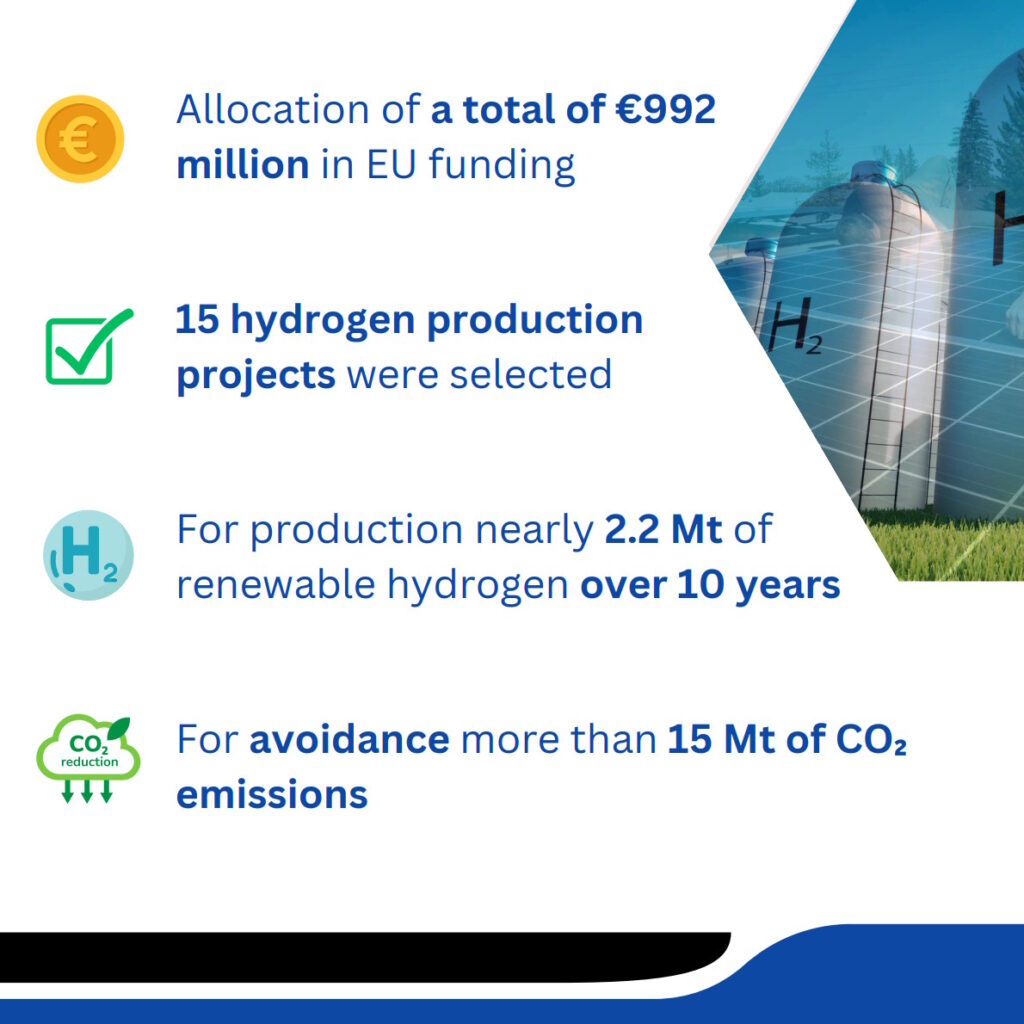
πŸ’° Allocated Budget:

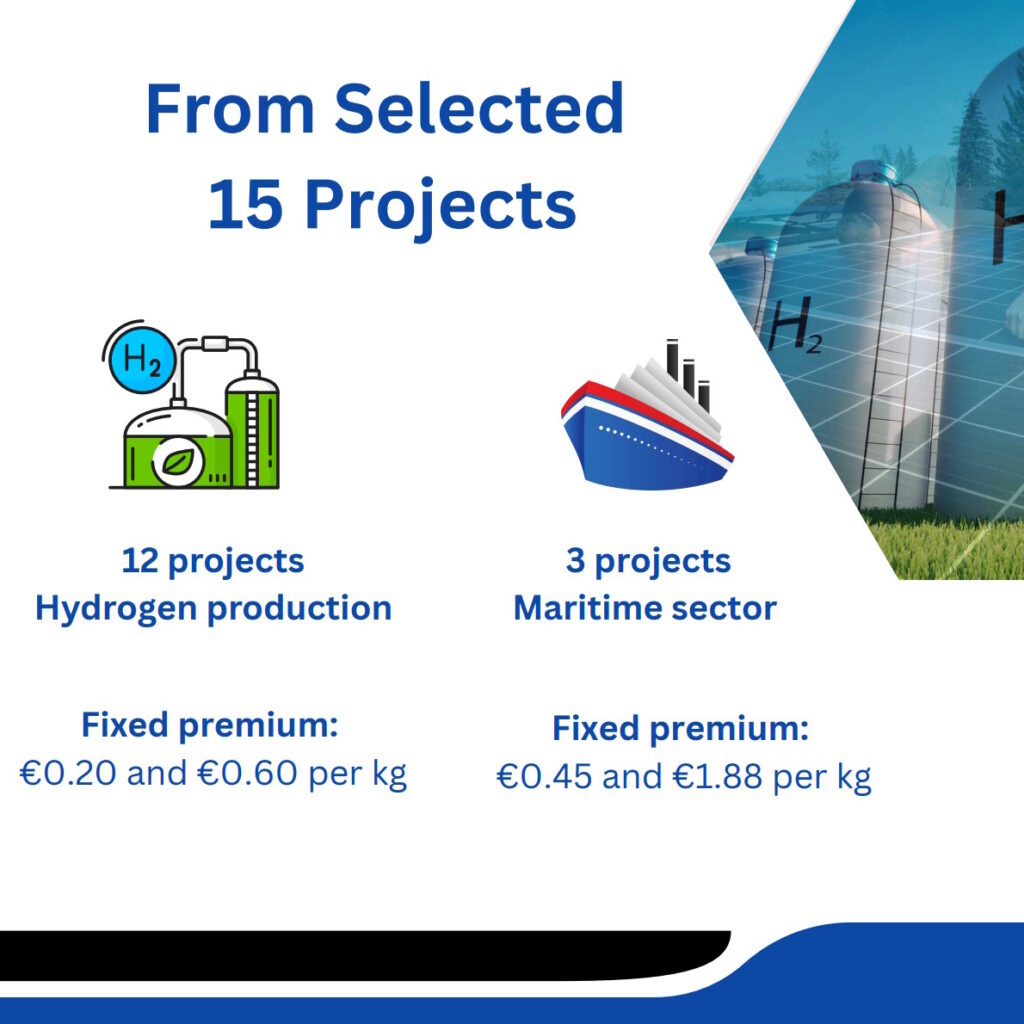
πŸ“Œ EUR 895,364,238 – for 12 projects under the general topic

πŸ“Œ EUR 96,677,425 – for 3 projects in the maritime sector

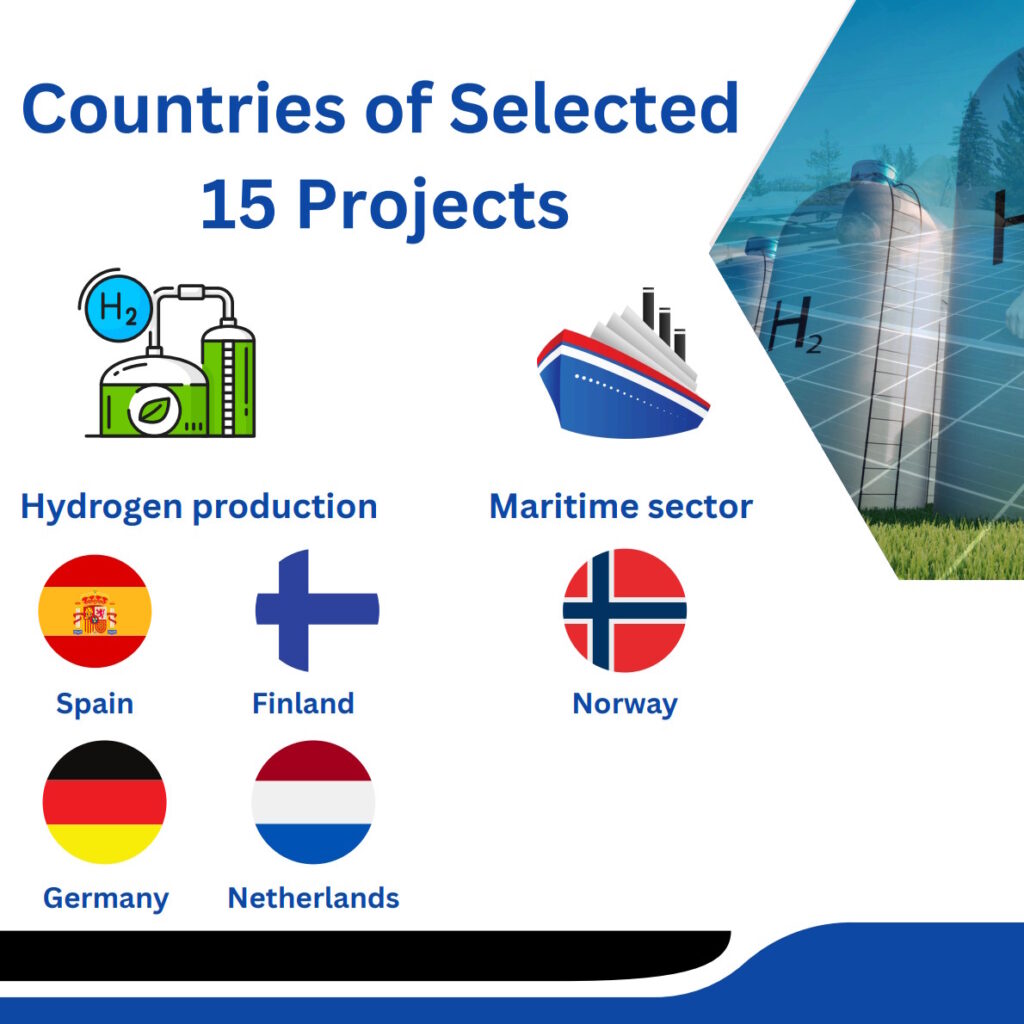
🌍 Geographical Distribution of Selected Projects:

  • 8 – Spain
  • 3 – Norway
  • 2 – Germany
  • 1 – Netherlands
  • 1 – Finland

βœ… Spain and Germany reported the highest production volumes and planned installed electrolyser capacities:

πŸ“Œ Spain: 3,531,791 tons over 10 years; 3,203 MWe of aggregated electrolyser capacity

πŸ“Œ Germany: 1,082,989 tons over 10 years; 1,098 MWe of aggregated electrolyser capacity

πŸ“ˆ The average levelized cost of RFNBO hydrogen in the listed countries ranges from EUR 5.5 to 11.1/kg

β˜‘οΈ Preferred contract structure: Fixed-price agreements with off-takers

β˜‘οΈ Most common delivery method: Pipeline

⚑ Main power source: Onshore wind energy, typically combining grid connection with a renewable PPA

➑️ Sources:
β–ͺ️ Press release
β–ͺ️ Presentation

Opinion on the statutory documents of the ENNOH

Opinion (C/2025/2004) on the statutory documents of the European Network of Network Operators for Hydrogen (ENNOH)

On 16 May 2025, the European Commission published its Opinion (C/2025/2004) on the statutory documents of the European Network of Network Operators for Hydrogen (ENNOH) – the independent association representing future hydrogen transmission network operators at EU level.

βœ… Key Takeaways:

πŸ“Œ Climate Objectives: the Articles of Association (AoA) of the ENNOH should be modified as to include climate related objectives.

πŸ“Œ Membership Criteria: Only certified Hydrogen Transmission Network Operators (HTNOs) β€” or those undergoing certification β€” can be members. The β€œfounding member” concept must align with EU law.

πŸ“Œ Observer Access: Observer status should be restricted to HTNOs from countries applying EU energy law (e.g., EEA or Energy Community members).

πŸ“Œ Board Composition: Rules must ensure regional balance while rewarding early movers β€” but with transparent limitations and future revisions.

πŸ“Œ Stakeholder Engagement: Public consultations must be transparent, inclusive, and allow a default period of 2 months.

πŸ“Œ Amendments & Dissolution: Changes to ENNOH’s statutory documents β€” including its list of members β€” and any dissolution must receive explicit Commission approval.

πŸ“Œ Gender & Diversity: ENNOH is encouraged to integrate gender parity and diversity into board and senior role appointments.

β˜‘οΈ WHAT NEXT?

The future hydrogen transmission network operators shall adopt and publish, by early July 2025, the final statutory documents, taking into account the Commission’s and ACER’s opinions.

➑️ Source: Important step towards establishing the European Network of Network Operators for Hydrogen

Enforcement of the ReFuelEU Aviation Regulation by EU Member States

Member States enforcing the ReFuelEU Aviation Regulation

How are EU Member States enforcing the ReFuelEU Aviation Regulation?

The European Commission has published an overview of the enforcement status of the ReFuelEU Aviation Regulation across EU Member States.

ℹ️ This overview was compiled based on data provided by Member States and is published for information purposes.

πŸ“… Last updated: 5 May 2025.

➑️ Source: Overview_of_Member_States_enforcement_of_RFEUA

Public Consultations. Innovation Fund

public consultation to evaluate the operations of the Innovation Fund by 2025

The European Commission has started the public consultation to evaluate the operations of the Innovation Fund by 2025.

πŸ“„ Form of Feedback – the online questionnaire via this link

πŸ“… Feedback period – 15 April 2025 – 08 July 2025

βœ… What is the Innovation Fund?

πŸ“Œ The Innovation Fund is one of the world’s largest funding programmes for the deployment of net-zero and innovative technologies.

πŸ“Œ The Innovation Fund was established by the Emissions Trading System (ETS) Directive to support innovation in low or zero-carbon products, processes and technologies in the sectors covered by the Directive.

πŸ“Œ The Fund obtains its resources from ETS allowance revenues.

➑️ Source: What is the Innovation Fund?

β˜‘οΈ Purpose and Scope of Evaluation:

πŸ“Œ The European Commission will:

  • evaluate the implementation of the Innovation Fund from 2020 to 2024.
  • will focus primarily on assessing synergies between the Fund and other EU programmes, including Horizon Europe, and the procedures for disbursing financial support.

πŸ“Œ The evaluation will assess:

  • Effectiveness: the degree to which the Fund has succeeded in achieving its objectives of:
    1. supporting projects that demonstrate highly innovative technologies, processes and products;
    2. providing financial support tailored to market needs and risk profiles of eligible projects while attracting additional public and private resources;
    3. ensuring that Innovation Fund revenues are managed to accomplish the objectives of the ETS Directive.
  • Efficiency: how ETS allowances have been employed to achieve the expected effects of the Fund, alongside the administrative burden associated with application, evaluation, and project implementation.
  • Relevance: the connection between the Fund’s objectives and the attainment of EU climate targets, particularly emissions reduction and necessary technology development, while strengthening competitiveness and resilience.
  • Coherence: how the various elements of the Fund function cohesively to achieve its objectives and how they synergise with the EU’s policy objectives and other programmes, such as Horizon Europe, the Recovery and Resilience Fund, and InvestEU.
  • EU added value: the extent to which the results and impacts of the Fund contribute to changes prompted by the Commission’s intervention over what could reasonably have been expected from national actions.

➑️ Source: Industrial Decarbonisation Accelerator Act – speeding up decarbonisation

Lobbying activity in the EU hydrogen sector

Mapping the hydrogen power players:
Methods and Data (626 lobbying organizations analyzed), Hydrogen stakeholder population in the EU (most stakeholders are from EU, 83.22% of lobbyists represent business interests, 5.72% of lobbyists are NGOs), Bias in EU hydrogen lobbying (no inherent bias against NGO participation, clear industry bias)

Figure: Mapping the hydrogen power players

Source: Article “Mapping the hydrogen power players: An analysis of lobbying on EU hydrogen policy-making”

Article “Mapping the hydrogen power players: An analysis of lobbying on EU hydrogen policy-making” Lucas Flath, Christine Quittkat provides:

  • First analysis of hydrogen lobbying processes in EU policy-making.
  • First mapping of hydrogen lobbyists at EU-level.

βœ… Some takeaways:

πŸ“Œ The actual depth of the hydrogen economy will result not only from technological competition, but also from political decisions – for Europe, in particular, EU regulations and policies.

πŸ“Œ It can be expected that the integration of hydrogen into the energy system will be a highly politicized process, with various actors trying to influence the transition in their own interests, as has been observed in other fields of the energy transition.

πŸ“Œ European business lobbying often takes place through and by associations, which have established channels of access to political decision-makers. The European Commission, in particular, favors associations as contact partners because an aggregation of individual actors reduces the transaction costs of coordination.

πŸ“Œ Corporate lobbying in the EU traditionally takes place through a multi-level chain of representation: Companies join national trade associations, which in turn are members of the corresponding associations at EU level. However in recent years, direct lobbying by individual companies at EU level has increased significantly.

πŸ“Œ The membership structure of European hydrogen associations shows that hydrogen is supported by a wide range of economic sectors and actors, but in particular by mid- and downstream natural gas companies, large chemical companies, car manufacturers, and manufacturers of machinery, electronic and electrical equipment.

πŸ“Œ The most well-known key factors influencing lobbying activity are material resources, such as lobbying budget or lobbying staff. Organizations with greater resources, regardless of other characteristics, are more likely to gain access to European decision makers.

πŸ“Œ Characteristics of the hydrogen stakeholder population:

  • 47.28 % – companies
  • 35.94 % – trade associations
  • 5.72 % – NGOs

πŸ“Œ Geographical distribution of hydrogen stakeholders:

  • Most of the stakeholders (467; 74.60 %) are primarily organized at the national level.
  • 139 actors (22.20 %) are primarily organized at the EU level and a small portion of 20 actors (3.20 %) represents interests organized at the international level.
  • Among the stakeholders organized at the national level, 410 (87.79 %) are based in EU Member States.
  • The most frequently represented non-EU countries are the United States, the United Kingdom, Norway and Switzerland. Germany is best represented with 166 actors (24.84 % of the total).

➑️ Source: Mapping the hydrogen power players: An analysis of lobbying on EU hydrogen policy-making. Lucas Flath, Christine Quittkat

Public Consultations. Delegated Act about reporting of CORSIA-eligible fuels

Delegated Act about reporting of CORSIA-eligible fuels

✈️ The European Commission conducts the Public Consultation regarding the draft of the Delegated Act about reporting of CORSIA-eligible fuels and CORSIA emissions unit cancellation reports.

πŸ“… Feedback Period – 01 April 2025 – 29 April 2025

βœ… What is the CORSIA?

The Carbon Offsetting and Reduction Scheme for International Aviation (CORSIA):

  • has been in operation since 2019 for monitoring, reporting and verification of carbon dioxide emissions.
  • is intended to be a globally applied market-based measure, which aims to offset international aviation carbon dioxide emissions from January 2021.

βœ… Key Points:

πŸ“Œ This Delegated Act aims to update the current rules to facilitate:

  • reporting of fuels eligible under the CORSIA; and
  • submission and verification of CORSIA emissions unit cancellation reports.

πŸ“Œ β€˜CORSIA eligible fuel’ means an aviation fuel certified as CORSIA (Carbon Offsetting and Reduction Scheme for International Aviation) eligible fuel by sustainability certification schemes listed in Annex I;

πŸ“Œ Annex I: CORSIA approved sustainability certification schemes:

  • International Sustainability and Carbon Certification (ISCC)
  • Roundtable on Sustainable Biomaterials (RSB)
  • ClassNK SCS

πŸ“Œ It should be possible to certify a batch of alternative aviation fuel under several schemes if it fulfils the criteria for each of those schemes. In order to prevent double claiming, aircraft operators should submit a declaration listing all GHG schemes they participate in, confirming that no amount of the alternative aviation fuel is reported more than once.

πŸ“Œ This Delegated Act should apply to the emissions and use of CORSIA eligible fuels that have occurred since 1 January 2024.

➑️ Source: EU Emissions Trading System (ETS) – reporting of CORSIA-eligible fuels and CORSIA emissions unit cancellation reports

SAF Flexibility Mechanism

SAF Flexibility Mechanism

Let’s talk about the SAF Flexibility Mechanism in the EU.

βœ… Main Documents:

β˜‘οΈ What is the SAF Flexibility Mechanism?

πŸ“Œ the SAF flexibility mechanism allows an aviation fuel supplier to supply the minimum shares of SAF as a weighted average over all the aviation fuel it supplied across all EU airports for each reporting period.

πŸ“Œ the SAF flexibility mechanism is intended to give the SAF industry sufficient time to scale up its production and supply capacities.

πŸ“Œ this means that aviation fuel suppliers may supply aviation fuels containing higher shares of SAF in certain EU airports to compensate for aviation fuels containing zero or lower shares of SAF in other EU airports.

πŸ“… The SAF flexibility mechanism applies from 1Β January 2025 until 31Β December 2034.

βœ… Some key conclusions from SAF flexibility mechanism report:

πŸ“Œ Compliance with targets:

  • Aviation fuel suppliers can claim the supply of SAF for the purposes of complying with their ReFuelEU Aviation obligations and contributing to the national RED targets.
  • EU law does not prevent a batch of SAF to be certified under more than one certification scheme (e.g. RED, CORSIA certified fuels).
  • Aircraft operators can claim the use of a given quantity of SAF under one GHG reduction scheme, including the EU ETS and ICAO’s CORSIA.

πŸ“Œ Virtual trading of SAF sustainability certificates

  • there is no unified industry-wide position neither on the design or the necessity of implementing such an accounting mechanism system for the purposes of complying with current blended SAF obligations and of claiming their use under other pieces of EU law, such as the EU ETS that does not allow aircraft operators to claim the use of blended SAF without physically delivery.
  • virtual trading of SAF sustainability certificates may bring new dynamics to the market on the demand side, but it is not clear whether this would have any real impact on the production side at this early stage.

πŸ“Œ Availability of blended SAF at EU airports

  • the risk of a significant geographic concentration of blended SAF in few EU airports is limited.
  • most aviation fuel suppliers operate only within the borders of their respective Member State, so the possibility of significant geographic concentration is already largely limited to national markets.
  • many EU airport managing bodies have clearly communicated their intention to make blended SAF available in the coming years on their premises.
  • projects for new SAF capacities are appearing in various locations across the EU.