Energy Regulation Solutions offers specialized regulatory consulting at the intersection of innovation, climate goals, and market readiness. We support developers, investors, and policymakers in navigating complex regulatory landscapes for hydrogen, CO₂, and Power-to-X technologies in the EU, Germany, and the US
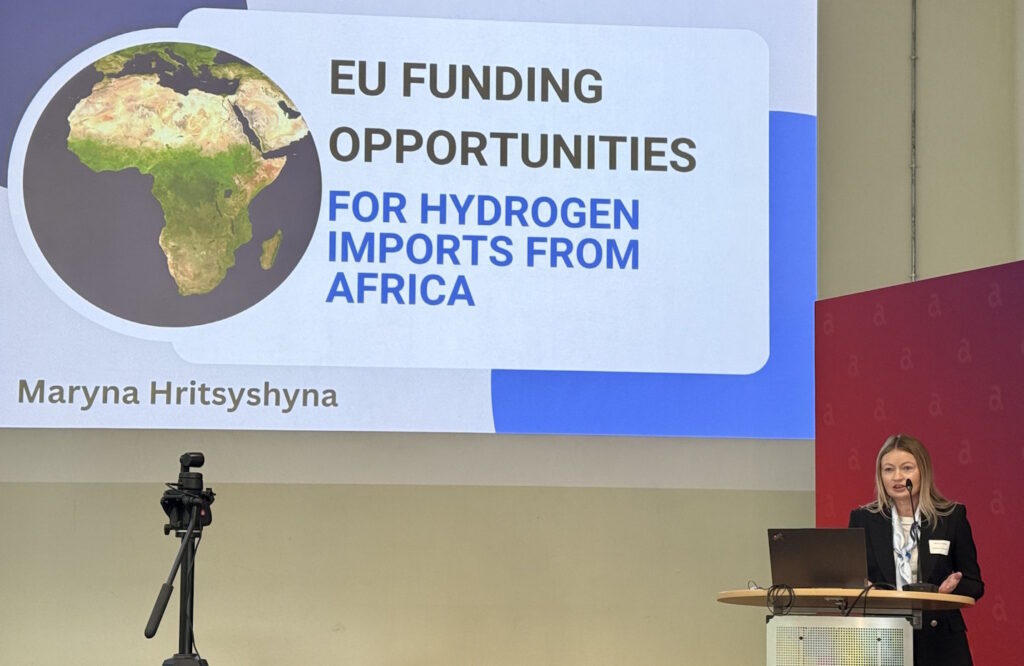
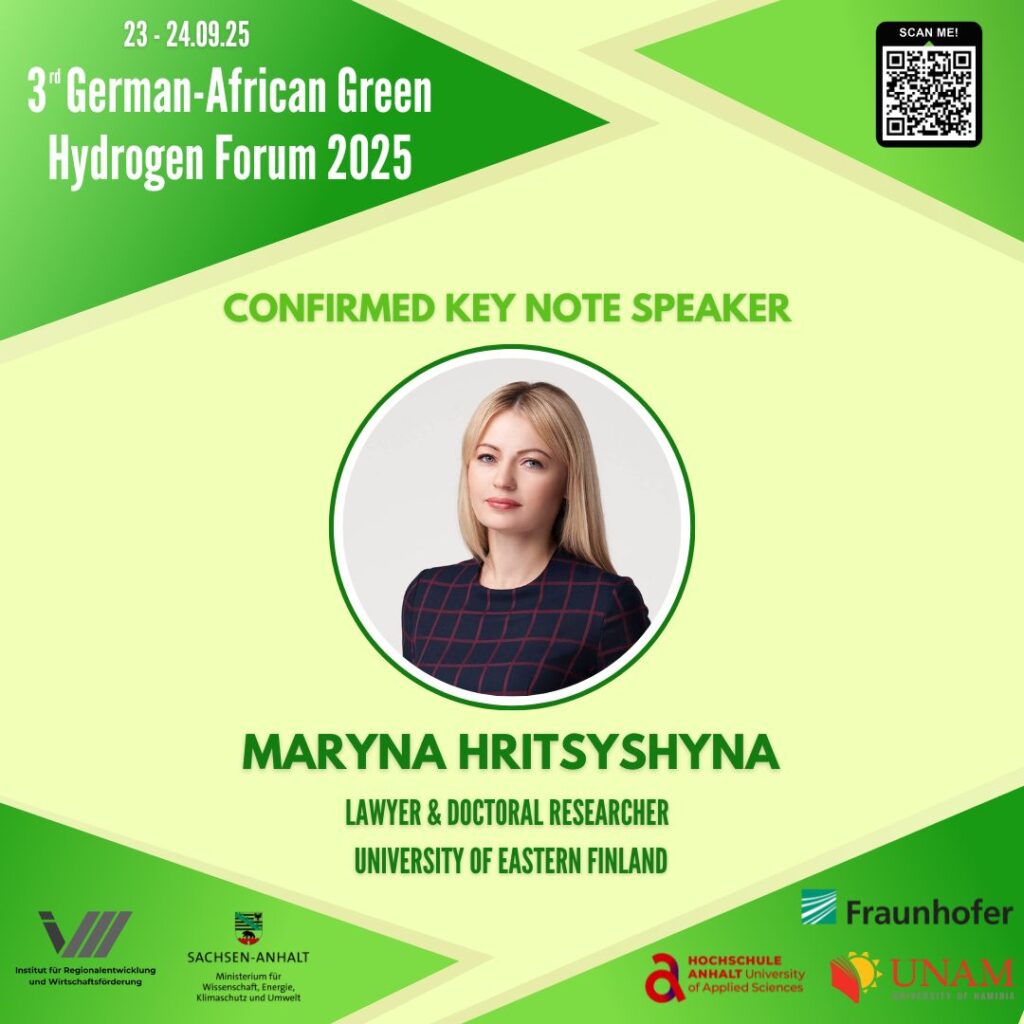
On 23 September, I had the pleasure of speaking at the German-African Green Hydrogen Forum at Hochschule Anhalt, University of Applied Sciences. It was inspiring to exchange ideas on the main challenges of hydrogen imports with delegates from different countries and leading experts in the hydrogen sector.
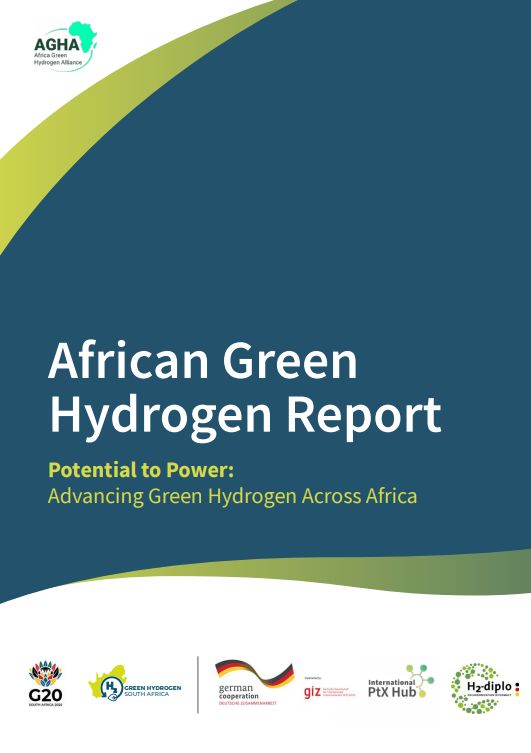
African Green Hydrogen Report, published by GIZ, is available via this link.
✅ Some key takeaways
📌 Export Potential:
Several African countries are developing ambitious green hydrogen export strategies aimed at European and Asian markets.
Tunisia, Namibia, Morocco, Egypt, and South Africa aim to have annual exports of more than 20 million tons of green hydrogen equivalent by 2050.
📌 Policy and regulation:
By February 2025, eight African countries – Algeria, Egypt, Kenya, Mauritania, Morocco, Namibia, South Africa and Tunisia – have adopted hydrogen strategies and/or roadmaps.
Main challenge is a lack of the required comprehensive regulatory frameworks to translate these strategies into action.
📌 Financing projects:
Almost 80% of the public funding for GH2 projects in Africa came from Europe, with Germany accounting for 13% of total funding.
Only a small fraction of announced large-scale African hydrogen projects have reached final investment decisions.
📌 Sustainability considerations:
Electricity and water sustainability are key concerns for green hydrogen projects, particularly in arid regions.
As environmental standards evolve, emerging certification schemes demand strict water use, land access, and emissions compliance.
📃 Article “Mapping the cost competitiveness of African green hydrogen imports to Europe” was published by researchers of the Technical University of Munich (TUM), the University of Oxford and ETH Zurich.
✅ The Key Findings:
📌The research covers:
all projects planned to be operational by 2030.
the analysis of African countries with port access.
31 countries, except Somalia and Libya, were excluded due to political instability and small island states.
📌 Overview of African green hydrogen projects:
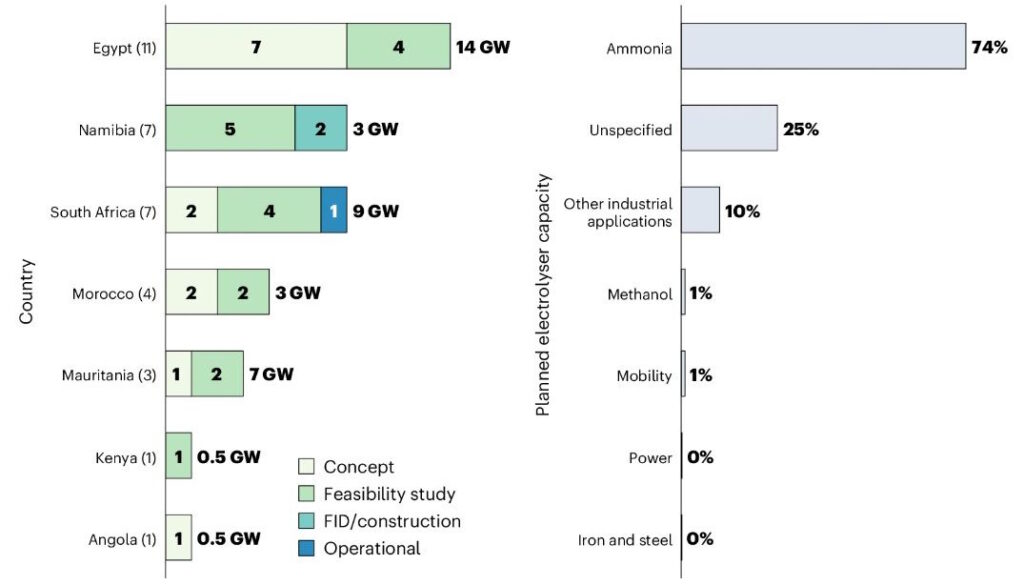
34 projects are found across 7 countries;
89% of projects are either at concept or feasibility stages;
2 of the projects have reached a financial investment decision and are under construction, and only one small-scale project (that is, 3.5 MW) in South Africa is operational;
From 3.5 MW to 6.9 GW is planned project sizes;
74% of planned electrolyser capacity is intended for ammonia (NH3) production
📌 Levelized cost of hydrogen (LCOH):
In a high interest scenarios 1 and 2, least costs for green H2 exported from Africa are €4.9 kgH2−1 without policy support and €3.8 kgH2−1 when fully de-risked by European governments.
In a low interest scenarios, the costs come down to €4.2 kgH2−1 and €3.2 kgH2−1, respectively.
no location competitive with the first round of auction results by the European Hydrogen Bank, which yielded a lowest bid of €2.8 kgH2−1 in Spain.
📌 Challenges:
many low-cost locations are in regions that are either politically contested or encounter relatively regular flares of armed conflict.
the size of the planned investments relative to the GDP raises questions on feasibility. This situation is concerning as many African countries face massive foreign debt burdens.
whereas wind resources are critical to low-cost green H2 production, local expertise to install this wind capacity may be insufficient.
some low-cost locations, such as those near the Red Sea or the river Nile in Egypt, may also face challenges of water insecurity potentially disrupting consistent production.