Revision of the EU Hydrogen Strategy for Industry

During my recent application process, I was asked to prepare a presentation on the revision of the EU Hydrogen Strategy.

In the end, another candidate turned out to be a better fit for the role. That happens, and it’s part of any competitive process.

At the same time, I remain confident that my qualifications and the strategic depth of my presentation were very strong. The task clearly demonstrated my ability to develop a structured, forward-looking policy strategy, grounded in regulation, market realities, and industrial needs.

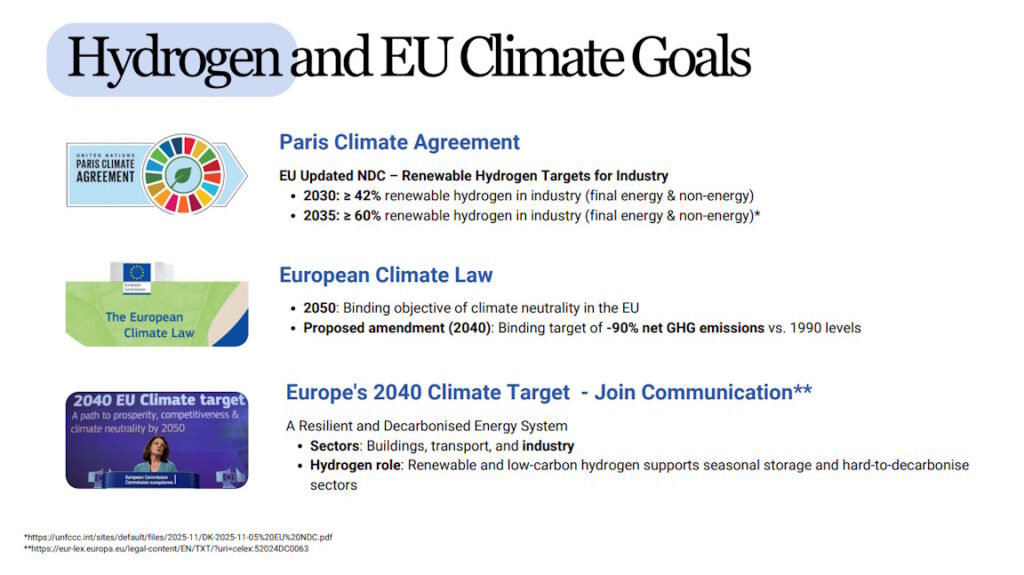
This exercise itself confirmed something important for me: the revision of the EU Hydrogen Strategy will be a decisive moment for Europe’s industrial decarbonisation.

So I’d like to briefly share a few reflections.

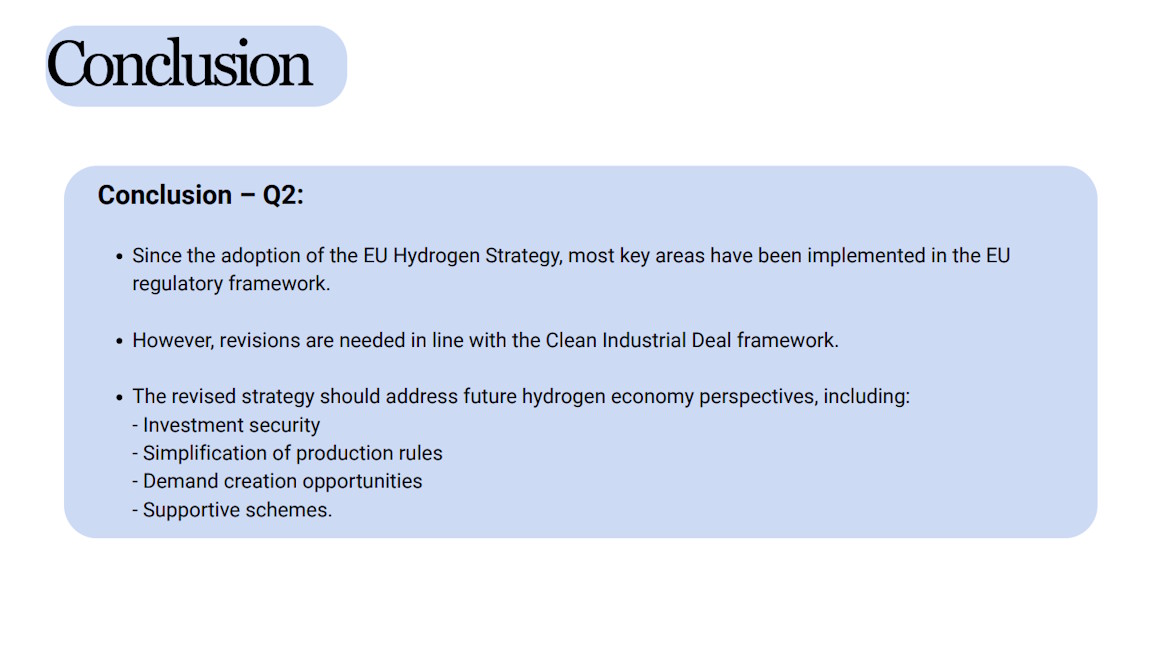
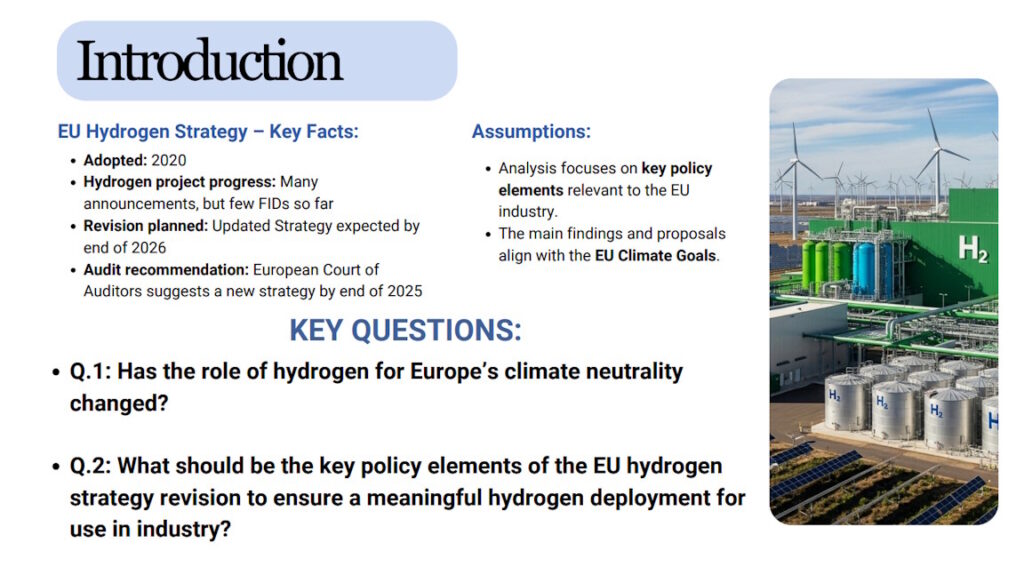
Since the adoption of the EU Hydrogen Strategy in 2020, we’ve seen:

  • strong political ambition,
  • an impressive number of project announcements,
  • but still too few final investment decisions.

This gap is no longer about vision. It’s about implementation, prioritisation, and bankability, and this is where strategic policy design becomes critical.

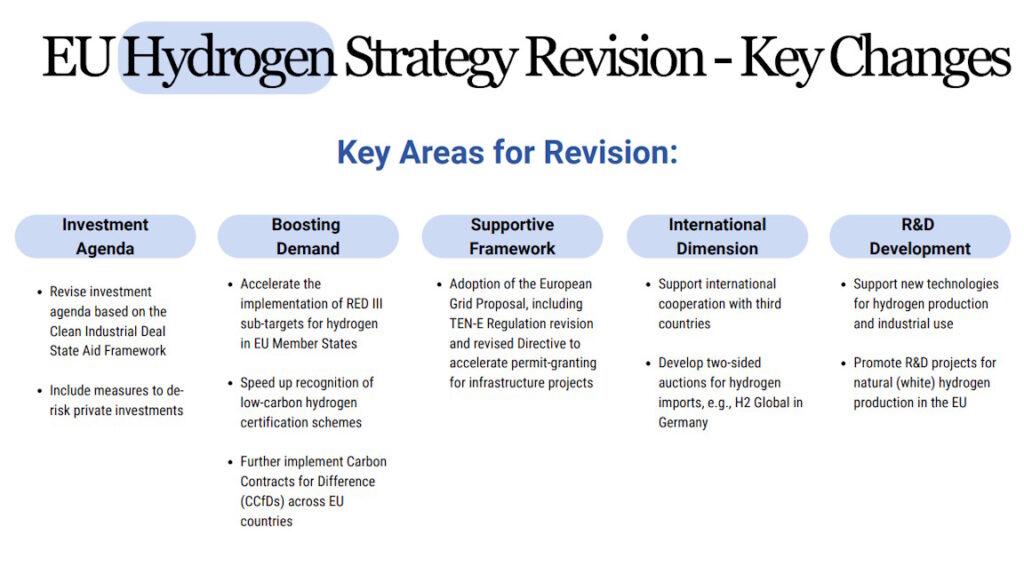
Looking ahead, a revised EU Hydrogen Strategy should focus less on targets alone and more on:

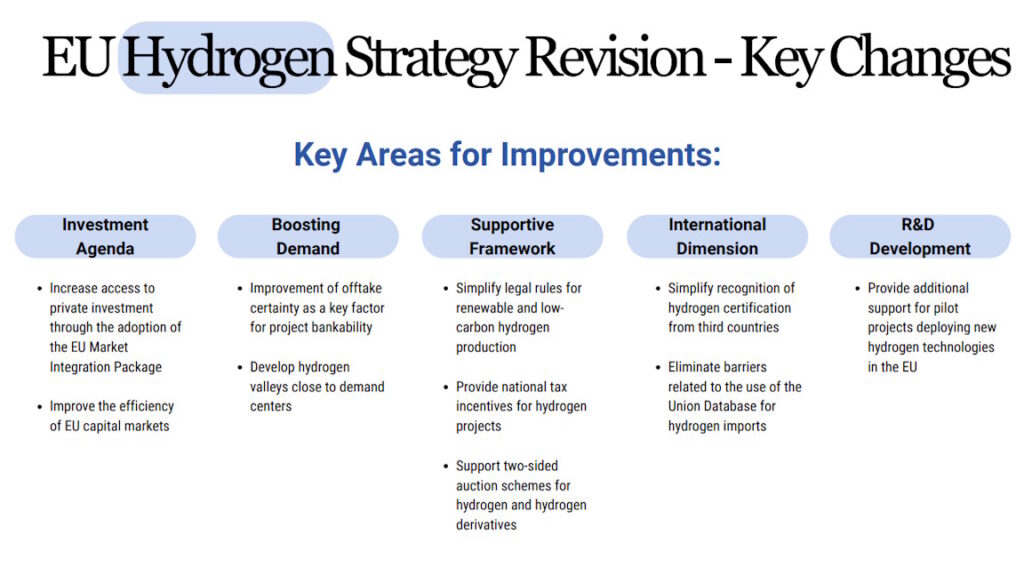
  • investment security and risk-sharing instruments
  • real demand creation and offtake certainty
  • simpler and more predictable rules for renewable and low-carbon hydrogen
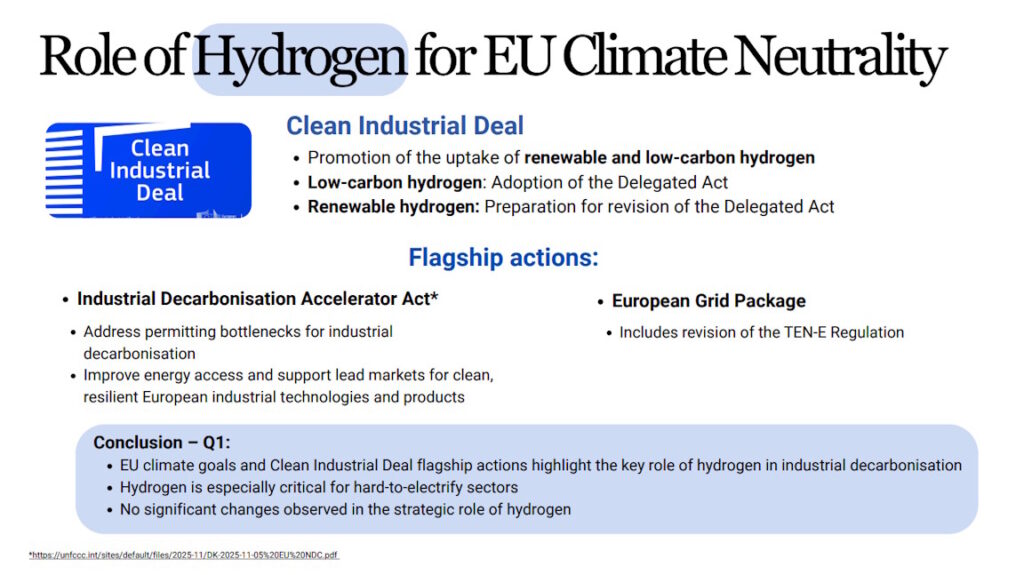
  • alignment with the Clean Industrial Deal and industrial competitiveness
  • an effective international dimension, including imports and certification.

Hydrogen remains essential for hard-to-electrify industrial sectors. Its strategic role hasn’t diminished, but the policy framework now needs to mature from ambition to delivery.

Grateful for the opportunity to think this through and always happy to exchange views with others working on Europe’s hydrogen future.
Clean Energy Technology Observatory

Clean Energy Technology Observatory: Renewable Fuels of Non-Biological Origin in the European Union - 2025 Status Report on Technology Development, Trends, Value Chains and Markets

Clean Energy Technology Observatory: Renewable Fuels of Non-Biological Origin in the European Union – 2025 Status Report on Technology Development, Trends, Value Chains and Markets

✅ Some Key Takeaways:

📌 Technology status

  • RFNBO production technologies involve electrolysers and the downstream conversion of renewable hydrogen into synthetic fuels, mostly based on established industrial processes using fossil-based inputs, now adapted for renewable hydrogen and captured carbon CO2 or N2 as feedstocks.
  • Technology Readiness Levels (TRLs) vary from 5–7 for innovative variants, up to 8–9 for commercially ready pathways like e-methanol and e-CH₄.
  • Most RFNBO technologies are at pilot or early commercial scale, with no fundamental technical barriers, but with substantial economic and infrastructure challenges to overcome.
  • Installed capacity remains modest, with approximately 35 operational e-methane plants in 2024 and total EU e-fuel capacity below 0.5 Mt/year, although project pipelines (45 announced e-kerosene (SAF) projects and several Power-to-X (PtX) hubs) are expected to expand capacity to a few hundred thousand tons per year by 2030.
  • Cost trends indicate strong learning effects: CAPEX for synthesis plants is projected to decrease by 30–35% by 2050. By 2030, several studies estimated production costs at €1.6–2.3 per litre of diesel equivalent for e-methanol and over €3.5 per litre for Fischer–Tropsch fuels, but the current trend could push these costs higher.

📌 Investment and funding

  • Public funding for research and innovation under Horizon 2020 and Horizon Europe has reached €200 million for over 40 projects, focused on RFNBO production.
  • Other EU initiatives can also indirectly finance RFNBO projects by leveraging complementary funding streams, EU public support for innovation readiness, and private capital for commercialisation and scale-up.
  • Commercial-scale projects still rely heavily on public guarantees and offtake agreements.

📌 Value chain

  • The RFNBO value chain integrates renewable hydrogen production, CO2/N2 capture, chemical synthesis, and fuel distribution, spanning multiple industrial sectors.
  • Early deployment is concentrated in Germany, Denmark, the Netherlands, and Spain.
  • The economic potential is considerable: RFNBO could contribute over €40–60 billion annually to the EU economy by 2040, creating up to 200,000 direct and indirect jobs in the hydrogen, chemical, and transport sectors.

📌 EU positioning and global competitiveness

  • The EU maintains global leadership in RFNBO research, demonstration, and regulatory frameworks, but lags behind the US and China in commercial scale-up.
  • Under the Net-Zero Industry Act, the EU aims to secure 40% domestic production of strategic net-zero emission technologies by 2030.

➡️ Source: Clean Energy Technology Observatory: Renewable Fuels of Non-Biological Origin in the European Union – 2025 Status Report on Technology Development, Trends, Value Chains and Markets

Fitness Check on EU Energy Security

The European Commission has just published a ‘fitness check’ of EU legislation on electricity and gas security of supply, looking both at past performance and what lies ahead. The document acknowledges that energy security in the EU will look very different in a decarbonised, electrified and geopolitically changed energy system.

✅ Key future developments include:

  • The evolving role of electricity and natural gas in a highly electrified, integrated energy system.
  • Protecting consumers and critical energy needs amid electrification and the phase-out of natural gas.
  • The growing role of new energy carriers such as biomethane and hydrogen.
  • Diversification of supply in response to geopolitical shifts and a stronger focus on homegrown clean energy.
  • The importance of critical raw materials for resilient clean-tech supply chains.
  • The increasing impact of climate change on EU energy security.

☑️ These points are clarified by the following:

📌 The energy transition will have a profound effect on the future security of gas and electricity supply. Phasing out imported fossil fuels and instead relying on homegrown renewable energy sources will have a substantial positive impact on the EU’s energy security. At the same time, a more electrified and decarbonised energy system requires a different management approach, with greater flexibility.

📌 Biomethane will become increasingly relevant for energy security. Under the Hydrogen and Decarbonised Gas Package, biomethane is now explicitly included in the definition of “natural gas”, meaning the Gas Security of Supply Regulation will apply to it from 2025 onwards. However, biomethane has very different characteristics compared to fossil gas: seasonal production, strong reliance on local resources, and predominantly decentralised injection into distribution grids. Importantly, biomethane-fired generation is still expected to contribute to electricity security by 2050 by providing flexible backup for variable renewables.

📌 Hydrogen will also become important for the future energy security framework, particularly for hard-to-abate sectors, and as a source of flexibility for the power system. Long-term storage, e-gases and e-fuels can all support security of supply. However, hydrogen will not simply “replace” natural gas. Its system role will be fundamentally different, and the deployment of electrolysers must be carefully aligned with grid capacities and broader decarbonisation pathways.

Overall, this ‘fitness check’ makes one thing very clear:

  • Energy security is no longer just about conventional fuels;
  • Energy security is about system design, flexibility, resilience, and smart regulation.

➡️ Source: Commission publishes “fitness check” on EU laws covering the security of electricity and gas supply in view of future revision

Modernisation Fund

On 17 December 2025, the European Commission and the European Investment Bank announced the disbursement of €1.8 billion from the Modernisation Fund to support 45 clean energy-related investments in 12 different Member States, including Portugal, which became a beneficiary Member State in 2024.

Financed by revenues from the EU Emissions Trading System (EU ETS), this brings total Modernisation Fund support to €20.7 billion for 294 investments since 2021. In 2025 alone, €5.46 billion has been disbursed to 79 projects, following an earlier allocation of €3.66 billion in July.

✅ What is the Modernisation Fund?

📌 The Modernisation Fund, funded by revenues from the auctioning of emission allowances under the EU ETS, aims to support 13 lower-income EU countries in their transition to climate neutrality.

📌 The beneficiary Member States are Bulgaria, Croatia, Czechia, Estonia, Hungary, Latvia, Lithuania, Poland, Romania, and Slovakia, as well as Greece, Portugal and Slovenia which became eligible for support as of January 2024, under the revised EU ETS Directive.

📌 The Modernisation Fund supports investments in the generation and use of energy from renewable sources, energy efficiency, energy storage, modernisation of energy networks, including district heating, grids, and just transition in carbon-dependent regions.

📌 It operates under the responsibility of the beneficiary countries in close cooperation with the European Commission and the European Investment Bank.

📅 Next deadlines

The next deadlines for beneficiary Member States to submit investment proposals under the Modernisation Fund are:

  • 15 January 2026 for non-priority proposals
  • 12 February 2026 for priority proposals.

➡️ Source: Joint press release: Modernisation Fund announces €1.8 billion in new clean energy investments, bringing 5-year total to over €20 billion

Innovation Fund in Transport Sector

How the Innovation Fund Supports the Decarbonisation of the EU Transport Sector

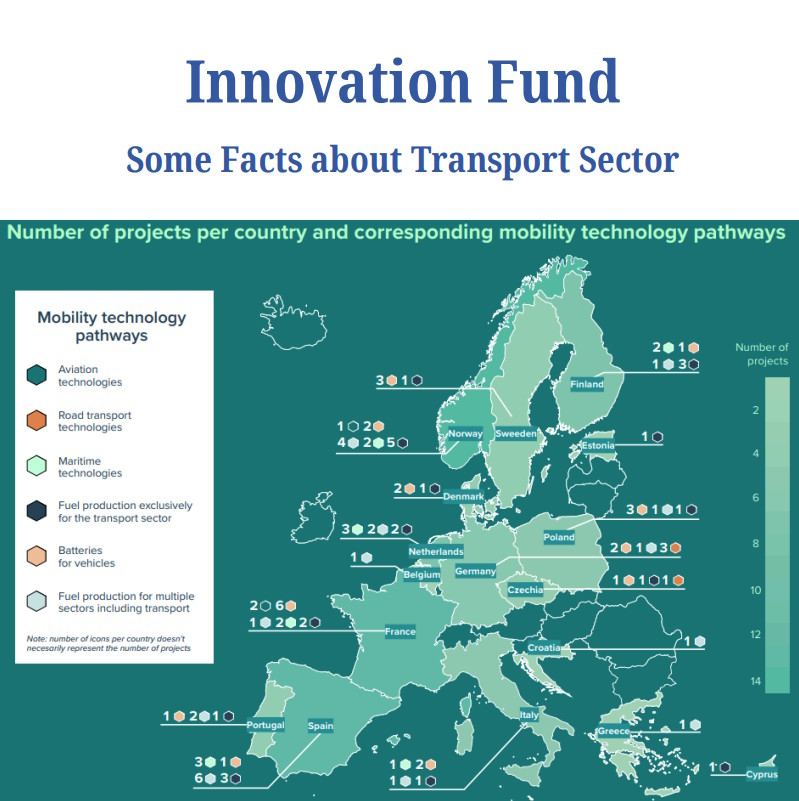
In a recent publication, the European Commission presented a factsheet on projects supported by the Innovation Fund, with total funding exceeding €4.8 billion.

✅ What is the Innovation Fund?

The Innovation Fund:

  • is one of the EU’s key financial instruments for deploying net-zero and innovative technologies.
  • is funded by revenues from the EU Emissions Trading System (EU ETS) and supports the decarbonisation of hard-to-abate sectors.
  • provides grants to breakthrough projects across a wide range of sectors in the European Economic Area (EEA).

☑️ What technologies in the transport sector does the Innovation Fund support?

  • the production and use of sustainable fuels
  • the electrification of transport systems
  • the manufacturing and recycling of batteries for electric vehicles (EVs)
  • the construction and retrofitting of low- and zero-carbon ships, aircraft, and heavy-duty vehicles

✅ Key Takeaways:

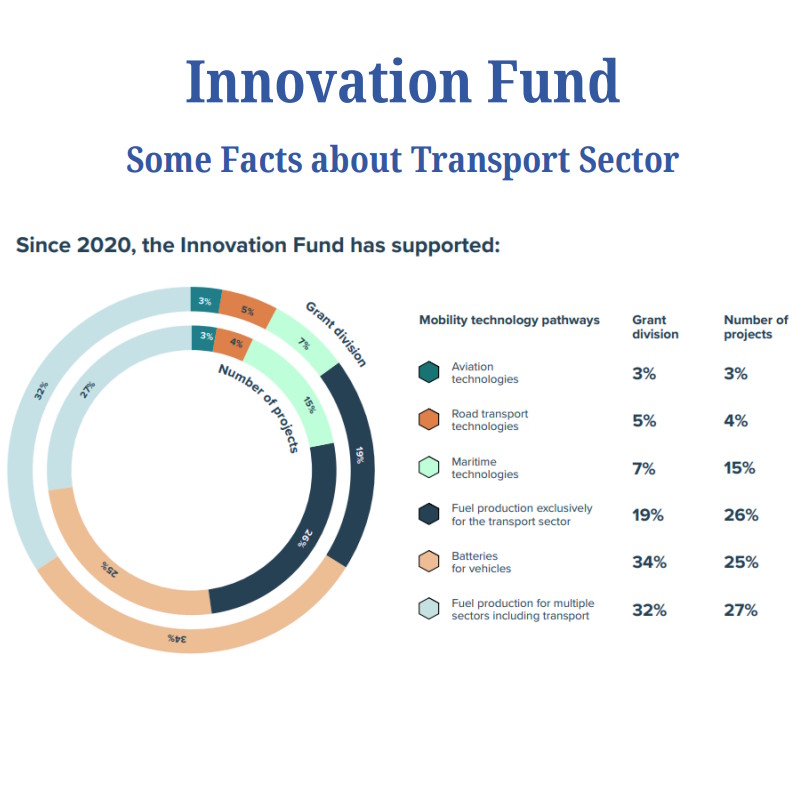
📌 Out of 272 ongoing and awarded projects, more than one-third focus on transport decarbonisation, receiving around one-third of total grants (€4.8 billion).

📌 Transport-related projects are expected to deliver approximately 29% of the Innovation Fund’s total emission reductions during their first ten years of operation, cutting 334 million tonnes of CO2.

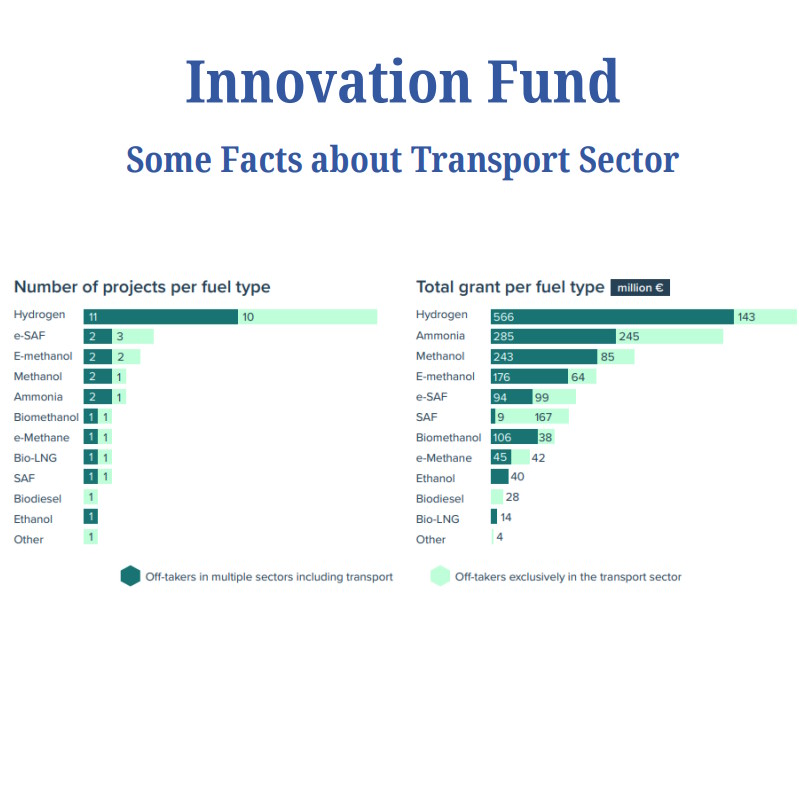
📌 The largest share of mobility projects in the Innovation Fund portfolio relates to fuel production (47 projects). More than 45% of these projects are expected to supply their output exclusively to the transport sector, while the remainder plan to serve multiple off-takers, with transport among the key beneficiaries.

➡️ Source: Driving decarbonisation in mobility through the innovation fund

2025 Carbon Market Report

2025 Carbon Market Report on the functioning of the European carbon market in 2024

On 3 December 2025, the European Commission published the 2025 Carbon Market Report, confirming that the EU Emissions Trading System (EU ETS) continues to function effectively and remains a key pillar of Europe’s climate policy.

As part of the State of the Energy Union Report, the assessment:

▪️ Reviews EU ETS performance in 2024 and early 2025
▪️ Confirms the continued decline in emissions across power and industry.

✅ Key takeaways:

🔹 Overall progress

  • EU ETS emissions from power and industry are now around 50% below 2005 levels.
  • The system remains on track for the 2030 target: –62% emissions

🔹 Power & Industry

  • 2024 emissions from power installations fell by almost 11% compared to 2023
  • Overall fuel combustion emissions across power + industry declined by 9%

🔹 Aviation

  • EU ETS prices for intra-European aviation increased around 15% in 2024
    • ➡️ Key Drivers: continued growth in aviation emissions and expanded coverage, including flights to the EU’s outermost regions
  • The EU ETS also started rewarding airlines for their use of sustainable aviation fuels (SAF) through additional allowance allocation, and the EU became the first jurisdiction to introduce monitoring and reporting of non-CO2 aviation effects.
  • SAF incentives under EU ETS
    • The ETS carbon price already provides an incentive of around EUR 200 per tonne of SAF used, compared to fossil kerosene.
    • Additional ETS support measures implemented in 2025: €500 – €7,000 per tonne of eligible SAF on ETS routes and applicable since 1 January 2024.
    • For 2024, the incentive from EU ETS was worth around EUR 25 million, supplemented by ETS support of about 1.3 million allowances worth approximately EUR 100 million
  • CORSIA alignment
    • Limited intra-European EU ETS scope extended to end-2026
    • Full application of ICAO CORSIA expected from 2027

🔹 Maritime

  • 2024 marked the inclusion of shipping in the EU ETS
  • Coverage:
    • 100% of emissions between EEA ports & at EEA ports
    • 50% of emissions from voyages to/from non-EEA ports
  • Compliance was high: shipping companies surrendered allowances for more than 99% of their relevant surrendering requirements by the 30 September deadline.
  • In 2025, shipping companies surrendered allowances for 40% of their 2024 emissions

🔹 EU ETS funding the clean transition

  • €38.8 billion raised in 2024
  • Revenues support:
    • National climate action
    • Clean energy investments
    • Innovation Fund
    • Modernisation Fund
    • Recovery & Resilience Facility (REPowerEU)

☑️ Total ETS revenues now exceed €250 billion

➡️ Source: 2025 Carbon Market Report: EU ETS lowers power sector emissions and expands to maritime transport

New EU funding opportunities

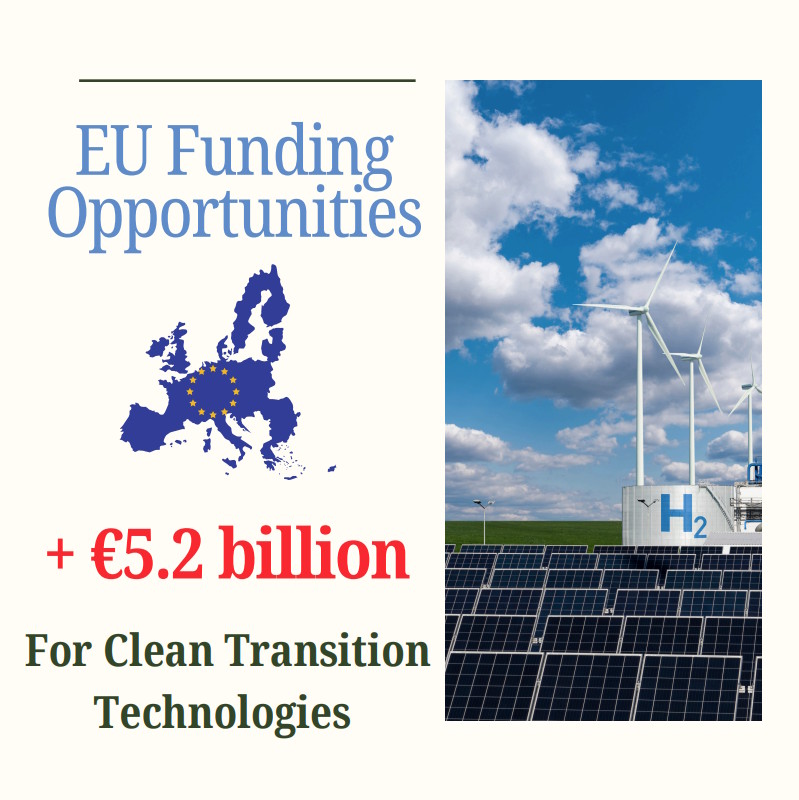
🚀 On 4 December 2025, the European Commission has launched three major new funding opportunities under the EU Innovation Fund, mobilising €5.2 billion from EU ETS revenues to support the scale-up of net-zero technologies, clean hydrogen production, and industrial heat decarbonisation.

✅ Main Funding Opportunities:

🔹 IF25 Net-Zero Technologies Call – €2.9 billion

📌 Supporting innovative, mature decarbonisation projects across various scales, including manufacturing of components for:

  • Renewables & energy storage
  • Heat pumps
  • Hydrogen production
  • EV batteries

📌 Projects are assessed on GHG reduction potential, innovation, maturity, replicability, and cost efficiency.

📌 A new bonus point is introduced for projects led exclusively by SMEs, recognising their role in driving innovation.

📅 Info Day: 16 December 2025

🔹 3rd Auction of the European Hydrogen Bank – €1.3 billion

📌 Scaling up production of RFNBO hydrogen and electrolytic low-carbon hydrogen, including a new topic for aviation and maritime off-takers.

📌 Support is provided via a fixed premium per kg of verified hydrogen produced for up to 10 years, increasing price certainty and bankability for projects.

📅 Info Day: 10 December 2025

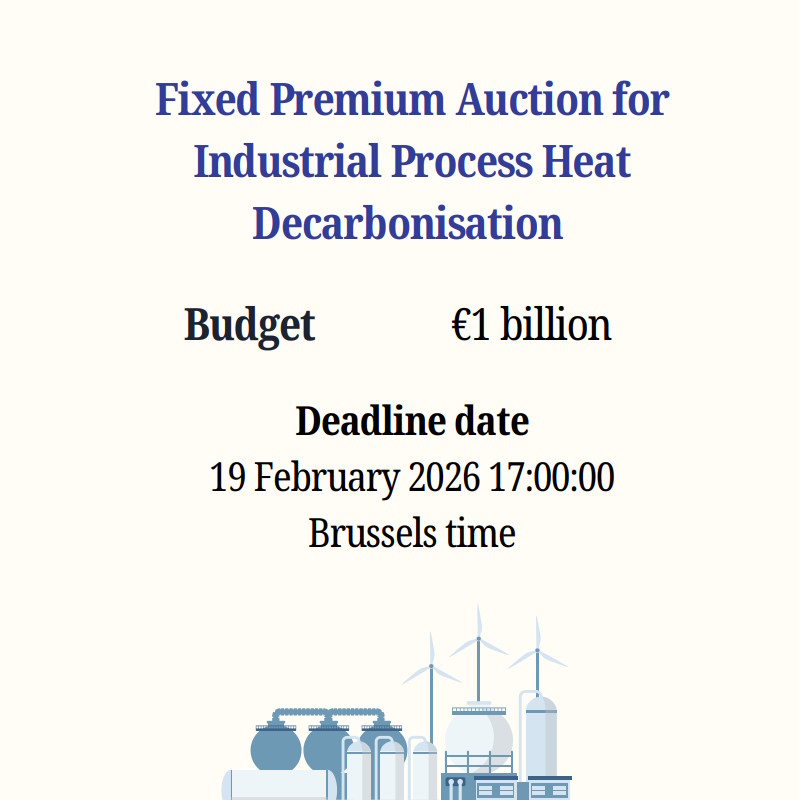
🔹 1st Auction for Decarbonising Industrial Process Heat – €1 billion

📌 The auction dedicated to industrial process heat, targeting one of Europe’s largest unaddressed emissions sources.

📌 Supported technologies include:

  • Heat pumps & electric boilers
  • Resistance & induction heating
  • Solar thermal & geothermal heat
  • Hybrid solutions

📌 Funding is granted as a fixed premium per unit of verified decarbonised heat for up to 5 years, awarded to the most cost-effective CO₂ abatement projects.

📅 Info Day: 16 December 2025

Member States can complement EU funding for high-scoring projects that miss out due to budget limits:

📌 Germany: additional €1.3 billion for RFNBO hydrogen projects

📌 Spain: €465 million total:

  • €415 million for hydrogen
  • €50 million for industrial heat decarbonisation

☑️ What’s next?

📌 Applicants are strongly encouraged to attend the Info Day.

📌 Signing of grant agreements:

  • NZT projects – expected Q1 2027
  • Auction projects – within 9 months of call closure.

➡️ Source: €5.2 billion of EU Emissions Trading revenues earmarked for clean transition technologies under the Innovation Fund

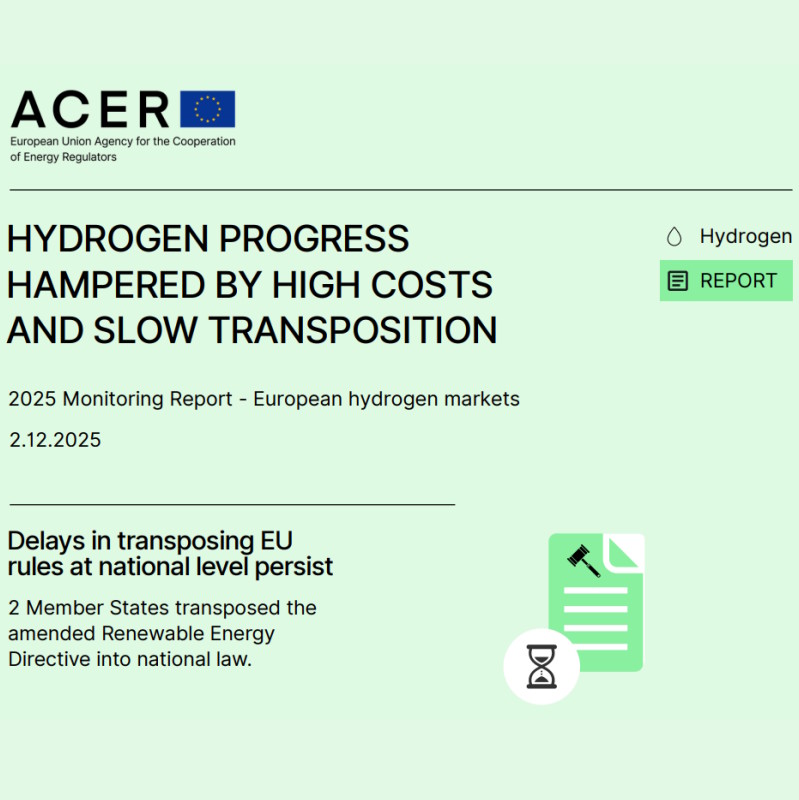
ACER’s European hydrogen markets 2025 Monitoring Report

The ACER’s European hydrogen markets provides 2025 Monitoring Report a realistic snapshot of the current state of development of the European hydrogen market.

✅ Key Takeaways:

📌 As of October 2025, only two Member States, Denmark and Ireland, have notified the Commission of the completion of RED III transposition.

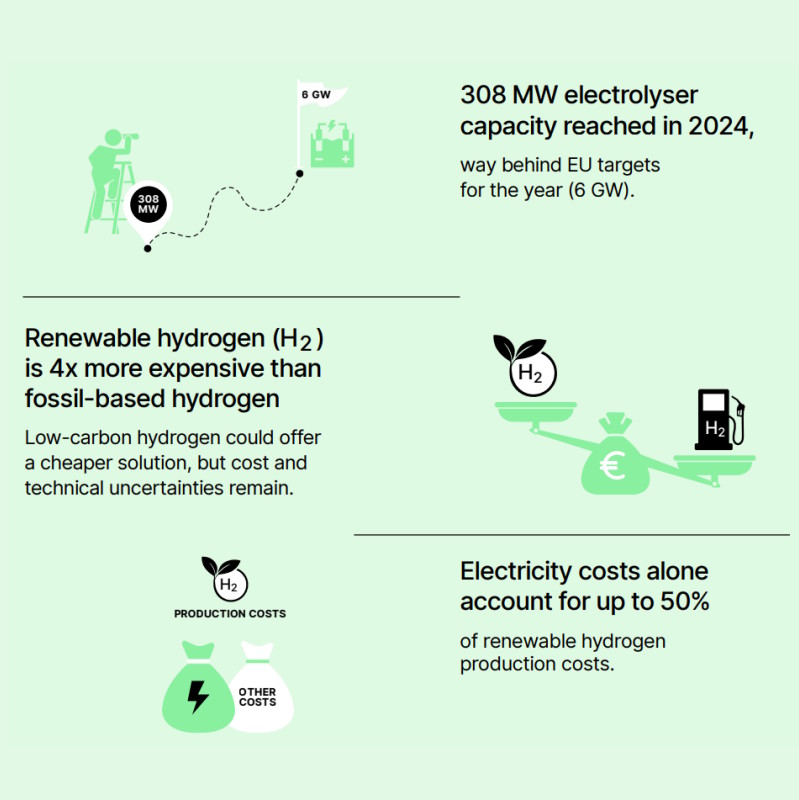
📌 Despite a strong 51% annual increase in installed electrolyser capacity in the EU in 2024, the installed capacity of 308 MW (2024) and the 1.8 GW capacity under construction still fall well short of a realistic trajectory toward the 2030 EU (40 GW) and Member States (48-54 GW) targets.

📌 At around 8 EUR/kgH2, the average cost of RFNBO hydrogen in the EU currently remains four times higher than that of conventional hydrogen from natural gas (just over 2 EUR/kg).

📌 Electricity supply costs, excluding grid tariffs, may account for up to 50% of the levelised cost of renewable hydrogen, depending on the electricity supply mix, with substantial regional variations across the EU.

📌 Uncertain future demand for renewable hydrogen, driven by the current cost, makes it difficult for hydrogen network operators (HNOs) to align network development with demand evolution, increasing the financial risks associated with this uncertainty. Adaptive network planning, reflecting the latest market trends, is essential to ensure efficient investment and cost control.

📌 Low-carbon hydrogen produced from natural gas with carbon capture and storage (CCS) could support market development and accelerate decarbonisation in some sectors. With current production cost estimates at just below 3 EUR/kg, low-carbon hydrogen with CCS is more competitive than renewable hydrogen.

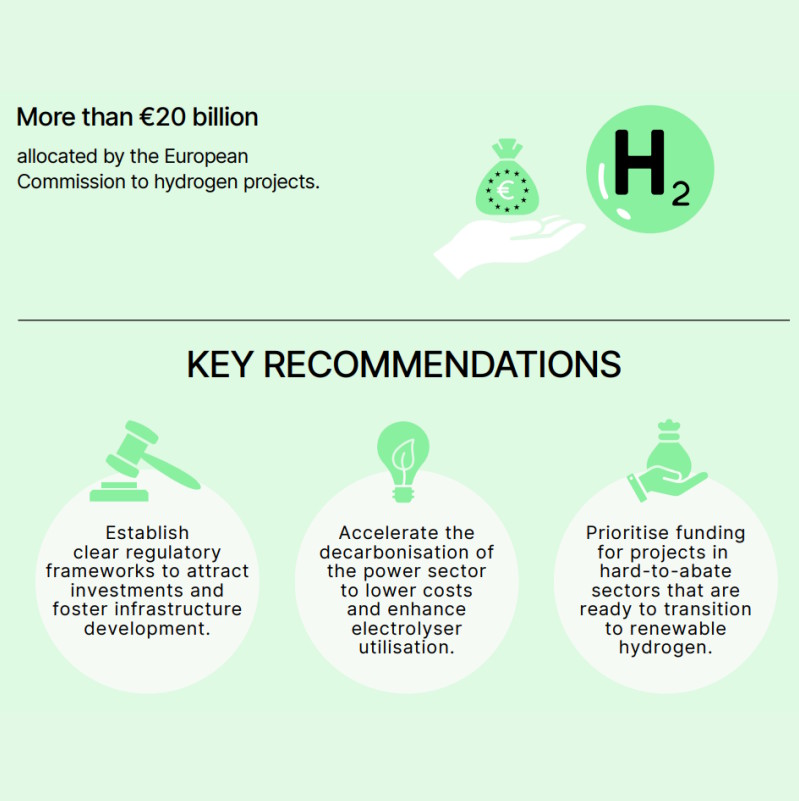
📌 Funding availability is increasing, but implementation remains slow. The European Commission has allocated more than €20 billion through various hydrogen-related programmes, including auctions under the European Hydrogen Bank. In addition, the EU Hydrogen Mechanism has been launched to facilitate supply–demand matching and accelerate hydrogen market creation.

➡️ Source: The European Union Agency for the Cooperation of Energy Regulators. European hydrogen markets 2025 Monitoring Report

Small Modular Reactors – Future Development and Deployment in Europe

Public consultation. Small Modular Reactors. Future development and deployment in Europe

📢 Call for Evidence: “Small Modular Reactors – Future Development and Deployment in Europe”

On 6 November, the European Commission launched a public consultation to help shape the upcoming EU Strategy on Small Modular Reactors (SMRs).

🗓️ Open until: 4 December 2025

➡️ Participate here: Small modular reactors – future development and deployment in Europe

✅ What is this initiative about?

📌 The Commission plans to adopt an SMR Strategy in Q1 2026 (via a Commission Communication) aimed at creating a supportive industrial, economic, and policy framework to accelerate SMR deployment across Europe with first projects expected in the early 2030s.

📌 The strategy seeks to:

  • Strengthen the competitiveness of the EU industry;
  • Foster innovation in nuclear technologies;
  • Provide a coherent EU approach, complementing national initiatives.

☑️ Why does it matter?

📌 More than 10 EU Member States have already expressed interest in deploying SMRs as part of their national energy and climate plans.

📌 SMRs are seen as a potential source of clean, flexible electricity and heat for residential and industrial use, including low-carbon hydrogen and efuel production.

📌 Key advantages include simplified design, enhanced safety features, factory production, reduced construction and operational costs, flexibility for multiple energy uses, and contributions to grid stability.

✅ Strategy objectives:

Building on the work of the European Industrial Alliance on SMRs, the upcoming Communication will focus on:

  • Strengthening collaboration to develop a robust EU supply chain
  • Enhancing regulatory cooperation and streamlining licensing processes
  • Reinforcing EU leadership in research and innovation, including start-up and scale-up partnerships
  • Securing a reliable nuclear fuel cycle
  • Preserving and developing skills and expertise across Europe
  • Addressing investment barriers
  • Supporting public engagement and trust-building initiatives

Climate Change Performance Index 2026

📢 The Climate Change Performance Index 2026 illustrates how the regulatory framework influences the achievement of climate targets.

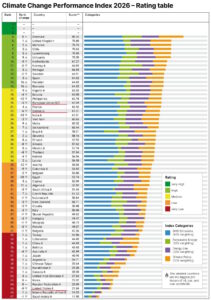
The Climate Change Performance Index (CCPI) is an independent monitoring tool for the climate mitigation performance of 63 countries and the EU.

✅ Key Takeaways:

📌 No country is strong enough in all categories to achieve an overall very high rating. Therefore, the top three places continue to be vacant.

📌 Denmark remains the top-ranked country but falls short of earning an overall very high rating.

📌 Overall, the EU falls three spots, to 20th, and has a medium overall ranking.

📌 Eight EU countries are among the high performers, with Denmark (4th) and Luxembourg (8th) upfront.

📌 No EU country receives an overall very low rating. Bulgaria, at 51st, is still the worst-performing EU country, as nine other EU countries receive an overall low ranking.

📌 The European Union (EU):

  • It ranks 20th in this year’s CCPI, down three spots from last year and receives medium ratings across the board in: GHG Emissions, Renewable Energy, Energy Use, and Climate Policy;
  • The CCPI experts question the likelihood of member states’ full implementation of the revised National Energy and Climate Plans (NECP) regarding the 2030 target published in May 2025
  • RED III provides a policy framework with an overall EU minimum binding target of 42.5%, although the experts criticise the lack of national binding targets and weak enforcement.
  • Implementation remains a major gap, with the European Commission having launched infringement procedures against 26 member states for non-compliance.

📌 Germany

  • Germany drops six places to 22nd in this year’s CCPI;
  • Planned gas power capacity risks a fossil fuel lock-in;
  • The overall ranking decline can be attributed to its announcements to weaken existing climate legislation and unnecessarily expand gas power plants.
  • Hydrogen ramp-up and the development of a capacity market, for when RE does not generate sufficient power, are also moving too slowly. Offshore and onshore wind expansion remain below what is needed.

📌 The United States:

  • The United States falls eight spots from 57th to 65th and remains a very low performing country.
  • Key policies supporting renewable energy build-up and GHG emissions reduction have been revoked alongside promotion of fossil fuel expansion.
  • Key support schemes from the Inflation Reduction Act, such as the Environmental  Protection Agency’s Solar for All program and clean energy tax credits, have been rescinded or weakened.
  • Some states, such as New York and California, still have policies in place to combat climate change and legislators strive to protect these from national-level policies and decrees through the U.S. Climate Alliance.

➡️ Source: Climate Change Performance Index. Ranking