Sustainable Transport Investment Plan

Sustainable Transport Investment Plan
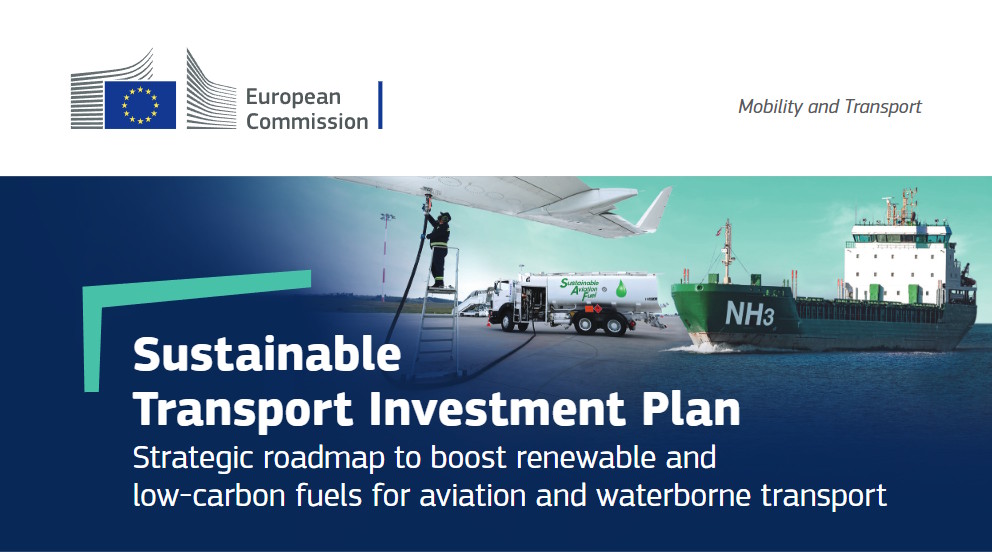
✈️ 🚢 EU launches the Sustainable Transport Investment Plan (STIP), accelerating renewable and low-carbon fuels for aviation and maritime transport

On 5 November 2025, the European Commission has unveiled its Sustainable Transport Investment Plan (STIP), a strategic roadmap to scale up investments in renewable and low-carbon fuels for the aviation and waterborne transport sectors.

This initiative marks a crucial step in delivering the ReFuelEU Aviation and FuelEU Maritime goals and strengthening Europe’s industrial leadership in sustainable fuels.

✅ Key highlights:

📌 Around 20 million tonnes of sustainable alternative fuels (13.2 Mt biofuels and 6.8 Mt e-fuels) will be needed by 2035.

📌 Estimated €100 billion investment is required to meet these targets.

📌 The EU aims to mobilise €2.9 billion by 2027, including:

  • €2 billion via InvestEU for sustainable fuel projects.
  • €300 million through the European Hydrogen Bank for SAF and SMF hydrogen production.
  • €133 million for R&I projects under Horizon Europe.
  • €446 million from the Innovation Fund for synthetic aviation and maritime fuel projects.
  • Launch of an eSAF Early Movers Coalition to mobilise €500 million for synthetic aviation fuel projects.

☑️ The STIP builds on three pillars:

📌 Strategic framework – identifying investment gaps and needs.

📌 Financing action – unlocking and de-risking private investments.

📌 External dimension – fostering global cooperation and fair competition for EU fuel producers.

By creating regulatory stability and new financing tools, STIP aims to make Europe a frontrunner in sustainable transport fuels, driving innovation, industrial leadership, and climate neutrality by 2050.
➡️ Source: Commission unveils the Sustainable Transport Investment Plan: a strategic approach to boost renewable and low-carbon fuels for aviation and waterborne transport

ReFuelEU Aviation Annual Technical Report

The European Union Aviation Safety Agency (EASA) has published the first ReFuelEU Aviation Annual Technical Report 2025

✈️ The European Union Aviation Safety Agency (EASA) has published the first ReFuelEU Aviation Annual Technical Report.

☑️ Synthetic Aviation Fuels (e-SAF) Market Development as of June 2025:

  • The global pipeline for e-SAF facilities comprises 94 announced demonstration or commercial projects, with a combined capacity of 7.2 million tonnes per year.
  • The European Economic Area (EEA) is the frontrunner, accounting for 59% of projects and 42% of planned capacity.
  • Due to the absence of binding e-SAF mandates outside the EU and UK, many projects are oriented toward exporting to the European market.
  • Planned non-EEA capacity faces both slow project progress and the challenge of meeting the EU’s stringent sustainability criteria before these fuels can be imported into the EU.

✅ Key Takeaways:

📌 EU SAF production capacities are projected to be sufficient to meet the minimum SAF shares defined under the ReFuelEU Aviation Regulation for 2030 (excluding e-SAF).

📌 A continuous scale-up of production will be necessary to establish a well-functioning market and achieve the 2035 ReFuelEU targets, which rise to 20% that year. The scale-up of e-SAF production in the EU is still lagging.

📌 As of today, none of the se-SAF facilities in the EU have reached Final Investment Decision (FID), putting at risk the 2030 sub-target for e-SAF. To meet that target, given development lead times, several facilities must reach FID by 2026 at the latest.

📌 Of the feedstock used for SAF supplied in the EU, 69% originated from non-EU countries, with China contributing 38%, Malaysia 12%, and Finland 10% as the largest European contributor.

📌 In 2024, 25 aviation fuel suppliers (out of 83) reported a total supply of 193 kt of SAF. Fewer than ten suppliers accounted for 80% of this amount, indicating a high level of market concentration. This suggests that the EU SAF market remains nascent and dominated by a few mature or well-capitalized players.

📌 SAF was delivered to 33 Union airports across 12 EU Member States, with 5 Member States – France, the Netherlands, Spain, Sweden, and Germany – accounting for 99% of the total amount supplied.

📌 According to Eurostat, the EU imported 80 kt of SAF in 2024, representing over 40% of the total EU SAF supply that year, highlighting the continued importance of imports despite the gradual growth of domestic production.

➡️ Source: European Union Aviation Safety Agency. ReFuelEU Aviation Annual Technical Report 2025

Commission Work Programme for 2026

European Commission Work Programme for 2026

📢 The European Commission has just published its Work Programme for 2026, outlining key legislative and policy initiatives.

The main highlights for the Energy and Climate sectors:

🔹 Electrification Action Plan, including heating and cooling (non-legislative, Q1 2026)

🔹 Strengthening Energy Security (legislative, Article 194 TFEU, Q1 2026)

🔹 Update of the Governance of the Energy Union and Climate Action, including the phase-out of fossil fuel subsidies (legislative, Articles 192 & 194 TFEU, Q4 2026)

🔹Energy Union Package for the Decade Ahead

  • Development of CO₂ transportation infrastructure and markets (Q3 2026)
  • Establishment of the energy efficiency framework (Q3 2026)
  • Establishment of the renewable energy framework (Q3 2026)

🔹Omnibus to simplify energy product legislation (Q2 2026)

🔹 Climate Package for the Decade Ahead

  • Revision of national targets and flexibilities in the EU climate policy framework (Q4 2026)
  • Update of the EU Emissions Trading System (ETS) for maritime, aviation, and stationary installations, including the Market Stability Reserve (Q3 2026)

🔹European Integrated Framework for Climate Resilience (non-legislative & legislative, Article 192 TFEU, Q4 2026)

📄 Factsheet: “Explaining the Commission work programme 2026”

➡️ Source: European Commission Work Programme for 2026

How to Navigate the Transposition of RED III

How to Navigate the Transposition of RED III in EU Member States?

When trying to understand how RED III is being transposed across the EU, you can easily find a multiple of publications often with overlapping or even contradictory information.

To analyse this topic effectively, I recommend the following key resources:

1️⃣ Announcements of the European Commission

  • On 24 July 2025, the European Commission opened infringement procedures by sending letters of formal notice to 26 Member States for failing to communicate the full transposition of RED III into national law.
  • Member States were required to notify the transposition of the RED III by 21 May 2025.
  • Only Denmark has notified full transposition by the legal deadline.

👉 This means that as of July 2025, only Denmark had fully transposed RED III.

➡️ Source: Commission takes action to ensure complete and timely transposition of EU directives – key decisions on energy

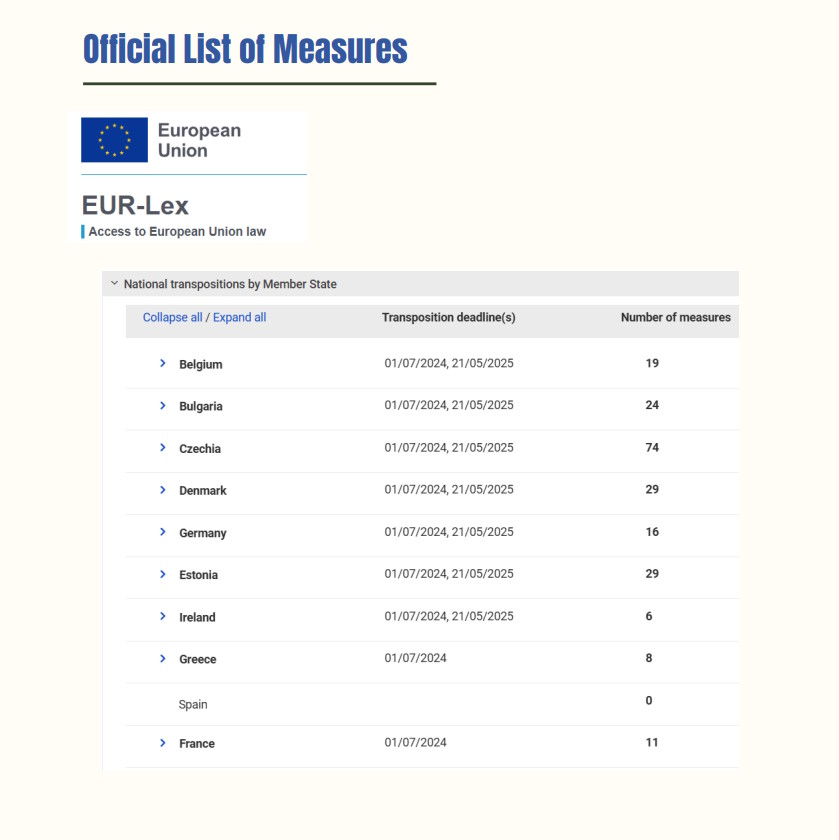
2️⃣ Information on National Transposition in EUR-Lex

  • While EUR-Lex does not confirm full transposition, it provides a list of national measures adopted for implementing RED III, presented separately for each EU country.

➡️ Source: National transposition measures communicated by the Member States

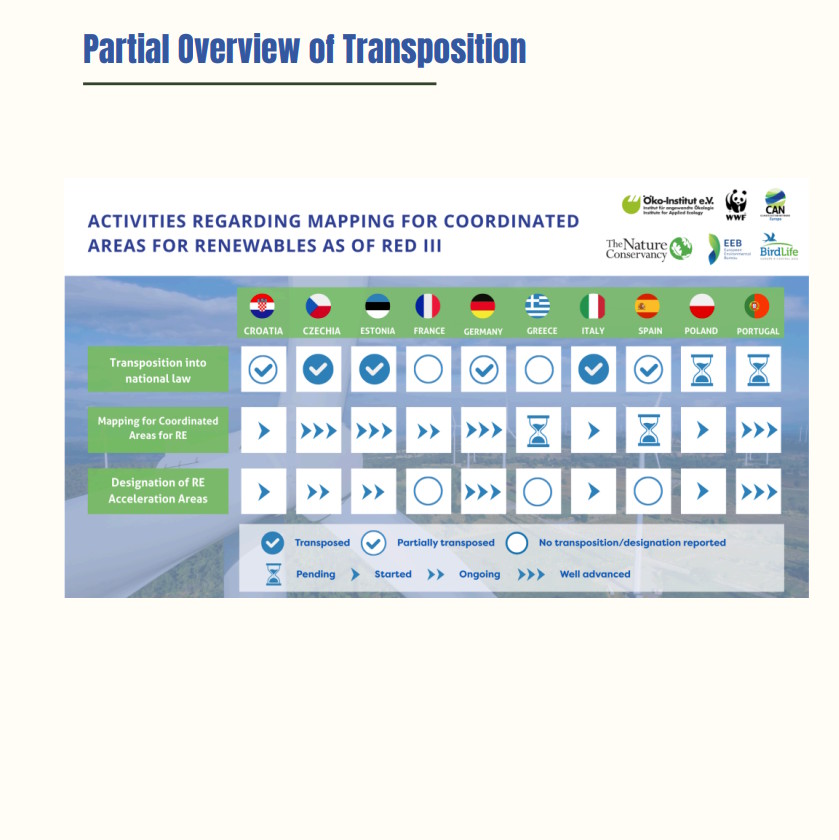
3️⃣ Overviews by Associations, Research Centres, and Institutes

  • Such overviews can be very insightful but usually do not provide full information on RED III transposition. They often cover only some Member States or some parts of the RED III transposition such as hydrogen and others.

👉 Some useful publications from associations include:

Tax incentives to promote clean technologies

Council of the European Union approved conclusions on the use of tax incentives to promote clean technologies

On 10 October, the Council of the European Union approved conclusions on the use of tax incentives to promote clean technologies and industry, supporting the implementation of the Clean Industrial Deal (CID).

➡️ The conclusions is available via this link.

The conclusions respond to the European Commission’s Recommendation of 2 July 2025, which outlined how Member States can use fiscal tools such as targeted tax credits and accelerated depreciation to boost investment in clean technologies and industrial decarbonisation.

✅ Key elements of the Council conclusions:

📌 Welcome the the Commission recommendation on tax incentives to support the Clean Industrial Deal and in light of the Clean Industrial Deal State Aid Framework.

📌 Emphasise that tax incentives should remain simple, effective, and adapted to diverse national tax systems.

📌 Highlight the importance of flexibility and Member State discretion in designing and applying incentives, given budgetary realities.

📌 Encourage evaluation and exchange of best practices across Member States to ensure effective implementation.

☑️ Why this matters:

Tax incentives can become a cornerstone of Europe’s industrial transformation, helping to:

  • Stimulate private investment in decarbonisation and clean manufacturing;
  • Improve cash flow for businesses investing in energy efficiency and renewables;
  • Strengthen the EU’s industrial base while supporting the 2050 climate neutrality goal.

By aligning tax policy with the Clean Industrial Deal and State aid rules, the EU is laying the groundwork for a coherent fiscal framework that empowers industries to lead the clean transition cost-effectively and competitively.

World Hydrogen Week

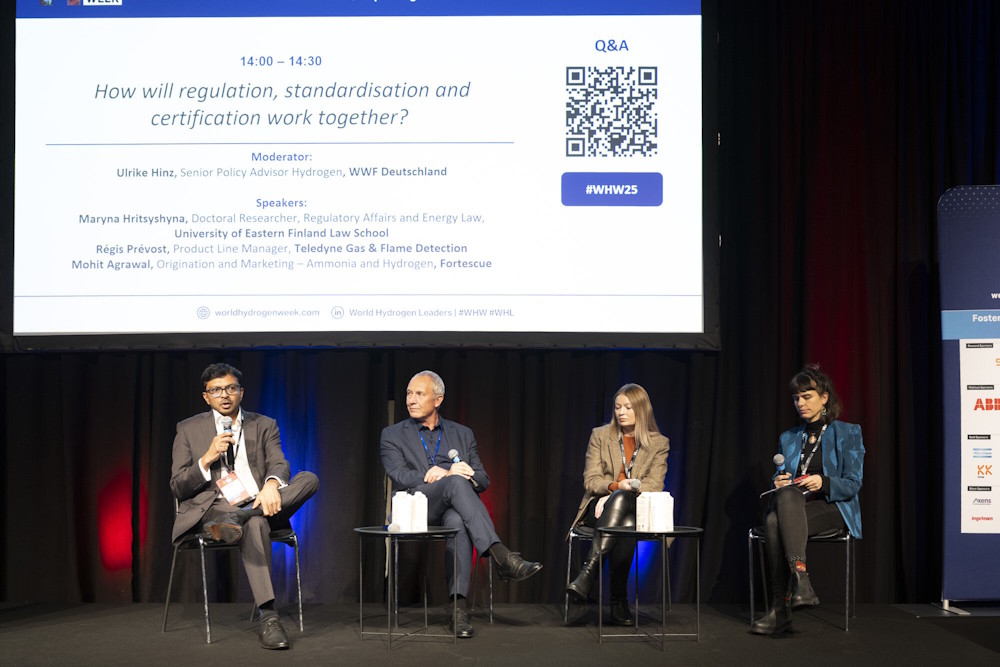
How will regulation, standardisation, and certification work together?

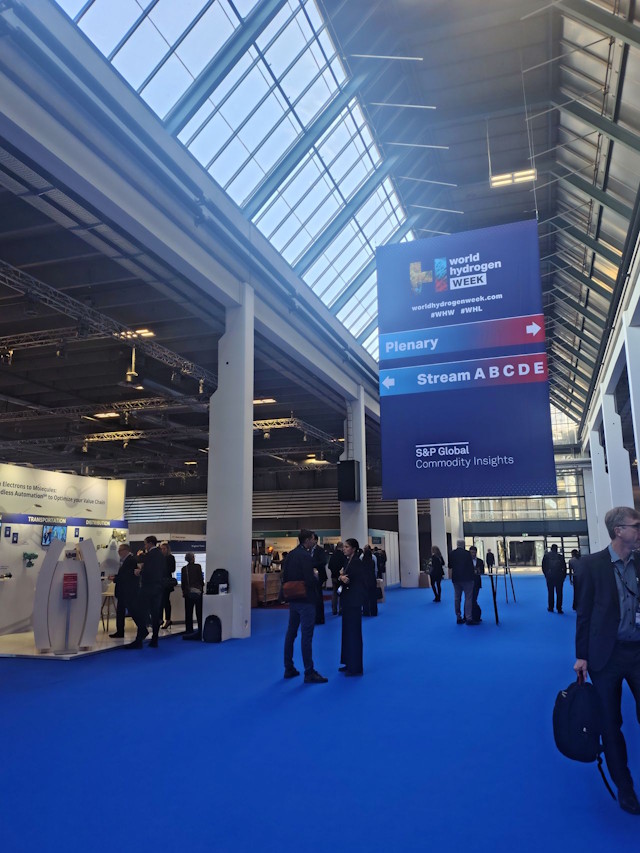
This question we discussed 09.10.2025 during the World Hydrogen Week in Copenhagen, organised by World Hydrogen Leaders.

Under the chair of Kim Talus and the moderation of Ulrike Hinz, together with Régis Prévost and Mohit Agrawal, we explored how standards and regulation interact in the production of hydrogen and hydrogen derivatives.

This topic is also part of my ongoing research at the University of Eastern Finland. Building on my previous studies, I shared several key points during the discussion:

📌 Different purposes: Regulations aim primarily at achieving greenhouse gas (GHG) emission reduction targets, while standards focus on ensuring safety and technical compatibility.

📌 Different approaches to blending: Regulations allow flexibility through book & claim or mass balance systems, whereas standards typically apply only to physical blending.

📌 Different consequences for non-compliance: Under regulatory frameworks, penalties or GHG payments may apply, while under technical standards, non-compliance simply means the fuel cannot be used.

It was a truly insightful exchange on how these frameworks can and must align to support the development of a global hydrogen economy.

Public consultation on CO2 markets and infrastructure in the EU

Public consultation on CO2 markets and infrastructure

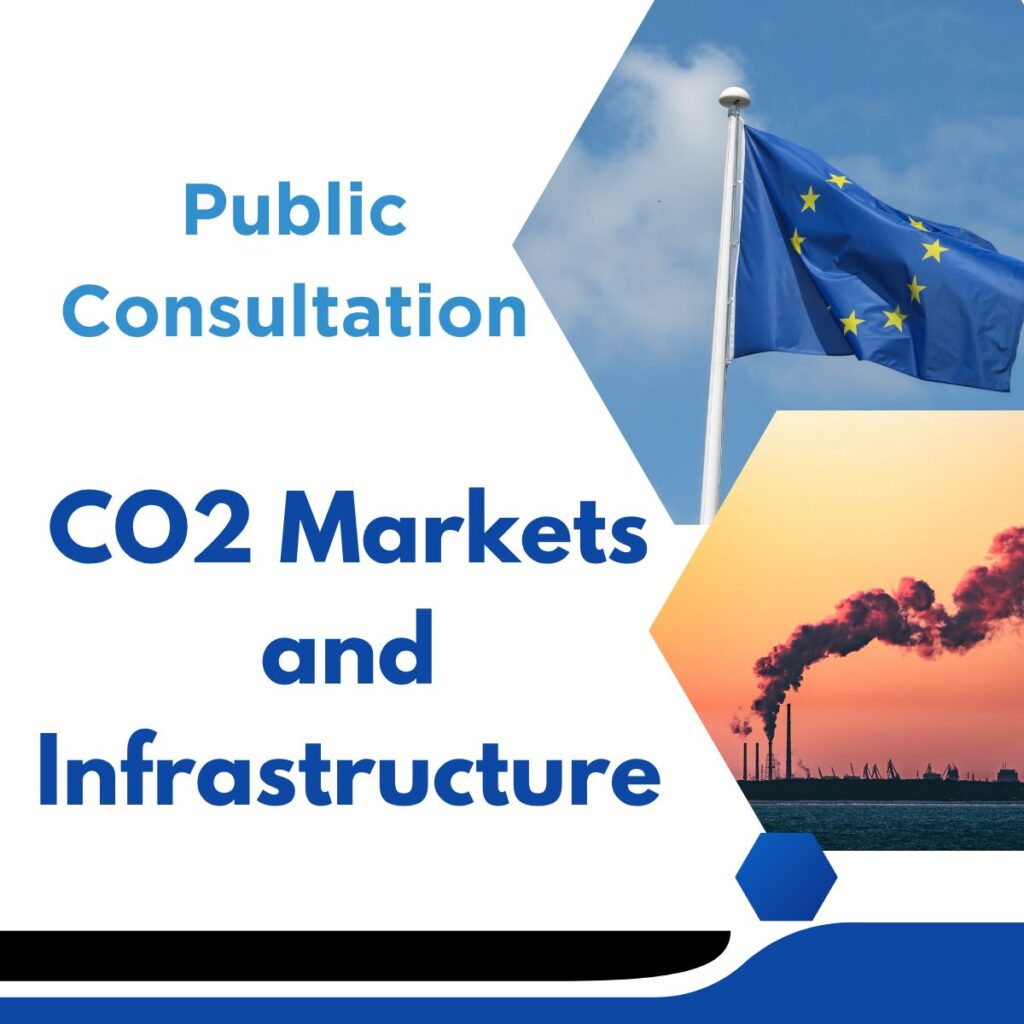
On 6 October, the European Commission launched an open public consultation on upcoming legislation and impact assessment for CO2 markets and infrastructure.

To meet the EU’s climate neutrality target by 2050, industrial carbon management (ICM) will play a crucial role alongside renewable energy and energy efficiency. Building on the Industrial Carbon Management Strategy, adopted in February 2024, the European Commission has now launched a public consultation on an upcoming legislative initiative for CO2 markets and infrastructure.

🗓️ The consultation is open until 9 January 2026.

➡️ Participate before 9 January 2026: Legislative initiative on CO2 transportation infrastructure and markets

ICM is essential to address hard-to-abate industrial emissions and to maintain a competitive, decarbonised industrial base in the EU. However, the CO2 value chain is still in its early stages. Limited infrastructure, regulatory fragmentation, and investment risks are slowing progress.

The upcoming legislative proposal aims to create a well-functioning, competitive, and integrated EU CO2 market, ensuring that captured CO2 can be safely and efficiently transported, stored, or utilised across borders.

✅ Key topics covered in the consultation include:

📌 Regulatory framework design, ensuring investor confidence, flexibility, and long-term predictability.

📌 Cross-border CO2 transport, removing barriers linked to international treaties and aligning with neighboring countries.

📌 Infrastructure planning and permitting, improving coherence and speeding up authorisations under TEN-E, NZIA, and the CCS Directive.

📌 Market access and third-party rules – defining access rights, financing models, and governance structures for CO2 networks.

📌 CO2 quality standards, supporting the development of common European standards to enable interoperability and avoid market fragmentation.

This initiative is expected to become a cornerstone of the EU’s Clean Industrial Deal, providing the regulatory and financial foundations for scaling up industrial carbon management technologies.

EU ETS II Pricing Scenarios

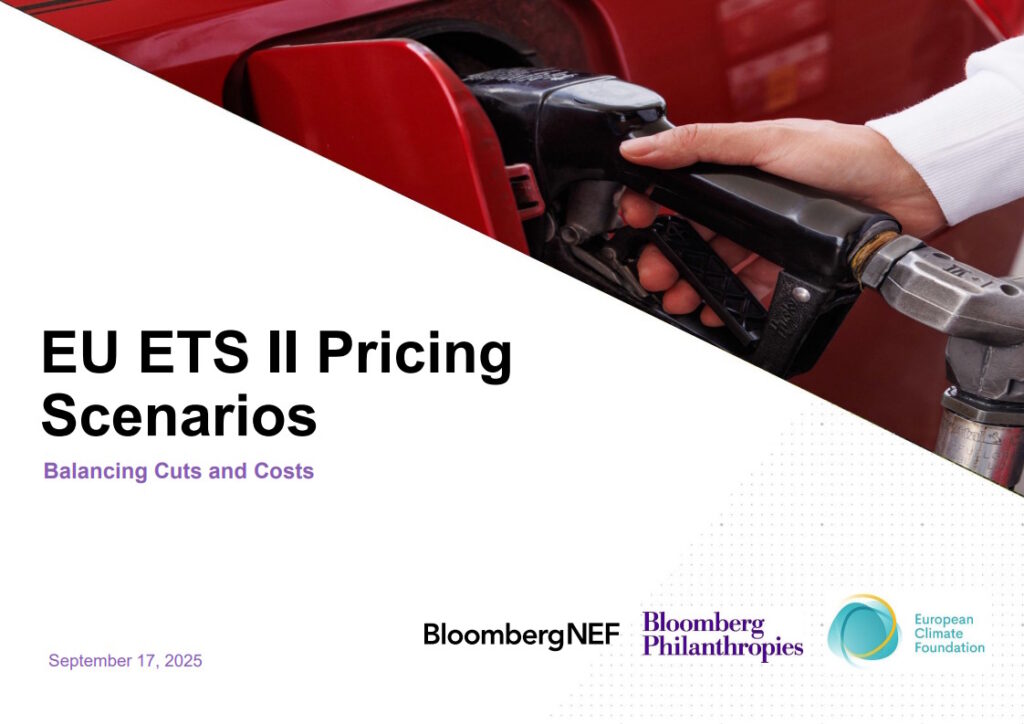
September 17, 2025 BloombergNEF published its Report: EU ETS II Pricing Scenarios

As the EU prepares to launch its new carbon market for road transport and buildings (EU ETS II) in 2027, the discussion about its social and political sustainability is gaining momentum.

In June 2025, sixteen EU Member States voiced concern that high carbon prices could impose heavy costs on households and businesses – risking a public backlash despite broad support for climate goals.

BloombergNEF’s new analysis explores what a “carbon price sweet spot” could look like — one that balances affordability for consumers with effective emissions reduction.

✅ Key insights:

📌 Under its current design, EU ETS II could see prices as high as €122/tCO₂ in 2030, the highest globally, cutting emissions by 40% (vs. 2005) but raising fuel prices by up to one-third.

📌 Flexible market design could help stabilize prices around €78/tCO₂, with limited impact on emission targets.

📌 Recycling 50% of ETS II revenues into electrification subsidies could lower average prices to €67/tCO₂.

📌 Complementary policies, such as stricter vehicle and building efficiency standards, could further ease pressure, keeping prices around €86/tCO₂.

📌 A combined approach could reduce average prices to €45/tCO₂, cutting social costs by 55% while maintaining climate ambition.

In parallel, the European Commission highlights the broader benefits of carbon pricing:

✅ Cutting emissions by 50% since ETS launch 20 years ago.

✅ Funding innovation through the Innovation Fund and Modernisation Fund.

✅ Supporting over €200 billion in clean investments.

✅ Mobilising €86.7 billion via the Social Climate Fund (2026–2032) to protect vulnerable households.

☑️ Main Conclusion: The success of ETS II will depend on finding this balance, ensuring climate ambition remains credible while keeping the transition socially fair and politically resilient.

➡️ Source: 5 things you should know about carbon pricing

Briefing Delegated act on low-carbon hydrogen

European Parliamentary Research Service. Briefing: Delegated act on low-carbon hydrogen

I dove into the European Parliamentary Research Service Briefing on the “Delegated Act on Low-carbon Hydrogen”.

✅ Key takeaways:

📌 The delegated act, adopted by the Commission on 8 July 2025, is the final missing piece of the EU’s hydrogen regulatory framework. Its was adopted by the Commission on 8 July 2025, pending scrutiny by the Parliament and the Council until 10 November.

📌 The delegated act does not create financial incentives or targets but provides much-needed regulatory clarity on what qualifies as low-carbon hydrogen, supporting cross-border trade, investment, and a future EU hydrogen market.

📌 Electrolysis via the grid is only eligible in countries with very low grid emissions (currently: France, Sweden, Finland). Elsewhere, PPAs will play a key role.

📌 Nuclear power: The delegated act does not include a specific methodology for producing low-carbon hydrogen from nuclear power plants. The Commission plans to launch a public consultation on a draft methodology for this production method in 2026.

📌 Blue hydrogen faces stricter requirements. LNG-related emissions must be calculated using a methane-intensity methodology by 2027/28, raising uncertainty.

📌 Production costs: CCS-based hydrogen remains cheaper in the near term, while electrolytic hydrogen is still challenged by high EU power prices.

📌 Imports: The same low-carbon criteria apply to non-EU producers; a region-specific GHG methodology could follow by 2028.

⚠️ Parliament had already stressed in 2021 that low-carbon hydrogen must be seen as a bridging technology in the short and medium term, but also called for a clear distinction from renewable hydrogen.

The upcoming months will show whether Parliament and Council accept this final building block of EU hydrogen regulation or send the Commission back to the drawing board.

➡️ Source: European Parliamentary Research Service. Briefing: Delegated act on low-carbon hydrogen

Hydrogen Import & the European Hydrogen Bank

This weekend I dove into the report “Assistance in the development of an auction design and necessary pre-conditions for a European import auction for renewable hydrogen under the European Hydrogen Bank.”

The EHB is based on domestic and international pillars. While the domestic pillar for hydrogen production in the EU has already reached its third auction, the international pillar for hydrogen import is still under development. This report provides the groundwork for shaping a European import auction for renewable hydrogen and its derivatives.

My Key Takeaways:

1️⃣ Strategic recommendations:

  • The report outlines how to design RFNBO import auctions at EU level, based on hydrogen market analysis and lessons from existing/planned auction schemes in Europe and beyond.

2️⃣ Two case studies analyzed:

📌 Pipeline-based imports (pure hydrogen):

  • Can secure supply/offtake contracts between EU buyers and third-country producers in neighbouring regions.
  • Encourages pipeline investments.
  • Works via demand-side auction models to bridge funding gaps for RFNBO purchases, without assuming counterparty risks.

📌 Ship-based imports (derivatives: ammonia, methanol, eSAF):

  • Helps EU offtakers secure RFNBO volumes for hard-to-abate sectors and quota compliance.
  • Contributes to scaling up the global RFNBO market.

3️⃣ Contract terms

  • To scale import volumes effectively, the maturity transformation between purchase and sales agreements should be limited, with hydrogen sales agreements (HSAs) running for 2–5 years.

4️⃣ Auction design priorities

Import auctions should:

  • Bridge the cost gap between RFNBO production abroad and EU willingness to pay.
  • Accelerate market ramp-up.
  • Send a strong demand signal to international producers.
  • Strengthen cooperation among EU Member States.

💡 This report is an important step toward designing the EU’s approach for international hydrogen imports as a key enabler for the energy transition.

➡️ Source: European Commission: Directorate-General for Energy, Fraunhofer ISI and Guidehouse Germany GmbH, Assistance in the development of an auction design and necessary pre-conditions for a European import auction for renewable hydrogen under the European Hydrogen Bank – Final report, Publications Office of the European Union, 2025, https://data.europa.eu/doi/10.2833/9380870