Hydrogen from Peru to the EU

In this episode of Clean Energy Talks video blog with Roxana Serpa, Vice President of H2 Peru Association, we talk about hydrogen import from Peru to the EU:

I. Introduction of H2 Peru Association

The work of H2 Peru and its main activities in the hydrogen sector.

II. Renewable Energy Potential in Peru

What is the estimated renewable energy potential in Peru that could be used for green hydrogen production?

III. Regulatory framework

What recent developments in Peru’s regulatory framework could support the export of hydrogen to the EU?

IV. Transporting Hydrogen to Europe

What are the most viable options for transporting hydrogen from Peru to the EU?

  • Green ammonia
  • Sustainable aviation fuels (SAF)
  • Renewable methanol (for maritime transport).

V. Hydrogen Production Outlook

What opportunities exist for launching hydrogen production projects in Peru in the near to mid-term?

VI. Hydrogen Hubs

What is meant by a hydrogen hub, and what plans or locations are being considered for such hubs in Peru?

VII. Certification

How is Peru preparing to meet the certification requirements for hydrogen exports to the EU?

➑️ Reach out here on LinkedIn or contact me for more details on the video topic.
Carbon Border Adjustment Mechanism simplifications

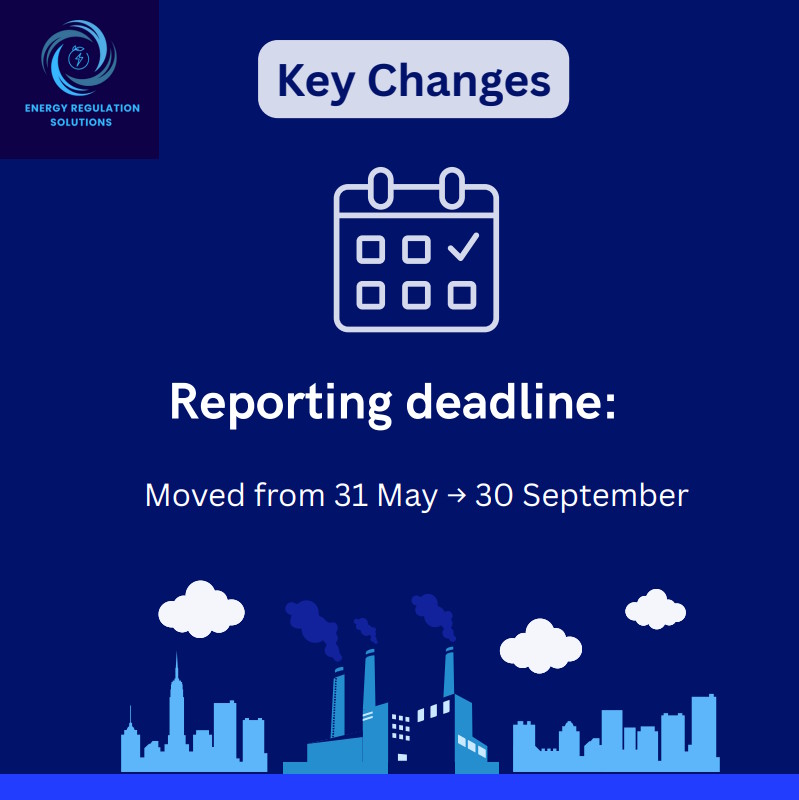
On 10 September, the European Parliament adopted simplifications to the Carbon Border Adjustment Mechanism (CBAM).

βœ… Key Points

πŸ“Œ Purpose: Reduce administrative burden, especially for SMEs and occasional importers.

πŸ“Œ Context: Part of the β€œOmnibus I” simplification package (presented on 26 February 2025), covering sustainability and investment legislation.

πŸ“Œ New de minimis threshold:

  • Imports up to 50 tonnes per importer per year exempted from CBAM.
  • Replaces the earlier exemption for goods of negligible value.
  • Exempts ~90% of importers (mainly SMEs and individuals).
  • ⚠️ Not applicable to hydrogen and electricity.

πŸ“Œ Climate ambition unchanged:

  • 99% of emissions from CBAM goods (iron, steel, aluminium, cement, fertilisers) still covered.
  • Strengthened anti-abuse provisions to prevent circumvention.

πŸ“Œ Simplifications for covered imports:

  • Streamlined authorisation process.
  • Simplified emissions calculation rules.
  • Adjusted verification rules.
  • Clearer financial liability for authorised CBAM declarants.

β˜‘οΈ What’s next:

The Council must now officially endorse the text. It will enter into force three days after publication in the EU Official Journal.

πŸ“„ Adopted text: Link.

➑️ Source: CBAM: Parliament adopts simplifications to the EU carbon leakage instrument

AI & Energy

Artificial Intelligence and digitalisation for Energy

πŸ“’ New EU Initiative on AI & Energy

The European Commission has launched the public consultations regarding the initiative “Strategic Roadmap for digitalisation and AI in the energy sector”.

πŸ—“ Feedback period: 05 August 2025 – 05 November 2025

πŸ’¬ Feedback can be provided here

🎯 Goals of the Strategic Roadmap:

πŸ“Œ To exploite of synergies with the Affordable Energy Action Plan, the Energy Efficiency Roadmap, the Grids Package, the Citizens Energy Package, the Electrification Action Plan and the Heating and Cooling Strategy.

πŸ“Œ To complement the upcoming Apply AI Strategy, the Data Union Strategy, and the Cloud and AI Development Act.

πŸ“Œ To leverage the potential of digital and AI technologies for the energy system, while mitigating the associated risks and enable the decarbonisation and competitiveness of the EU economy.

β˜‘οΈ What does the initiative aim to achieve?

πŸ“Œ Accelerate deployment

  • Enable access to energy data to support innovative services
  • Help develop and test AI tools for the energy sector
  • Advance smart grids and digital twins

πŸ“Œ Boost innovation & research

  • Close the innovation gap
  • Strengthen EU technological sovereignty
  • Support clean energy R&D using AI

πŸ“Œ Integrate data centers sustainably

  • Improve planning and energy efficiency
  • Minimise grid strain and local impact

πŸ“Œ Enhance transparency & risk oversight

  • Share best practices for AI in critical infrastructure
  • Provide guidance on high-risk AI systems
  • Use AI to improve energy asset security

πŸ“Œ Create a robust governance framework

  • Foster collaboration across sectors and Member States
  • Engage with international partners and stakeholders

βœ… What next?

  • Targeted consultations and workshops
  • Discussions with Member States and expert groups
  • A high-level stakeholder event in Q3 2025

➑️ Source: Artificial intelligence and digitalisation for energy – a roadmap

EU Hydrogen Auction

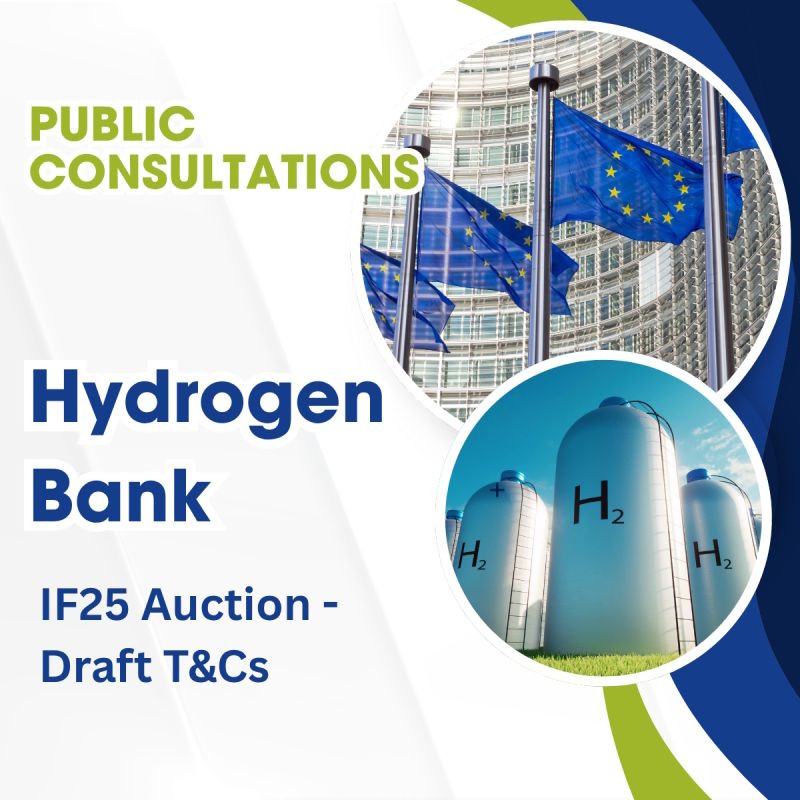
Hydrogen Bank. Innovation Fund IF25 Hydrogen Auction. Draft Terms and Conditions

πŸ“’ New EU Hydrogen Auction – Draft Terms & Conditions Open for Feedback

The European Commission has published the draft Terms & Conditions (T&Cs) for the IF25 Hydrogen Auction, the third call under the European Hydrogen Bank, set to launch by the end of 2025.

β˜‘οΈ What’s new in this round?

Proposed Budget: EUR 1.1 billion, split across three topics:

  • Topic 1: EUR 400 million – RFNBO and/or electrolytic low-carbon hydrogen
  • Topic 2: EUR 400 million – RFNBO hydrogen only
  • Topic 3: EUR 200 million – RFNBO and/or electrolytic low-carbon hydrogen for maritime applications

β˜‘οΈ Key Updates:

πŸ“Œ Broader Scope: Support extended to include electrolytic low-carbon hydrogen alongside RFNBOs

πŸ“Œ Electrolyser Resilience: Aligned with the NZIA Implementing Act (C(2025) 2900), simplifying some earlier resilience criteria

πŸ“Œ Environmental Screening: New evaluation against Do-No-Significant-Harm (DNSH) principles

πŸ“Œ No Double Funding: Projects already funded under the Innovation Fund or other EU sources are not eligible

πŸ“Œ Electricity Sourcing Plan: Projects must show a credible strategy for sourcing 100% of required electricity. For low-carbon hydrogen, at least 60% of non-renewable input must meet the 70% emissions savings threshold defined in Directive (EU) 2024/1788.

➑️ What’s next?

  • Stakeholder feedback will be gathered through the consultation
  • Feedback will be incorporated into the final design of the auction
  • The final version of T&Cs will be published with the auction launch in Q4 2025

πŸ—“ Feedback deadline: 14 September 2025

πŸ“„ Draft Terms & Conditions available here: Innovation Fund IF25 Hydrogen Auction. Draft Terms and Conditions

πŸ’¬ Provide feedback here: IF25 Auction – Draft T&Cs public consultation

Revisions to CBAM regulation

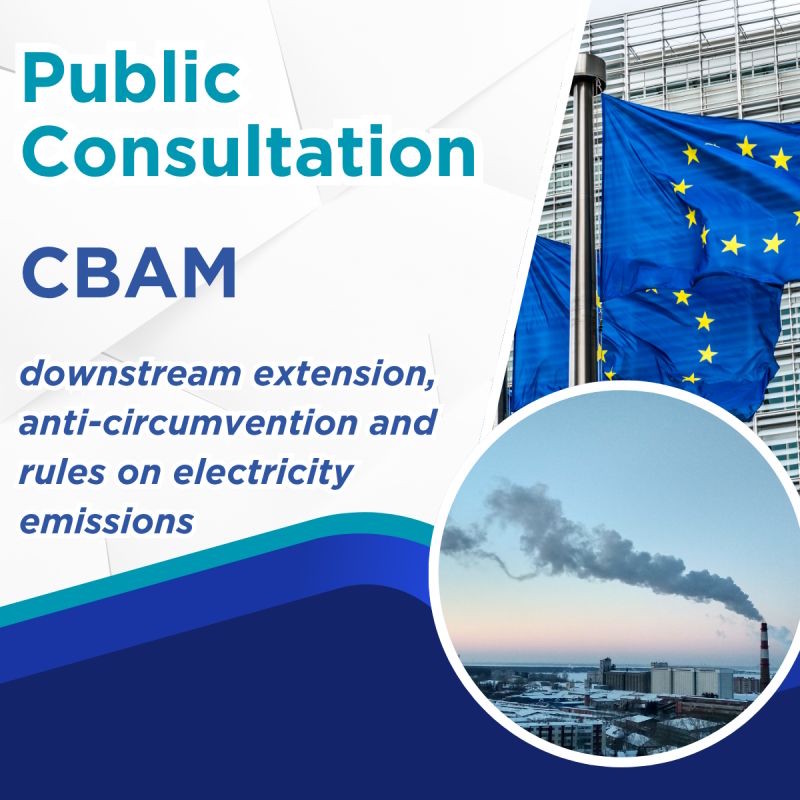
CBAM: downstream extensions, anti-circumvention and rules on electricity emissions

For general information about CBAM please visit General Introduction to CBAM.

This July, the European Commission launched a public consultation on proposed revisions to CBAM. The key aims:

  • Extend CBAM to certain downstream products – to reduce the risk of carbon leakage when production shifts outside the EU or buyers turn to non-EU suppliers.
  • Strengthen anti-circumvention measures – to close gaps and ensure the financial obligations are not avoided without valid reasons.
  • Clarify electricity-related rules – particularly the use of default values and criteria for using actual electricity emissions.

πŸ“… Feedback period – 01 July 2025 – 26 August 2025

βœ… Main Objectives of Consultation

The consultation explores:

πŸ“Œ Inclusion of selected downstream goods based on carbon leakage risk, embedded emissions, and technical feasibility.

πŸ“Œ Options to reinforce anti-circumvention tools (e.g. more reporting requirements).

πŸ“Œ Changes to CBAM rules for electricity – from emission factor updates to clearer criteria for PPAs and grid conditions.

β˜‘οΈ What next?

  • A factual summary report will be available 8 weeks after the consultation closes, followed by a full synopsis report.

➑️ Source: Carbon Border Adjustment Mechanism (CBAM) – downstream extension, anti-circumvention and rules on electricity emissions

News on the Hydrogen and Guarantees of Origin Market

hydrogen and guarantees of origin (GO) system

The latest EU report titled “Technical assistance to monitor functioning of the guarantees of origin (GO) system” provides an in-depth look at the GOs market and its impact on renewable energy and hydrogen tracking.

βœ… Key Takeaways

πŸ“Œ The GO market has achieved a healthy level of liquidity.

πŸ“Œ While transparency has improved, price discovery remains limited. GO prices vary based on factors such as technology, region, and additionality – factors not always visible to consumers. Forecasting prices remains difficult due to elements of monopolistic competition.

πŸ“Œ More than 90% of hydropower, 50% of wind, and 30% of solar electricity production in Europe is currently tracked via GOs.

πŸ“Œ The GO system is effective in tracking renewable electricity, but further harmonization is needed to reduce the risk of misuse.

πŸ“Œ Hydrogen

  • As of the end of 2023: only 0.4% of EU hydrogen production was based on water electrolysis (45 tonnes or 1.5 GWh).
  • An additional 9.2% (1,033 tonnes or 34 GWh) was produced as a green by-product (e.g., from chlor-alkali electrolysis).
  • The Hydrix index (as of January 2025) estimates green hydrogen prices in Germany at €7.80–€9.50/kg, roughly 2.5x higher than grey hydrogen (€3–€4/kg).

πŸ“Œ Hydrogen GO trading volumes

  • RFNBO certification has only been possible since December 2024.
  • Until now, certified green hydrogen has only been traded via GOs or Non-Governmental Certificates (NGCs).
  • Assuming certification, 1,500 GOs could have been issued in 2023 for hydrogen produced via electrolysis.
  • While only a few EU Member States are active in the gas GO market and even fewer support EU-wide GO trading, interest in GOs is growing:
    • Smaller projects often opt for GOs/NGCs due to lack of RFNBO compliance.
    • Larger projects (many pre-FID) are preparing for RFNBO certification to benefit from offtake obligations under the compliance market.

➑️ Source: Technical assistance to monitor functioning of the guarantees of origin (GO) system

Interaction of Certification and Standards for e-SAF Production

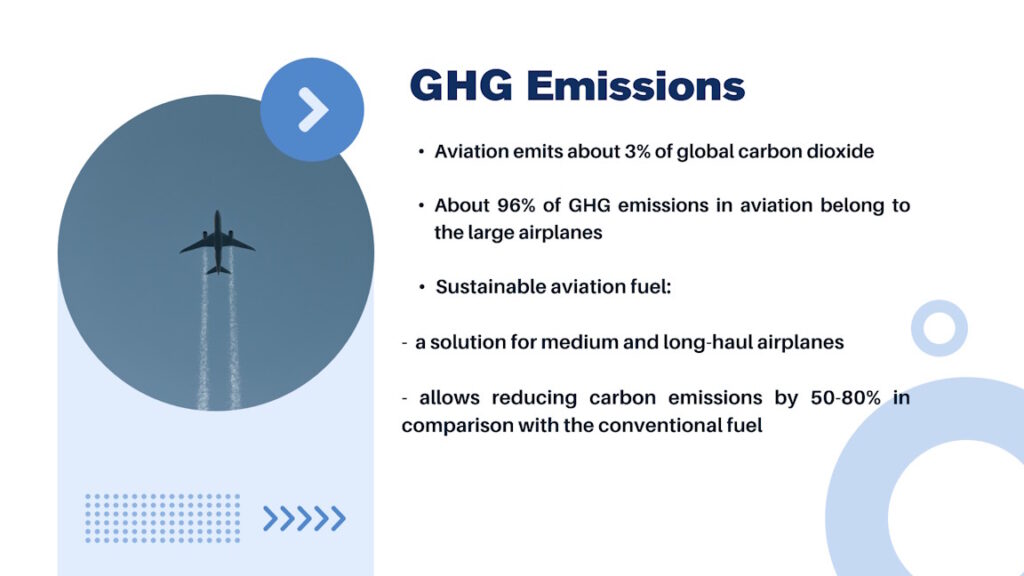
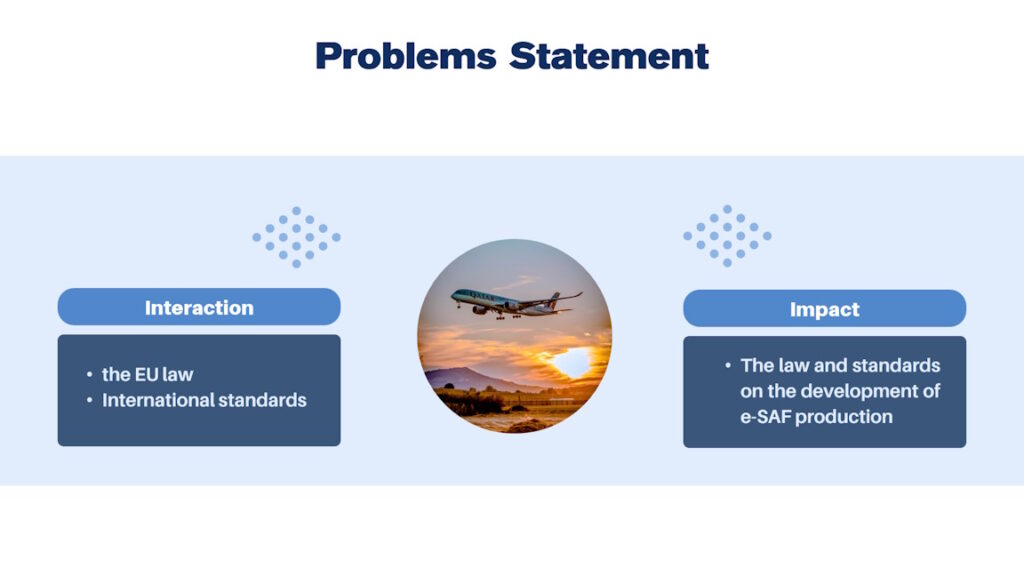
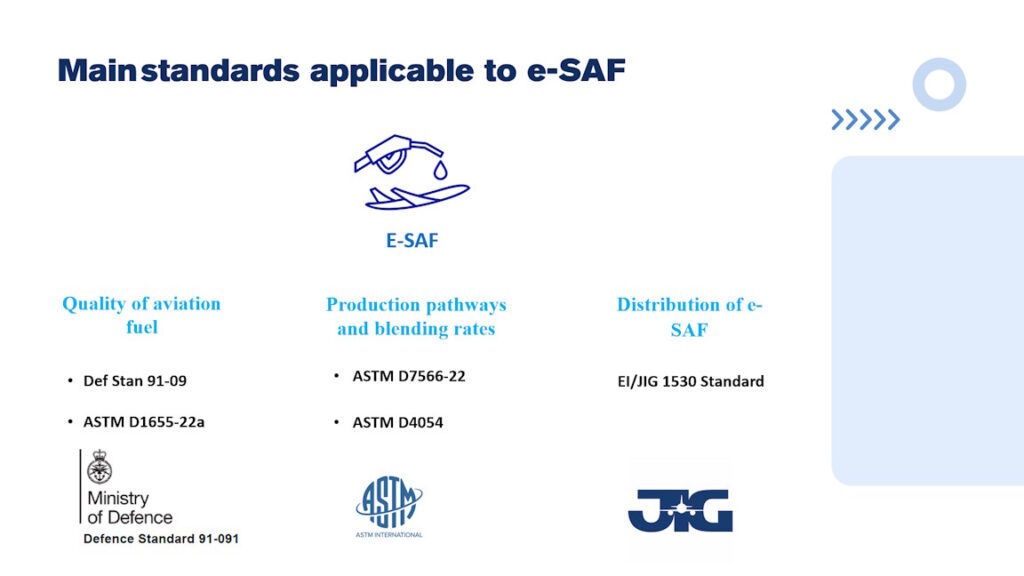
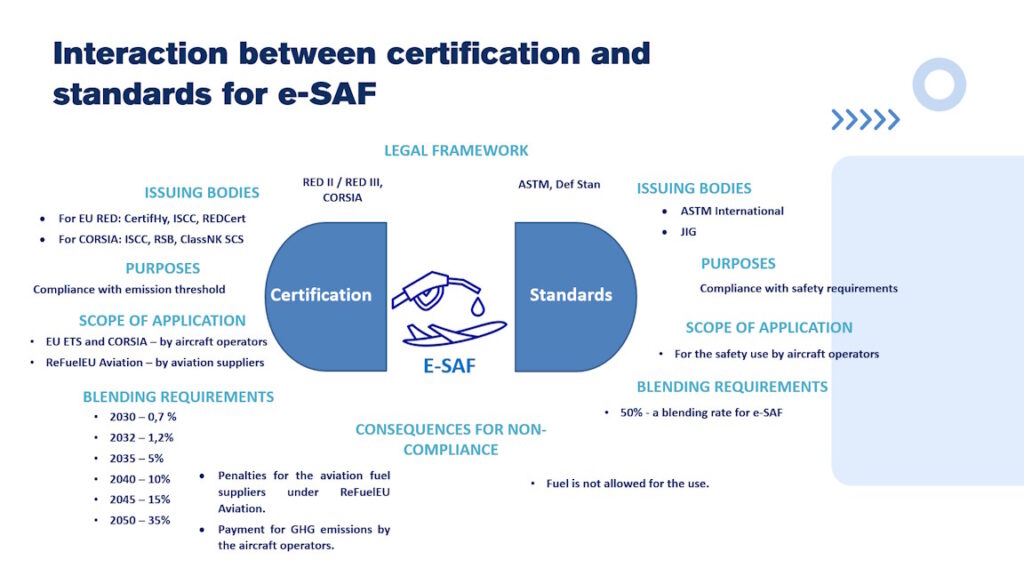
Last week, I had the opportunity to present my paper “Interaction of Certification and Standards for e-SAF Production” at a conference hosted by the Florence School of Regulation. This research is part of my broader PhD work on the interaction between law and technology in the regulation of Power-to-X (PtX) technologies.

βœ… Key Points of the Presentation:

πŸ“Œ General requirements

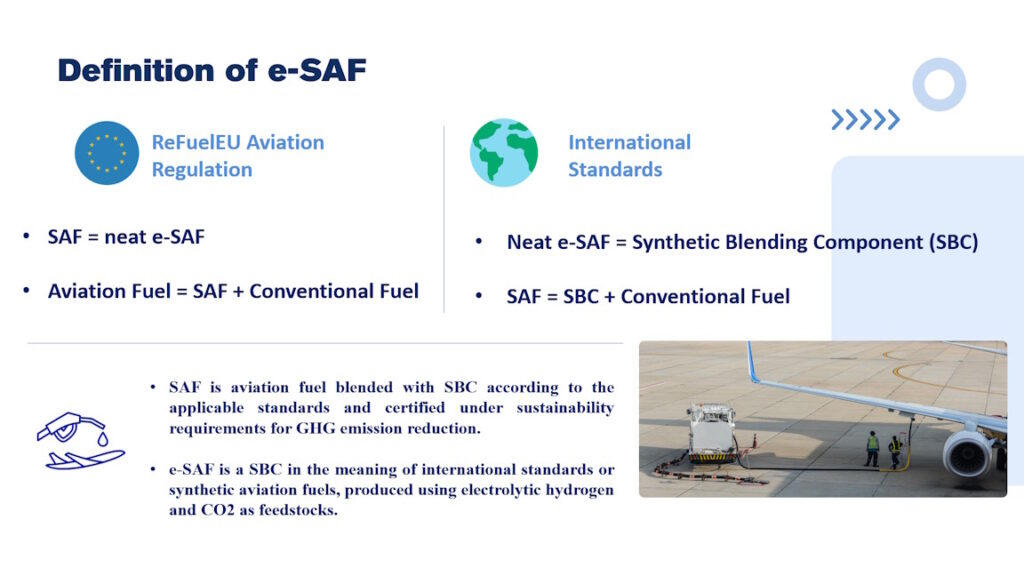
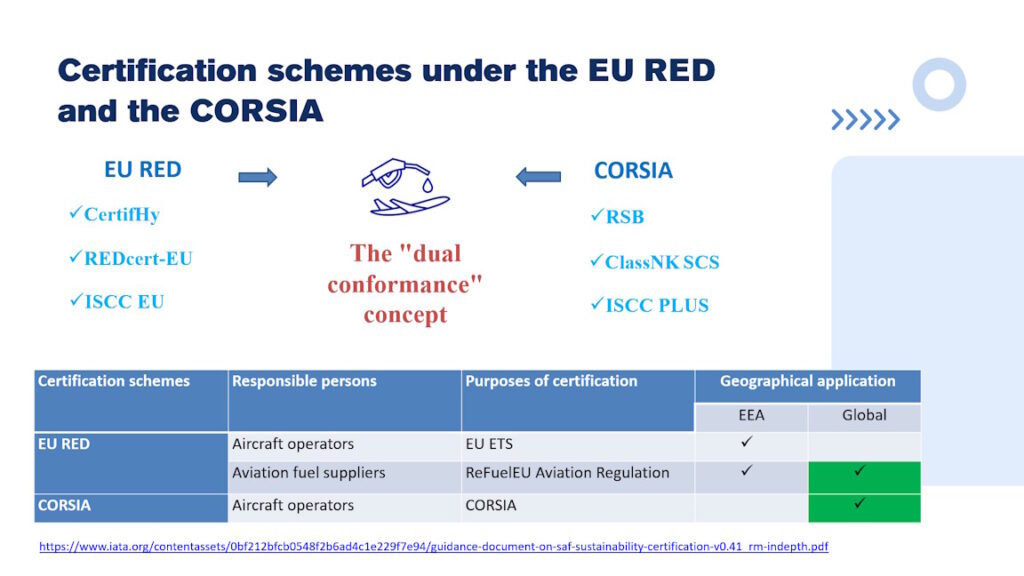
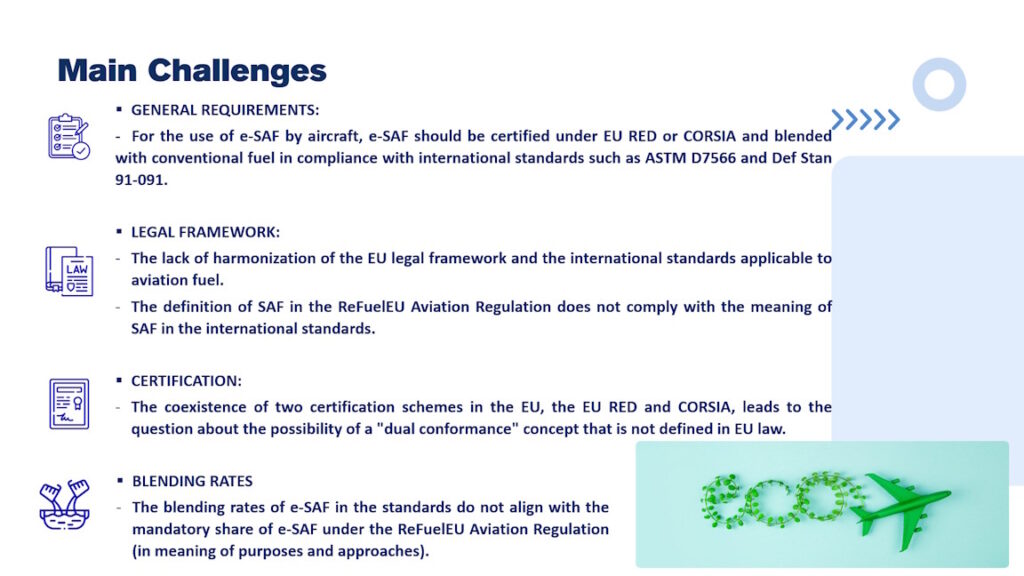
  • To be used in aviation, e-SAF must be certified under either the EU Renewable Energy Directive (RED) or the CORSIA scheme, and blended with conventional jet fuel in accordance with international standards such as ASTM D7566 and Def Stan 91-091.

πŸ“Œ Legal Framework

  • There is a lack of harmonization between the EU legal framework and international aviation fuel standards.
  • The definition of SAF in the ReFuelEU Aviation Regulation does not align with the definition used in international standards.

πŸ“Œ Certification

  • Particular attention should be given to the concept of β€œdual conformance” β€” i.e., a single batch of SAF being compliant with two different certification schemes (such as EU RED and CORSIA).
  • The coexistence of two certification schemes – EU RED and CORSIA within the EU raises questions about the feasibility of such dual conformance, a concept that is not yet defined under EU law.

β˜‘οΈ Conclusion

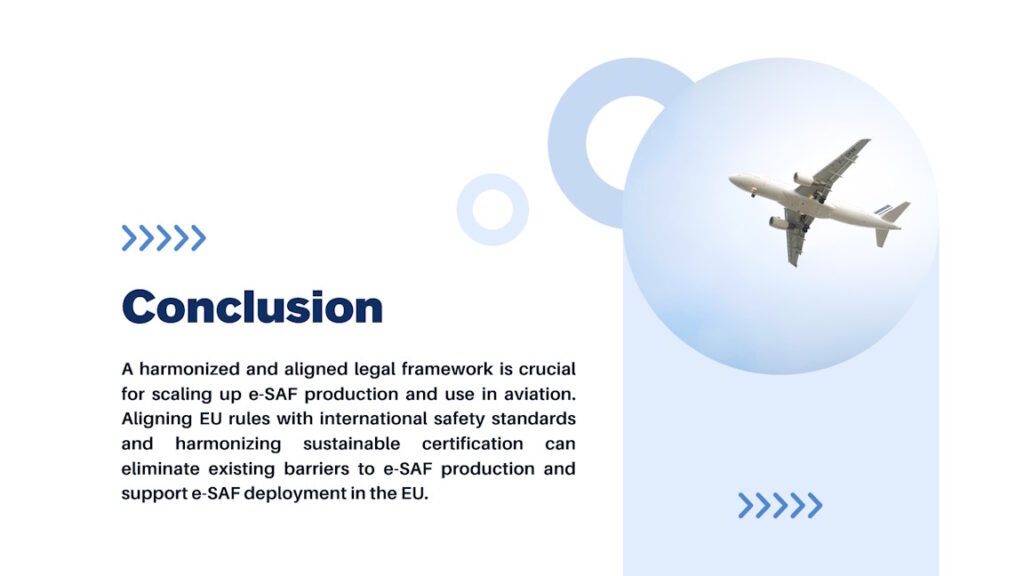
  • A harmonized and coherent legal framework is essential for scaling up e-SAF production and deployment in aviation.
  • Aligning EU regulations with international safety and sustainability standards will help remove existing regulatory barriers and support the widespread adoption of e-SAF across the EU.

Association of Issuing Bodies Annual Report 2024

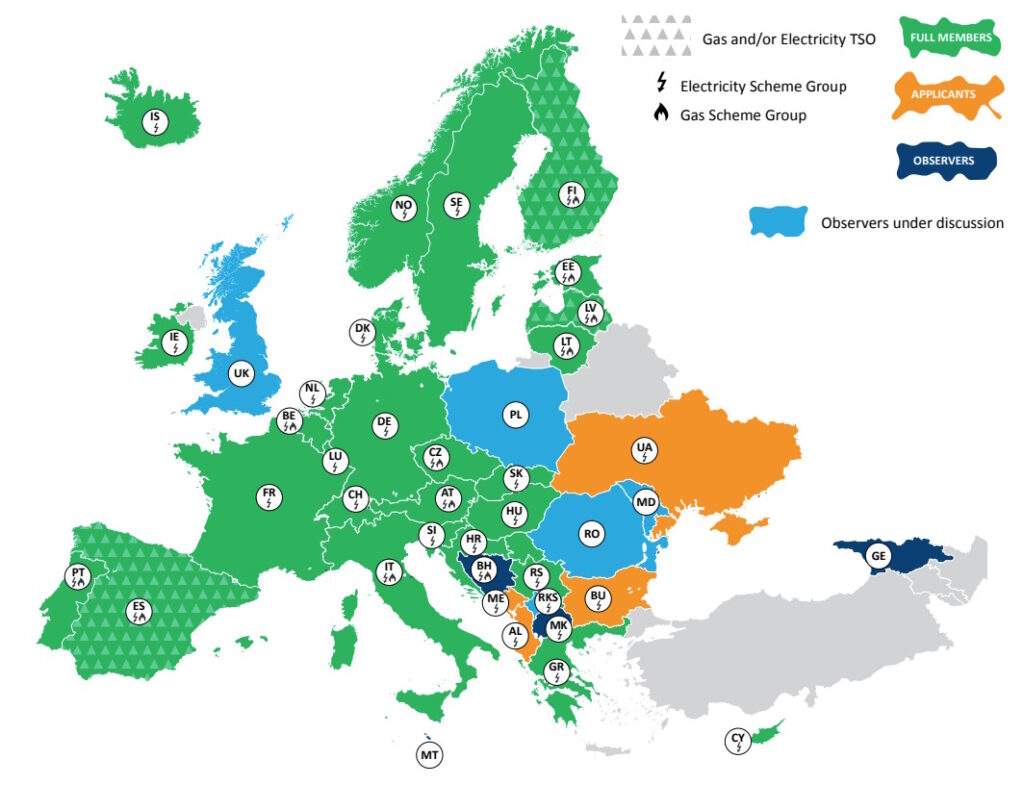
Association of Issuing Bodies members, applicants and observers

Figure: Association of Issuing Bodies members, applicants and observers

Source: Association of Issuing Bodies, Annual Report 2024

πŸ“’ The Association of Issuing Bodies (AIB) Annual Report 2024 is out!

βœ… Key highlights from 2024:

πŸ“Œ Membership Expansion

  • By the end of 2024, the AIB had 39 members from 30 European countries, covering the EU, EEA, and Energy Community.

πŸ“Œ Electricity Guarantees of Origin

  • 30 members actively participated in the European Energy Certificate System (EECS) Electricity Scheme, issuing and transferring GOs via the AIB Hub.
  • New participants preparing for the scheme:
    • NEURC (Ukraine)
    • ERE (Albania)
    • SEDA (Bulgaria)
  • New observers:
    • ERO (Kosovo)
    • MEMO (North Macedonia)

πŸ“Œ Gas Guarantees of Origin

  • 9 members were active in the EECS Gas Scheme, including:
    • Gasgrid (Finland)
    • Enagas (Spain)
    • Brugel (Belgium)
    • E-Control (Austria)
    • GSE (Italy)
    • REN (Portugal)
    • OTE (Czech Republic)
    • Elering (Estonia)
    • Conexus (Latvia)
  • 2024 was a milestone year for the Gas Scheme Group, with six new members joining.

πŸ“Œ Hydrogen

In 2024, the following countries registered EECS hydrogen production devices:

  • Austria: 2 devices (10 MW total capacity)
  • Finland: 1 device
  • Spain: 2 devices (23.8 MW total capacity)

It’s great to see steady progress across electricity, gas, and now hydrogen, contributing to a more integrated and transparent GO market across Europe.

➑️ The AIB Annual Report is available via this link: ANNUAL REPORT 2024

2nd Florence Aviation Regulation Conference

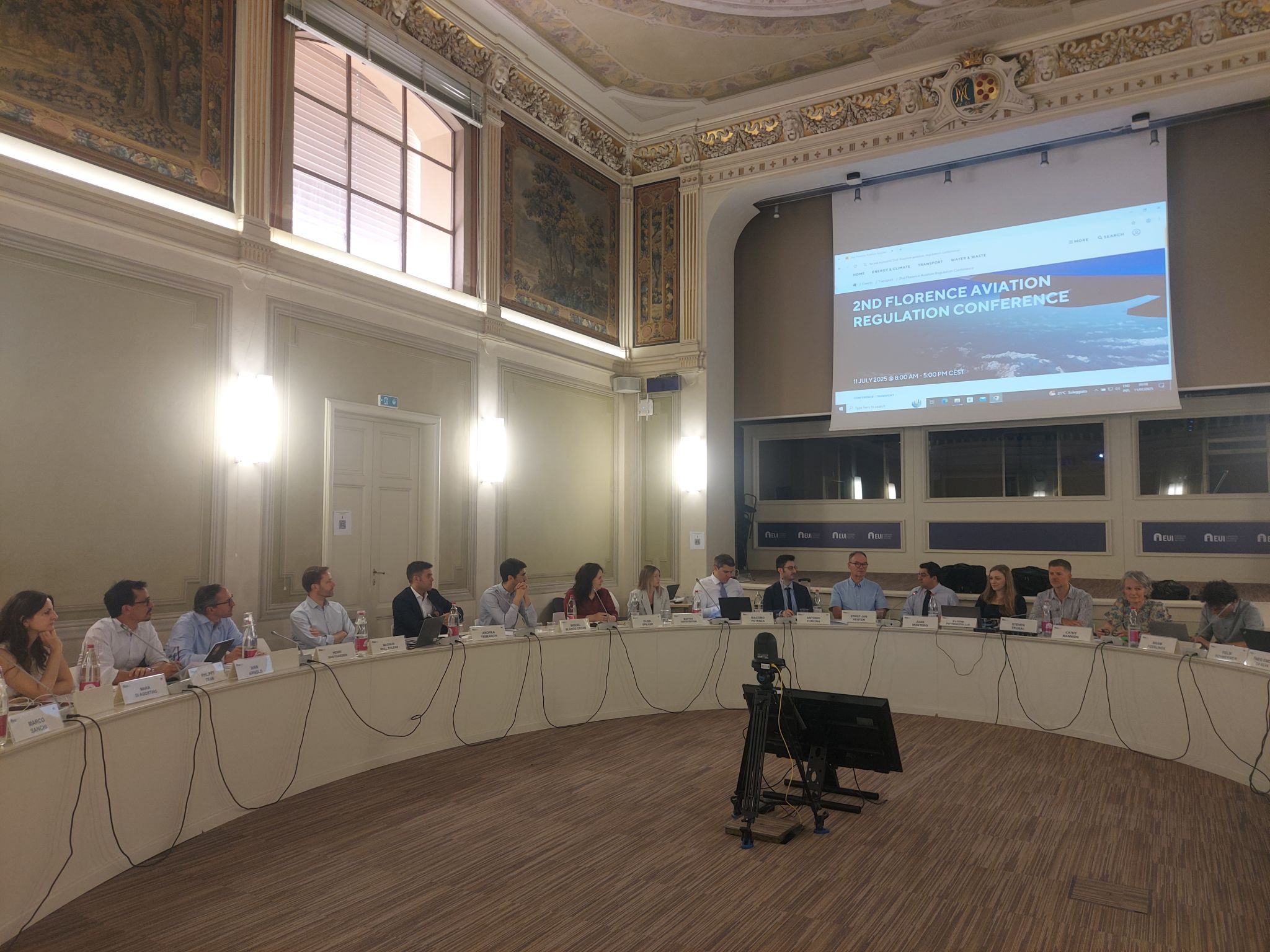
2nd Florence Aviation Regulation Conference, Florence School of Regulation

Just returned from the 2nd Florence Aviation Regulation Conference, co-organized by the International Institute of Air and Space Law (IIASL), Leiden University and the Florence School of Regulation.

It was an honor to contribute to such a high-level exchange of ideas shaping the future of aviation regulation.

I had the pleasure of presenting my paper on “Interaction of Certification and Standards for e-SAF Production”, exploring how regulatory frameworks and technical standards impact the uptake of sustainable aviation fuels in Europe.

The conference addressed a wide range of topics, including:

  • Interaction between CORSIA and the EU ETS
  • Implementation of the AI Act in aviation
  • Market incentives and social sustainability in the net-zero transition
  • Regulation of non-COβ‚‚ effects in aviation

Delegated act for Low-Carbon Fuels

EU Regulation on Low-Carbon Hydrogen and Fuels

πŸ“’ New EU Regulation on Low-Carbon Hydrogen and Fuels

On 8 July 2025, the European Commission adopted a Delegated Regulation specifying the methodology for calculating GHG emissions savings from low-carbon fuels, including low-carbon hydrogen (the Delegated Act).

βœ… What is this about?

  • The Delegated Act establishes a GHG emissions methodology for low-carbon hydrogen and fuels, as outlined in the Hydrogen and Gas Market Directive.
  • It complements existing rules on renewable hydrogen and RFNBOs, creating a complete EU regulatory framework for hydrogen certification.

β˜‘οΈ Who does it apply to?

  • The Delegated Act applies to EU and non-EU producers wishing to place hydrogen on the EU market.
  • Certification can be achieved through Voluntary Schemes β€” third-party systems already in use for renewable fuels.

πŸ“… What happens next?

  • The Delegated Act will now be reviewed by the European Parliament and Council, who have 2 months to accept or reject it.
  • This scrutiny period may be extended by an additional 2 months, if requested.
  • If approved, the Delegated Act will enter into force 20 days after its publication in the Official Journal of the EU.

πŸ“„ Delegated Act: Commission delegated regulation (EU) specifying a methodology for assessing greenhouse gas emissions savings from low-carbon fuels

➑️ Source: Clarity to hydrogen sector with new EU methodology for low-carbon hydrogen and fuels