The Energy Transition Investment Trends Report
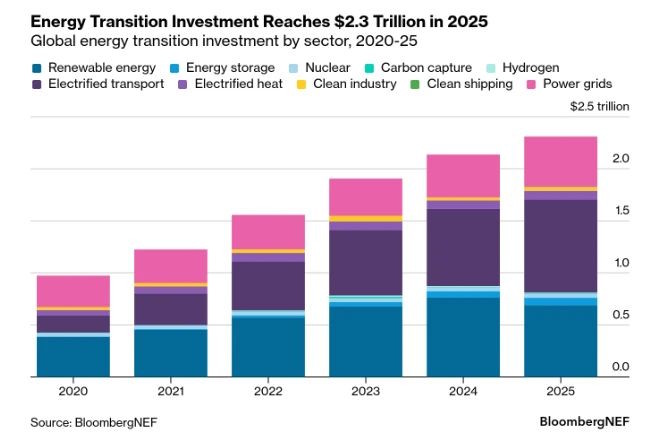
BloombergNEF. Global energy transition investment by sector, 2020-2025

Figure: Global energy transition investment by sector, 2020-2025

Source: BloombergNEF

The Energy Transition Investment Trends (ETIT) Report, released by BloombergNEF (BNEF), finds that global investment in the energy transition reached a record $2.3 trillion in 2025, up 8% from the prior year.

✅ Main Takeaways:

📌 The largest investment drivers were:

  • electrified transport – $893 billion;
  • renewable energy – $690 billion;
  • grid investment – $483 billion.

📌 Renewable energy investment fell 9.5% year-on-year due to changing power market regulations in China.

📌 Hydrogen ($7.3 billon) and nuclear ($36 billion) saw investment drop in 2025. All other sectors grew: energy storage ($71 billion), CCS ($6.6 billion), clean shipping ($4.2 billion), electrified heat ($84 billion) and clean industry ($34 billion).

📌 Clean energy supply investment outpaced fossil fuel supply for a second consecutive year in 2025, with the gap widening to $102 billion from $85 billion in 2024.

📌 While clean energy investment continued to grow, fossil fuel supply investment fell for the first time since 2020, declining by $9 billion year-on-year.

📌 Despite energy transition investment being at an all-time high, growth has slowed steadily, from 27% in 2021 to 8% in 2025.

📌 The regional changes:

  • China ($800 billion) is posting its first decline in investment since 2013.
  • The EU shrugged off headwinds to grow 18% to $455 billion, contributing the most to the global uptick.
  • US investment also moved up 3.5% to $378 billion, despite the Trump administration’s moves to slow the energy transition.
➡️ Source: BloombergNEF Finds Global Energy Transition Investment Reached Record $2.3 Trillion in 2025, Up 8% from 2024

German Aid for Canadian Renewable H2

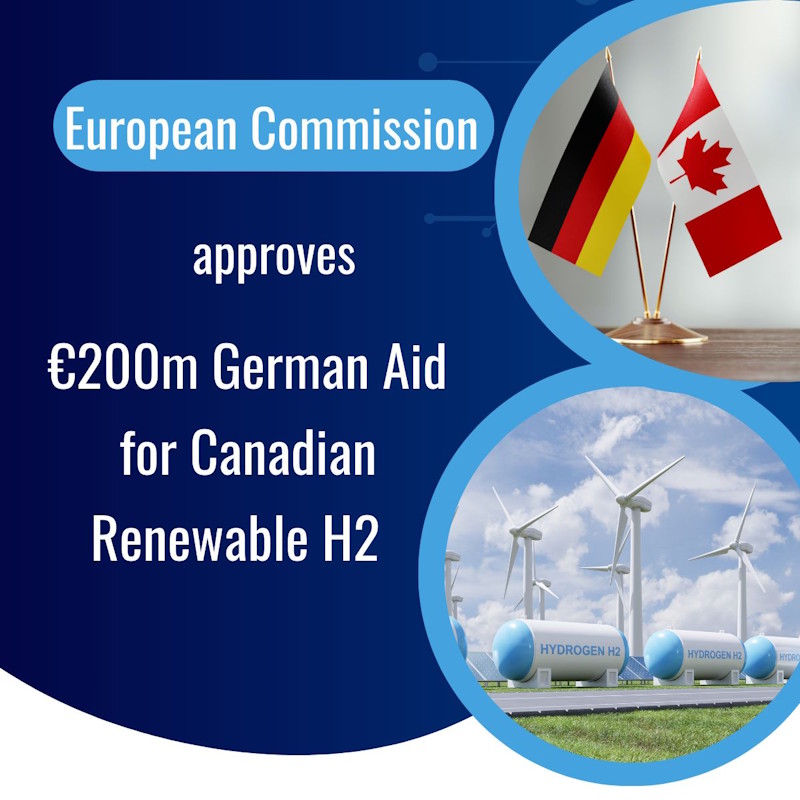
European Commission approves German Aid for Canadian Renewable Hydrogen

📢 New funding opportunities for hydrogen projects in Canada.

The European Commission has approved a €200 million German State aid scheme to support the production of renewable hydrogen and its derivatives (RFNBOs) in Canada for supply to the EU market.

✅ Key elements of the German support scheme:

📌 Germany notified the Commission of a €200 million support programme, complemented by an additional €200 million in Canadian funding, to enable cost-efficient RFNBO production in Canada.

📌 The scheme aims to incentivise the construction of up to 300 MW of electrolysis capacity through a competitive bidding process, expected to conclude in 2027.

📌 It is based on a double auction model, matching RFNBO producers in Canada with buyers in the EU. Producers offering the lowest supply price and buyers offering the highest offtake price will enter into a contractual relationship with State resources helping to fill the funding gap between the two prices.

📌 Beneficiaries must demonstrate full compliance with EU RFNBO sustainability and certification criteria, as defined in the delegated acts on renewable hydrogen.

📌 The scheme is expected to avoid up to 2.47 million tonnes of CO2-equivalent emissions.

➡️ Source: Commission approves €200 million German State aid for Canadian-produced renewable hydrogen and its derivatives for EU market

Public consultation for bilateral German-Australian H2Global funding window

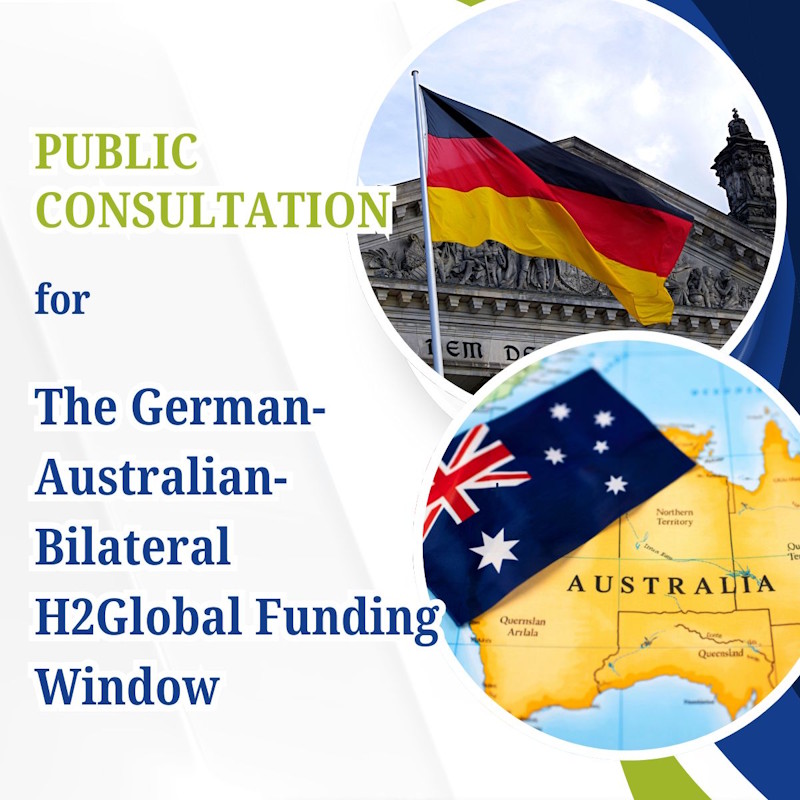
Public consultation for bilateral German-Australian H2Global funding window

The German Federal Ministry for Economic Affairs and Energy (BMWE) has launched a public market consultation under the Climate, Energy and Environmental Aid Guidelines (CEEAG) requirements for the German–Australian bilateral H2Global funding window (2030–2041/42).

🗓 Deadline to submit feedback: 16 February 2026

☑️ Why Australia?

In September 2023, Germany and Australia signed a Joint Declaration of Intent as part of their energy partnership. A key element of this cooperation is the development of a joint auction for green hydrogen products, implemented under the H2Global double auction model.

The objective is clear:

  • support the global market ramp-up of green hydrogen;
  • provide secure long-term offtake agreements;
  • send reliable price signals to producers and buyers.

Germany will provide up to EUR 200 million from the Climate and Transformation Fund (KTF). The Australian government, represented by the Department of Climate Change, Energy, the Environment and Water, will contribute an equivalent amount.

As a result, the total support budget of the bilateral H2Global auction amounts to EUR 400 million. Based on the assumption that the auction will focus on renewable ammonia, with production prices in the range of EUR 1,100–1,600 per tonne and expected offtake prices between EUR 500–900 per tonne, this budget could enable the procurement of up to 360,000 tonnes of renewable ammonia.

✅ Why this consultation matters

The international hydrogen ramp-up has been constrained by well-known challenges, such as high production costs for renewable hydrogen and limited willingness to pay on the demand side.

The planned German–Australian auction aims to address these by sharing the “difference costs” equally between both sides.

To properly design the auction and ensure compliance with EU state aid rules, BMWE is conducting this public market consultation and explicitly invites all affected companies to participate.

📄 The questionnaire (in English), outlining the measure and the specific questions, is available via the consultation link.

➡️ Source: Market consultation for the Bilateral German-Australian H2Global funding window

Modernisation Fund

On 17 December 2025, the European Commission and the European Investment Bank announced the disbursement of €1.8 billion from the Modernisation Fund to support 45 clean energy-related investments in 12 different Member States, including Portugal, which became a beneficiary Member State in 2024.

Financed by revenues from the EU Emissions Trading System (EU ETS), this brings total Modernisation Fund support to €20.7 billion for 294 investments since 2021. In 2025 alone, €5.46 billion has been disbursed to 79 projects, following an earlier allocation of €3.66 billion in July.

✅ What is the Modernisation Fund?

📌 The Modernisation Fund, funded by revenues from the auctioning of emission allowances under the EU ETS, aims to support 13 lower-income EU countries in their transition to climate neutrality.

📌 The beneficiary Member States are Bulgaria, Croatia, Czechia, Estonia, Hungary, Latvia, Lithuania, Poland, Romania, and Slovakia, as well as Greece, Portugal and Slovenia which became eligible for support as of January 2024, under the revised EU ETS Directive.

📌 The Modernisation Fund supports investments in the generation and use of energy from renewable sources, energy efficiency, energy storage, modernisation of energy networks, including district heating, grids, and just transition in carbon-dependent regions.

📌 It operates under the responsibility of the beneficiary countries in close cooperation with the European Commission and the European Investment Bank.

📅 Next deadlines

The next deadlines for beneficiary Member States to submit investment proposals under the Modernisation Fund are:

  • 15 January 2026 for non-priority proposals
  • 12 February 2026 for priority proposals.

➡️ Source: Joint press release: Modernisation Fund announces €1.8 billion in new clean energy investments, bringing 5-year total to over €20 billion

Innovation Fund in Transport Sector

How the Innovation Fund Supports the Decarbonisation of the EU Transport Sector

In a recent publication, the European Commission presented a factsheet on projects supported by the Innovation Fund, with total funding exceeding €4.8 billion.

✅ What is the Innovation Fund?

The Innovation Fund:

  • is one of the EU’s key financial instruments for deploying net-zero and innovative technologies.
  • is funded by revenues from the EU Emissions Trading System (EU ETS) and supports the decarbonisation of hard-to-abate sectors.
  • provides grants to breakthrough projects across a wide range of sectors in the European Economic Area (EEA).

☑️ What technologies in the transport sector does the Innovation Fund support?

  • the production and use of sustainable fuels
  • the electrification of transport systems
  • the manufacturing and recycling of batteries for electric vehicles (EVs)
  • the construction and retrofitting of low- and zero-carbon ships, aircraft, and heavy-duty vehicles

✅ Key Takeaways:

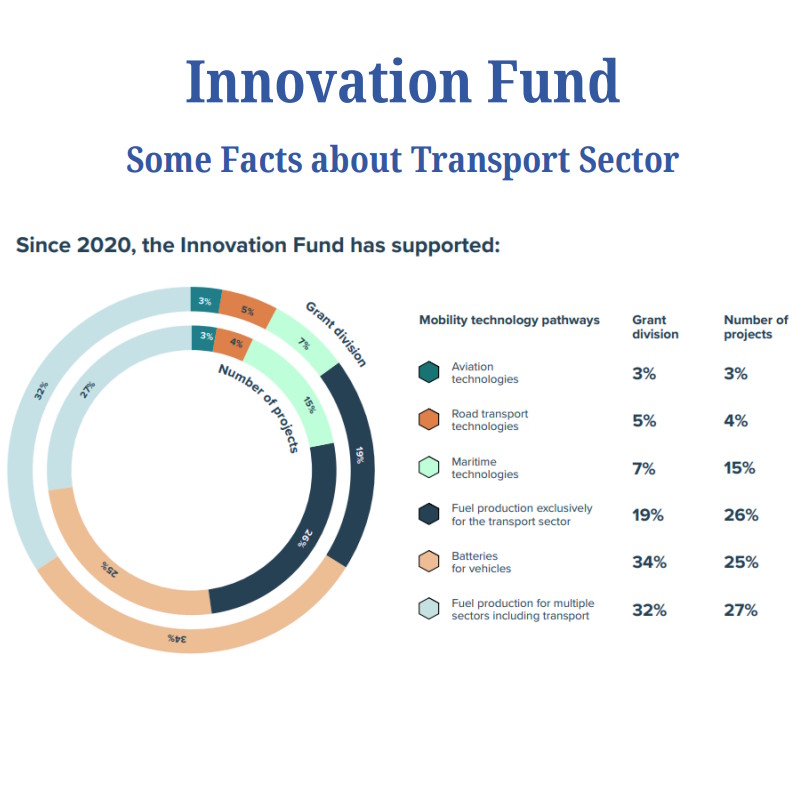
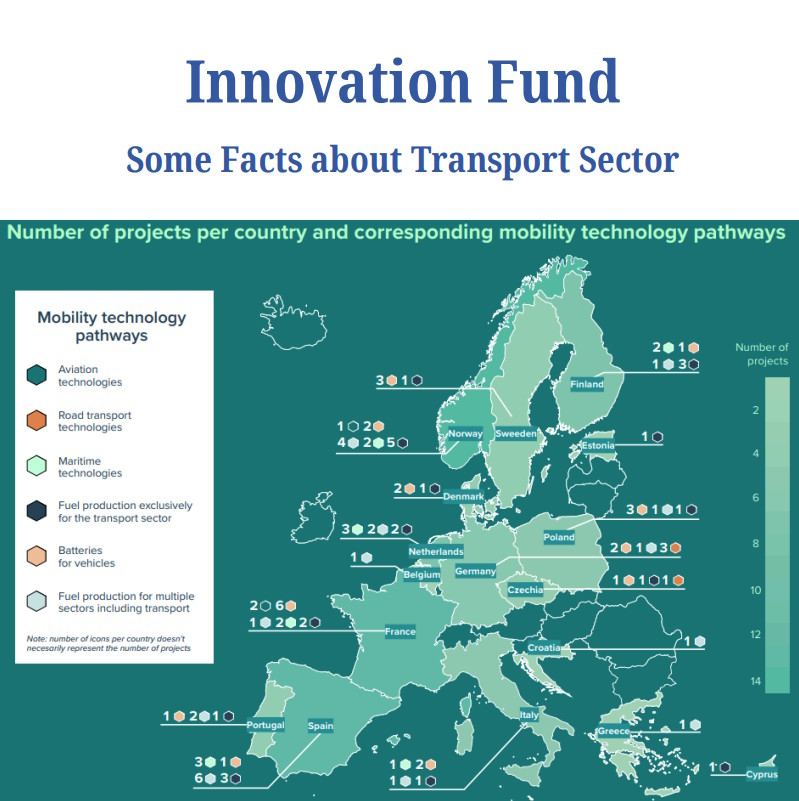
📌 Out of 272 ongoing and awarded projects, more than one-third focus on transport decarbonisation, receiving around one-third of total grants (€4.8 billion).

📌 Transport-related projects are expected to deliver approximately 29% of the Innovation Fund’s total emission reductions during their first ten years of operation, cutting 334 million tonnes of CO2.

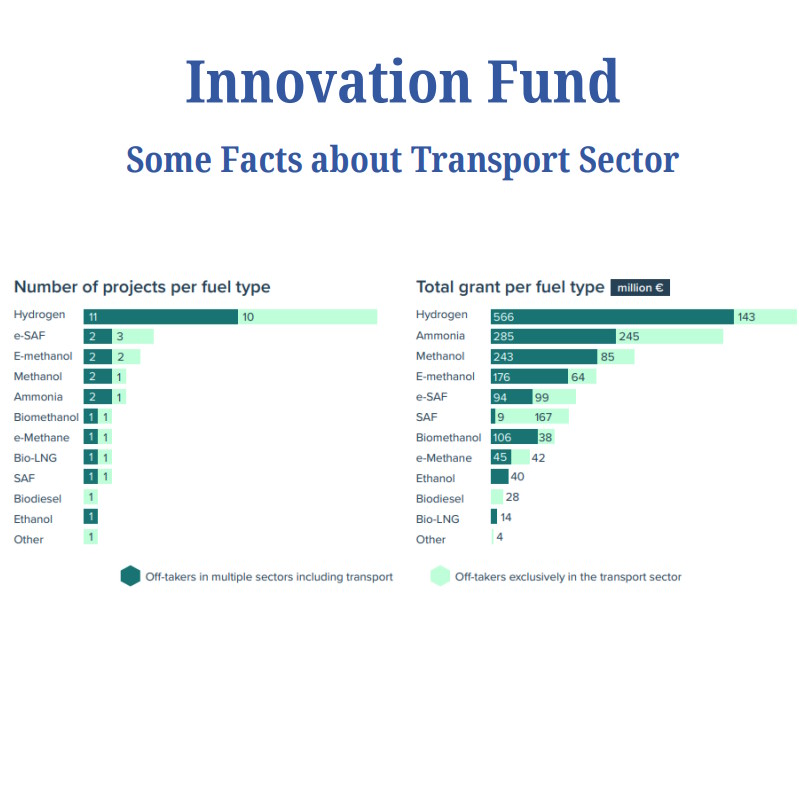
📌 The largest share of mobility projects in the Innovation Fund portfolio relates to fuel production (47 projects). More than 45% of these projects are expected to supply their output exclusively to the transport sector, while the remainder plan to serve multiple off-takers, with transport among the key beneficiaries.

➡️ Source: Driving decarbonisation in mobility through the innovation fund

New EU funding opportunities

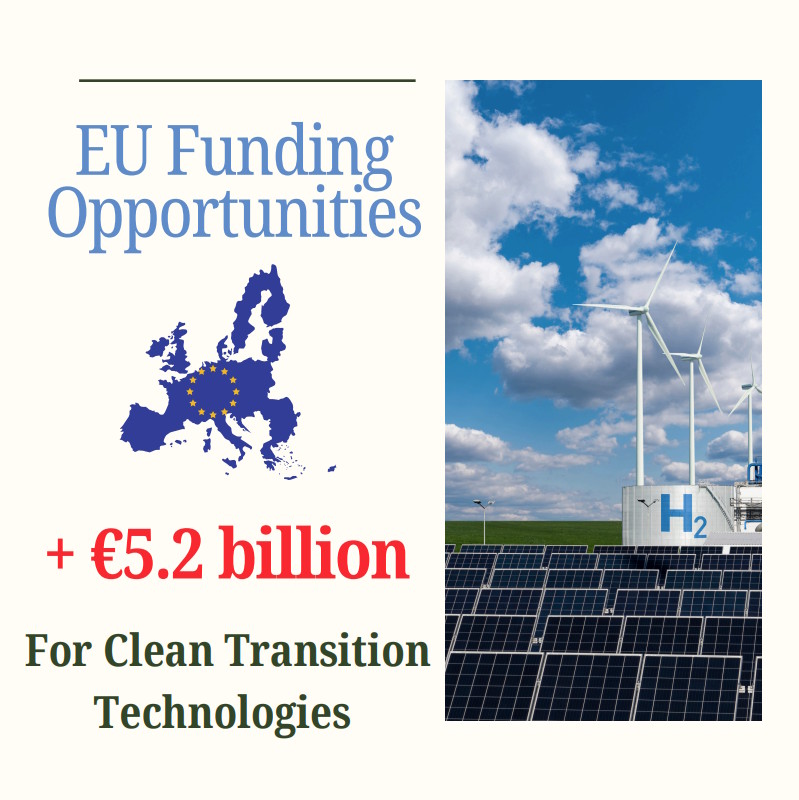
🚀 On 4 December 2025, the European Commission has launched three major new funding opportunities under the EU Innovation Fund, mobilising €5.2 billion from EU ETS revenues to support the scale-up of net-zero technologies, clean hydrogen production, and industrial heat decarbonisation.

✅ Main Funding Opportunities:

🔹 IF25 Net-Zero Technologies Call – €2.9 billion

📌 Supporting innovative, mature decarbonisation projects across various scales, including manufacturing of components for:

  • Renewables & energy storage
  • Heat pumps
  • Hydrogen production
  • EV batteries

📌 Projects are assessed on GHG reduction potential, innovation, maturity, replicability, and cost efficiency.

📌 A new bonus point is introduced for projects led exclusively by SMEs, recognising their role in driving innovation.

📅 Info Day: 16 December 2025

🔹 3rd Auction of the European Hydrogen Bank – €1.3 billion

📌 Scaling up production of RFNBO hydrogen and electrolytic low-carbon hydrogen, including a new topic for aviation and maritime off-takers.

📌 Support is provided via a fixed premium per kg of verified hydrogen produced for up to 10 years, increasing price certainty and bankability for projects.

📅 Info Day: 10 December 2025

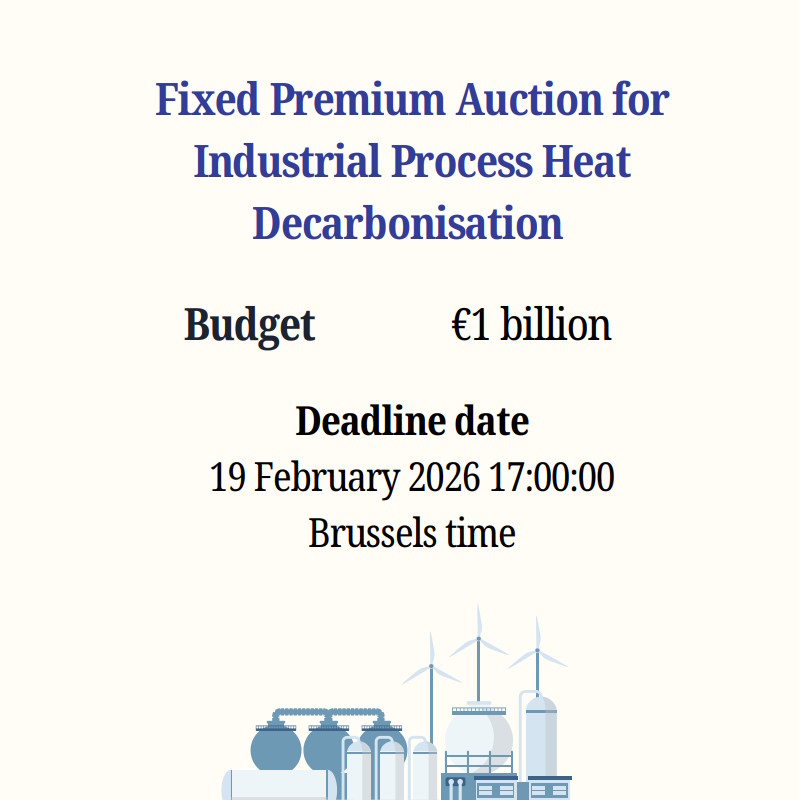
🔹 1st Auction for Decarbonising Industrial Process Heat – €1 billion

📌 The auction dedicated to industrial process heat, targeting one of Europe’s largest unaddressed emissions sources.

📌 Supported technologies include:

  • Heat pumps & electric boilers
  • Resistance & induction heating
  • Solar thermal & geothermal heat
  • Hybrid solutions

📌 Funding is granted as a fixed premium per unit of verified decarbonised heat for up to 5 years, awarded to the most cost-effective CO₂ abatement projects.

📅 Info Day: 16 December 2025

Member States can complement EU funding for high-scoring projects that miss out due to budget limits:

📌 Germany: additional €1.3 billion for RFNBO hydrogen projects

📌 Spain: €465 million total:

  • €415 million for hydrogen
  • €50 million for industrial heat decarbonisation

☑️ What’s next?

📌 Applicants are strongly encouraged to attend the Info Day.

📌 Signing of grant agreements:

  • NZT projects – expected Q1 2027
  • Auction projects – within 9 months of call closure.

➡️ Source: €5.2 billion of EU Emissions Trading revenues earmarked for clean transition technologies under the Innovation Fund

Project Finance for Energy Projects

In this episode of Clean Energy Talks video blog with Shubhda Kaushik, Founder and CEO of Alternative Energy Company, about how Project Finance is driving the Energy Transition.

We explore:

  • Shubhda’s experience in project finance, strategy consulting, and project development across renewable and clean energy sectors;
  • The inspiration behind founding Alternative Energy Company and the market gaps it aims to close;
  • What project finance really means and how it supports large-scale energy infrastructure;
  • The key factors that make an energy project bankable — from risk assessment to financing structures;
  • How project finance for hydrogen, e-fuels, and ammonia differs from traditional renewables like wind and solar power.

Whether you’re interested in hydrogen project development, renewable energy investment, or financing sustainable infrastructure, this conversation offers practical insights into how innovative financial models are enabling the global clean energy transition.

➡️ Reach out here on LinkedIn or contact me for more details on the video topic.

Tax incentives to promote clean technologies

Council of the European Union approved conclusions on the use of tax incentives to promote clean technologies

On 10 October, the Council of the European Union approved conclusions on the use of tax incentives to promote clean technologies and industry, supporting the implementation of the Clean Industrial Deal (CID).

➡️ The conclusions is available via this link.

The conclusions respond to the European Commission’s Recommendation of 2 July 2025, which outlined how Member States can use fiscal tools such as targeted tax credits and accelerated depreciation to boost investment in clean technologies and industrial decarbonisation.

✅ Key elements of the Council conclusions:

📌 Welcome the the Commission recommendation on tax incentives to support the Clean Industrial Deal and in light of the Clean Industrial Deal State Aid Framework.

📌 Emphasise that tax incentives should remain simple, effective, and adapted to diverse national tax systems.

📌 Highlight the importance of flexibility and Member State discretion in designing and applying incentives, given budgetary realities.

📌 Encourage evaluation and exchange of best practices across Member States to ensure effective implementation.

☑️ Why this matters:

Tax incentives can become a cornerstone of Europe’s industrial transformation, helping to:

  • Stimulate private investment in decarbonisation and clean manufacturing;
  • Improve cash flow for businesses investing in energy efficiency and renewables;
  • Strengthen the EU’s industrial base while supporting the 2050 climate neutrality goal.

By aligning tax policy with the Clean Industrial Deal and State aid rules, the EU is laying the groundwork for a coherent fiscal framework that empowers industries to lead the clean transition cost-effectively and competitively.

Preparatory process for the 2026 bidding round of Carbon Contracts for Difference

Preparatory process for the 2026 bidding round of Carbon Contracts for Difference (Klimaschutzverträge)

📢 Germany launches preparatory process for the 2026 bidding round of Carbon Contracts for Difference (Klimaschutzverträge)

On 6 October, the German Federal Ministry for Economic Affairs and Climate Action (BMWK) initiated the preparatory phase for the 2026 bidding round of CO2-Differenzverträge (Carbon Contracts for Difference, CCfDs). Carbon Contracts for Difference are one of the key funding instruments supporting the decarbonisation of energy-intensive industries.

✅ Main purposes of the CCfDs:

📌 CCfDs protect companies investing in low-carbon production processes against price risks. Fluctuations in CO2 and energy prices, as well as cost differences compared to conventional production processes, are compensated over a period of 15 years.

📌 The contracts also aim to accelerate the market ramp-up of new technologies (e.g. industrial heat pumps, hydrogen applications, CO2 capture and storage, and energy storage technologies) and to help establish innovative production processes on the market.

☑️ Eligibility requirements:

📌 Companies are free to decide how to convert their production processes in line with the energy sources used (electricity, low-carbon hydrogen, biomass).

📌 The only requirements are milestones for CO2 savings: 60% from the third year and 90% in the final year of the contract term.

📌 Companies are remunerated based on the actual CO2 savings achieved.

📌 The CCfDs are also open to small and medium-sized enterprises with smaller production facilities.

📅 Schedule:

  • Participation in the preparatory phase until 1 December 2025 is required for companies wishing to submit bids in 2026.

⚠️ The bidding process remains subject to budgetary approval and state aid clearance by the European Commission.

📘 More information and documentation on the preparatory process are available at https://www.klimaschutzvertraege.info/

➡️ Source: BMWE startet vorbereitendes Verfahren für das Gebotsverfahren 2026 der CO2-Differenzverträge (Klimaschutzverträge)

2nd Call for International Hydrogen Projects

Call for International Hydrogen Projects

📢 Federal Ministry for Economic Affairs and Energy launches 2nd Call for International Hydrogen Projects.

The Federal Ministry for Economic Affairs and Energy (BMWE), together with the Federal Ministry of Research, Technology and Space (BMFTR), has published the second call for funding under the guidelines for international hydrogen projects. The BMWE thus supports the use of German hydrogen technologies abroad and aims to prepare and implement import routes to Germany.

✅ Key points:

📌 German companies can submit project outlines until 18 December 2025.

📌 Funding supports the development of renewable hydrogen and its derivatives outside Europe, with a focus on industrial-scale production plants and accompanying research (e.g., feasibility studies).

📌 Special emphasis is placed on German SMEs – technology suppliers and project developers – to strengthen expertise abroad and open new markets.

📌 Up to €30 million per project may be granted (subject to budget approval until 2026).

📅 On 13 October 2025, an information event will provide details on funding opportunities and allow participants to ask questions.

➡️ Register here: Förderaufruf zur novellierten Förderrichtlinie für internationale Wasserstoffprojekte

The initiative contributes to shaping a global renewable hydrogen market and securing future import routes to Germany, while showcasing German hydrogen technologies internationally.

➡️ Source: Bundeswirtschaftsministerium veröffentlicht zweiten Förderaufruf der Förderrichtlinie für internationale Wasserstoffprojekte