3rd German-African Green Hydrogen Forum 2025

EU funding opportunities for Hydrogen import from Africa

On 23 September, I had the pleasure of speaking at the German-African Green Hydrogen Forum at Hochschule Anhalt, University of Applied Sciences. It was inspiring to exchange ideas on the main challenges of hydrogen imports with delegates from different countries and leading experts in the hydrogen sector.

A special thank you to Markus Holz, Ana Beatriz Barbosa Turiel do Nascimento, and the entire team at Hochschule Anhalt for their outstanding hospitality and for organizing such a professional and engaging event.

Hydrogen Import & the European Hydrogen Bank

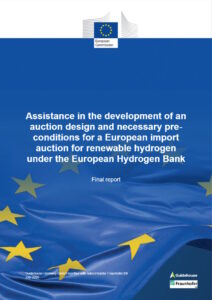
This weekend I dove into the report “Assistance in the development of an auction design and necessary pre-conditions for a European import auction for renewable hydrogen under the European Hydrogen Bank.”

The EHB is based on domestic and international pillars. While the domestic pillar for hydrogen production in the EU has already reached its third auction, the international pillar for hydrogen import is still under development. This report provides the groundwork for shaping a European import auction for renewable hydrogen and its derivatives.

My Key Takeaways:

1️⃣ Strategic recommendations:

  • The report outlines how to design RFNBO import auctions at EU level, based on hydrogen market analysis and lessons from existing/planned auction schemes in Europe and beyond.

2️⃣ Two case studies analyzed:

📌 Pipeline-based imports (pure hydrogen):

  • Can secure supply/offtake contracts between EU buyers and third-country producers in neighbouring regions.
  • Encourages pipeline investments.
  • Works via demand-side auction models to bridge funding gaps for RFNBO purchases, without assuming counterparty risks.

📌 Ship-based imports (derivatives: ammonia, methanol, eSAF):

  • Helps EU offtakers secure RFNBO volumes for hard-to-abate sectors and quota compliance.
  • Contributes to scaling up the global RFNBO market.

3️⃣ Contract terms

  • To scale import volumes effectively, the maturity transformation between purchase and sales agreements should be limited, with hydrogen sales agreements (HSAs) running for 2–5 years.

4️⃣ Auction design priorities

Import auctions should:

  • Bridge the cost gap between RFNBO production abroad and EU willingness to pay.
  • Accelerate market ramp-up.
  • Send a strong demand signal to international producers.
  • Strengthen cooperation among EU Member States.

💡 This report is an important step toward designing the EU’s approach for international hydrogen imports as a key enabler for the energy transition.

➡️ Source: European Commission: Directorate-General for Energy, Fraunhofer ISI and Guidehouse Germany GmbH, Assistance in the development of an auction design and necessary pre-conditions for a European import auction for renewable hydrogen under the European Hydrogen Bank – Final report, Publications Office of the European Union, 2025, https://data.europa.eu/doi/10.2833/9380870

EU Hydrogen Auction

Hydrogen Bank. Innovation Fund IF25 Hydrogen Auction. Draft Terms and Conditions

📢 New EU Hydrogen Auction – Draft Terms & Conditions Open for Feedback

The European Commission has published the draft Terms & Conditions (T&Cs) for the IF25 Hydrogen Auction, the third call under the European Hydrogen Bank, set to launch by the end of 2025.

☑️ What’s new in this round?

Proposed Budget: EUR 1.1 billion, split across three topics:

  • Topic 1: EUR 400 million – RFNBO and/or electrolytic low-carbon hydrogen
  • Topic 2: EUR 400 million – RFNBO hydrogen only
  • Topic 3: EUR 200 million – RFNBO and/or electrolytic low-carbon hydrogen for maritime applications

☑️ Key Updates:

📌 Broader Scope: Support extended to include electrolytic low-carbon hydrogen alongside RFNBOs

📌 Electrolyser Resilience: Aligned with the NZIA Implementing Act (C(2025) 2900), simplifying some earlier resilience criteria

📌 Environmental Screening: New evaluation against Do-No-Significant-Harm (DNSH) principles

📌 No Double Funding: Projects already funded under the Innovation Fund or other EU sources are not eligible

📌 Electricity Sourcing Plan: Projects must show a credible strategy for sourcing 100% of required electricity. For low-carbon hydrogen, at least 60% of non-renewable input must meet the 70% emissions savings threshold defined in Directive (EU) 2024/1788.

➡️ What’s next?

  • Stakeholder feedback will be gathered through the consultation
  • Feedback will be incorporated into the final design of the auction
  • The final version of T&Cs will be published with the auction launch in Q4 2025

🗓 Feedback deadline: 14 September 2025

📄 Draft Terms & Conditions available here: Innovation Fund IF25 Hydrogen Auction. Draft Terms and Conditions

💬 Provide feedback here: IF25 Auction – Draft T&Cs public consultation

3rd German-African Green Hydrogen Forum 2025
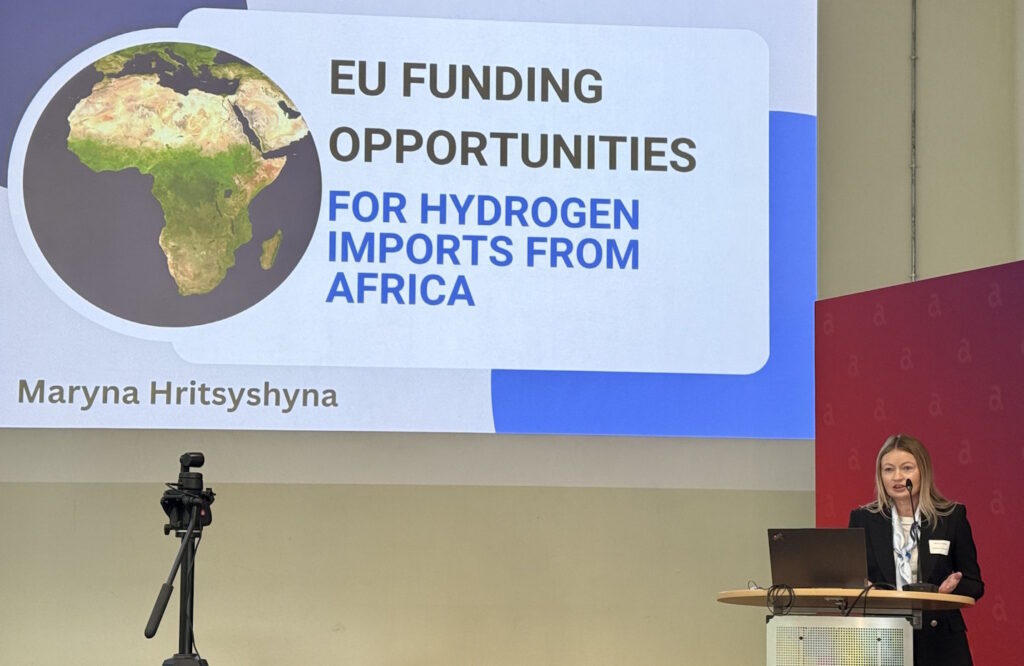
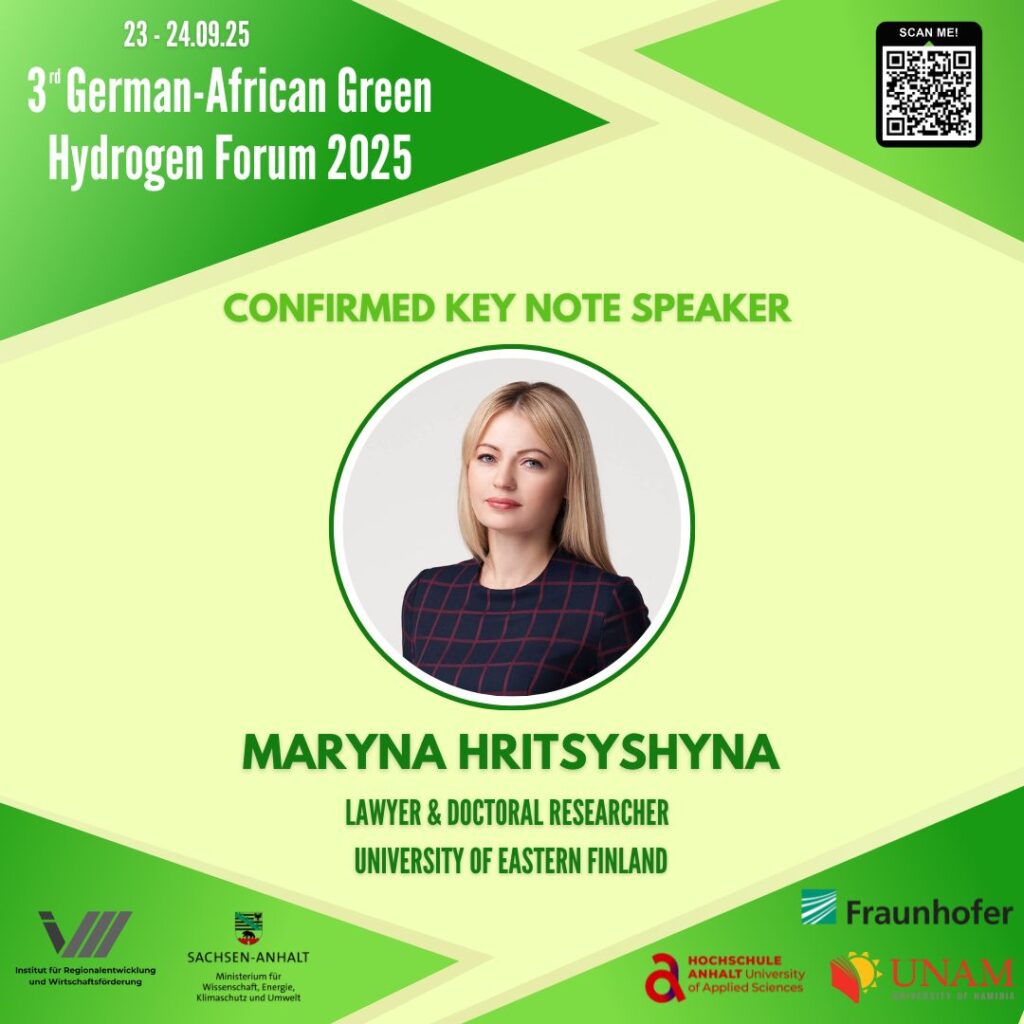
Maryna Hritsyshyna speaker on 3rd German-African Green Hydrogen Forum 2025

Excited to be part of the 3rd German-African Green Hydrogen Forum 2025 as a confirmed keynote speaker!

I will be speaking on the topic: “EU Funding Opportunities for Hydrogen Imports from Africa”

📅 Date: 23–24 September 2025

📍 Hosted by Hochschule Anhalt, in partnership with key actors from academia, policy, and industry.

🔗 Register here

This is a great opportunity to discuss how regulatory and funding mechanisms can unlock the potential of African-EU cooperation on green hydrogen.

Results of the 2nd Hydrogen Bank Auction

Results of the 2nd Hydrogen Bank Auction

An Overview of the Results of the 2nd Hydrogen Bank Auction

💰 Allocated Budget:

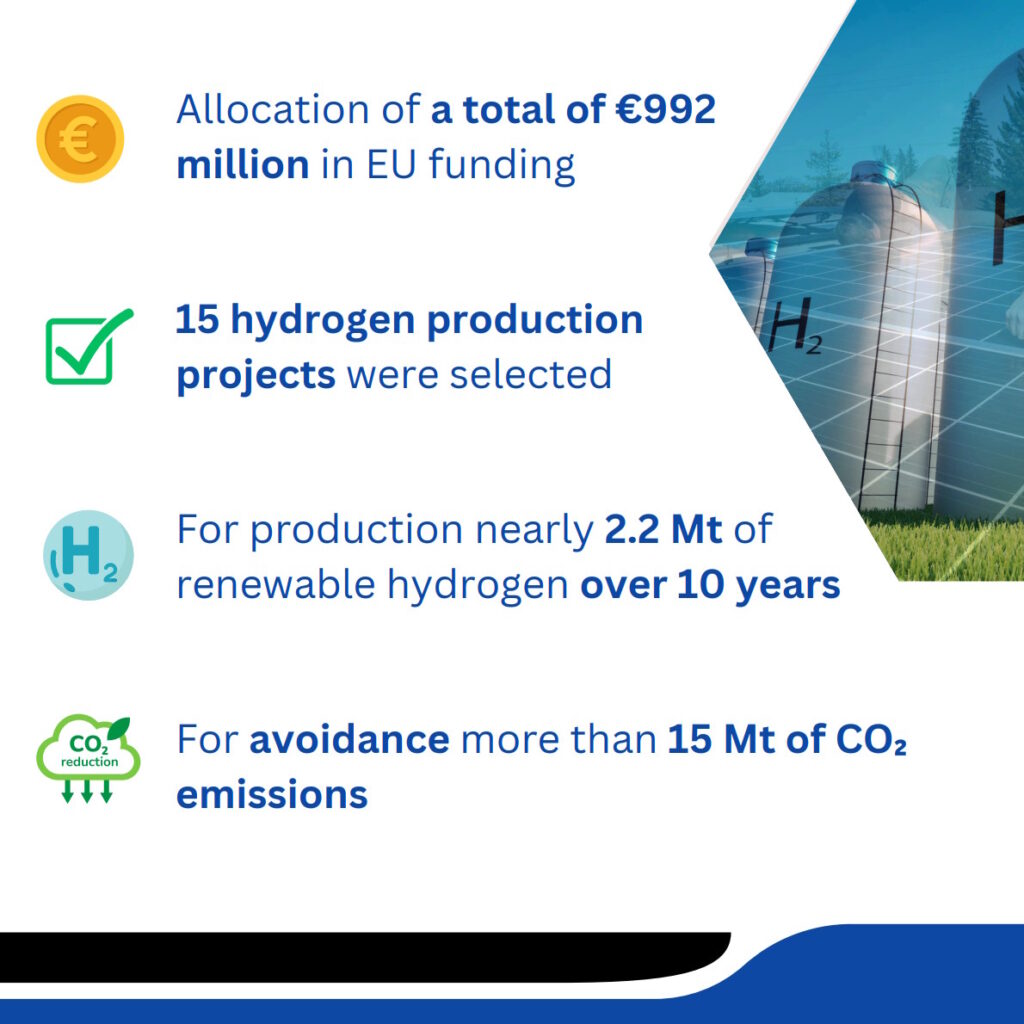
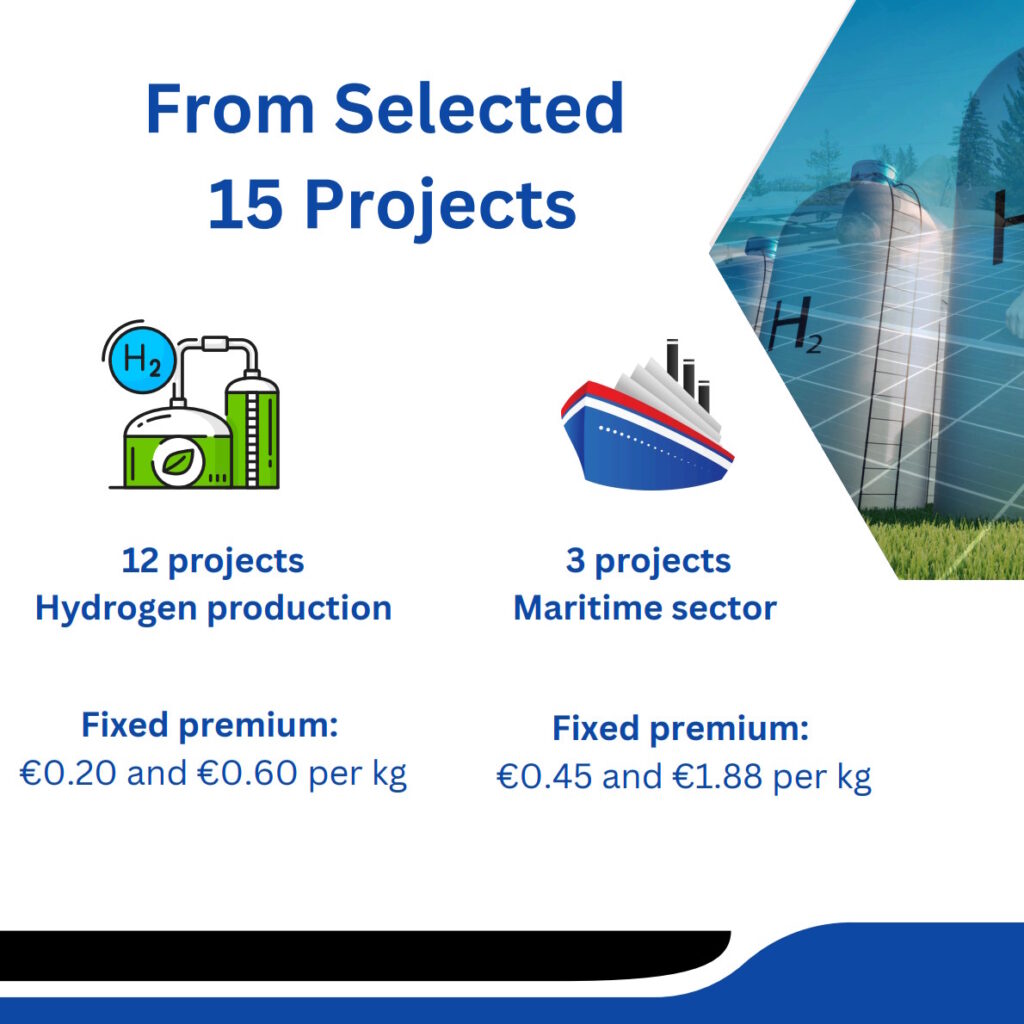
📌 EUR 895,364,238 – for 12 projects under the general topic

📌 EUR 96,677,425 – for 3 projects in the maritime sector

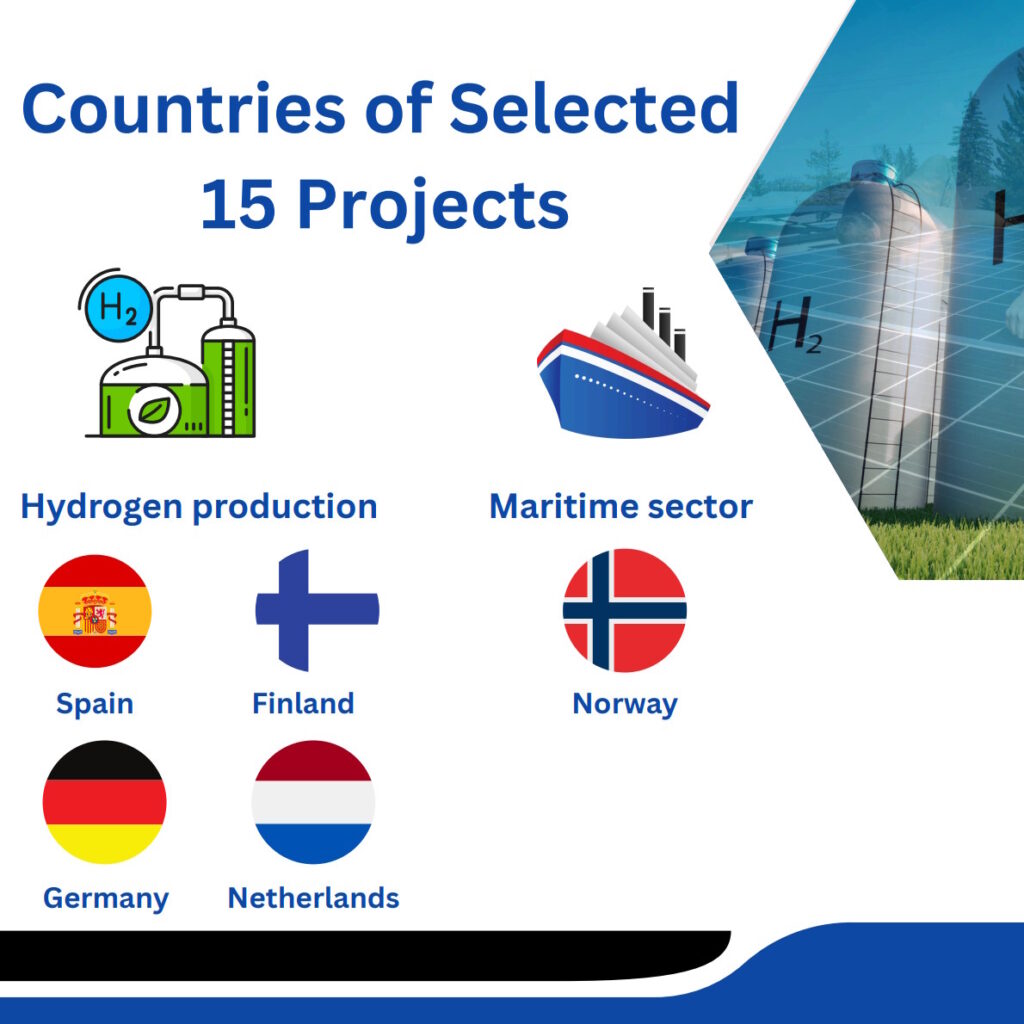
🌍 Geographical Distribution of Selected Projects:

  • 8 – Spain
  • 3 – Norway
  • 2 – Germany
  • 1 – Netherlands
  • 1 – Finland

✅ Spain and Germany reported the highest production volumes and planned installed electrolyser capacities:

📌 Spain: 3,531,791 tons over 10 years; 3,203 MWe of aggregated electrolyser capacity

📌 Germany: 1,082,989 tons over 10 years; 1,098 MWe of aggregated electrolyser capacity

📈 The average levelized cost of RFNBO hydrogen in the listed countries ranges from EUR 5.5 to 11.1/kg

☑️ Preferred contract structure: Fixed-price agreements with off-takers

☑️ Most common delivery method: Pipeline

⚡ Main power source: Onshore wind energy, typically combining grid connection with a renewable PPA

➡️ Sources:
▪️ Press release
▪️ Presentation

Public Consultations. Innovation Fund

public consultation to evaluate the operations of the Innovation Fund by 2025

The European Commission has started the public consultation to evaluate the operations of the Innovation Fund by 2025.

📄 Form of Feedback – the online questionnaire via this link

📅 Feedback period – 15 April 2025 – 08 July 2025

✅ What is the Innovation Fund?

📌 The Innovation Fund is one of the world’s largest funding programmes for the deployment of net-zero and innovative technologies.

📌 The Innovation Fund was established by the Emissions Trading System (ETS) Directive to support innovation in low or zero-carbon products, processes and technologies in the sectors covered by the Directive.

📌 The Fund obtains its resources from ETS allowance revenues.

➡️ Source: What is the Innovation Fund?

☑️ Purpose and Scope of Evaluation:

📌 The European Commission will:

  • evaluate the implementation of the Innovation Fund from 2020 to 2024.
  • will focus primarily on assessing synergies between the Fund and other EU programmes, including Horizon Europe, and the procedures for disbursing financial support.

📌 The evaluation will assess:

  • Effectiveness: the degree to which the Fund has succeeded in achieving its objectives of:
    1. supporting projects that demonstrate highly innovative technologies, processes and products;
    2. providing financial support tailored to market needs and risk profiles of eligible projects while attracting additional public and private resources;
    3. ensuring that Innovation Fund revenues are managed to accomplish the objectives of the ETS Directive.
  • Efficiency: how ETS allowances have been employed to achieve the expected effects of the Fund, alongside the administrative burden associated with application, evaluation, and project implementation.
  • Relevance: the connection between the Fund’s objectives and the attainment of EU climate targets, particularly emissions reduction and necessary technology development, while strengthening competitiveness and resilience.
  • Coherence: how the various elements of the Fund function cohesively to achieve its objectives and how they synergise with the EU’s policy objectives and other programmes, such as Horizon Europe, the Recovery and Resilience Fund, and InvestEU.
  • EU added value: the extent to which the results and impacts of the Fund contribute to changes prompted by the Commission’s intervention over what could reasonably have been expected from national actions.

➡️ Source: Industrial Decarbonisation Accelerator Act – speeding up decarbonisation