Hydrogen Acceleration Act

Hydrogen Acceleration Act
Last week, the Federal Ministry for Economic Affairs and Energy (BMWK) presented the Draft Law for a new Hydrogen Acceleration Act (Wasserstoffbeschleunigungsgesetz).

πŸ“„ The Draft Law is available via this link.

βœ… Key Points:

πŸ“Œ Broader Scope Beyond Green Hydrogen

  • Unlike previous strategies focused solely on green hydrogen, the new Draft Law grants equal treatment to both green and blue hydrogen.
  • Projects producing blue H2 from natural gas with carbon capture and storage (CCS) may now benefit from acceleration measures.

πŸ“Œ Support Across the Entire Hydrogen Value Chain

The Act aims to fast-track:

  • Electrolyser deployment
  • Hydrogen imports and derivatives (e.g., ammonia, methanol)
  • PtX plants for e-fuel production
  • Hydrogen storage and transport infrastructure

πŸ“Œ Natural Hydrogen Recognition

  • Natural hydrogen will be classified as a non-mineable mineral resource under the Federal Mining Act (Bundesberggesetz).
  • This change simplifies project development by removing the need for contracts with landownersβ€”similar to how resources like coal or natural gas are handled.

πŸ“Œ Accelerated Permitting

  • No public hearing (ErΓΆrterungstermin) will take place during the approval process.
  • A planning approval decision (Planfeststellungsbeschluss) must be issued within 12 months.
  • A planning permit (Plangenehmigung) must be granted within 7 months.

πŸ“… Consultation Period:

  • The BMWK is accepting feedback from federal states and industry associations until 28 July 2025.
Nuremberg Hydrogen Conference 2025

Nuremberg Hydrogen Conference 2025

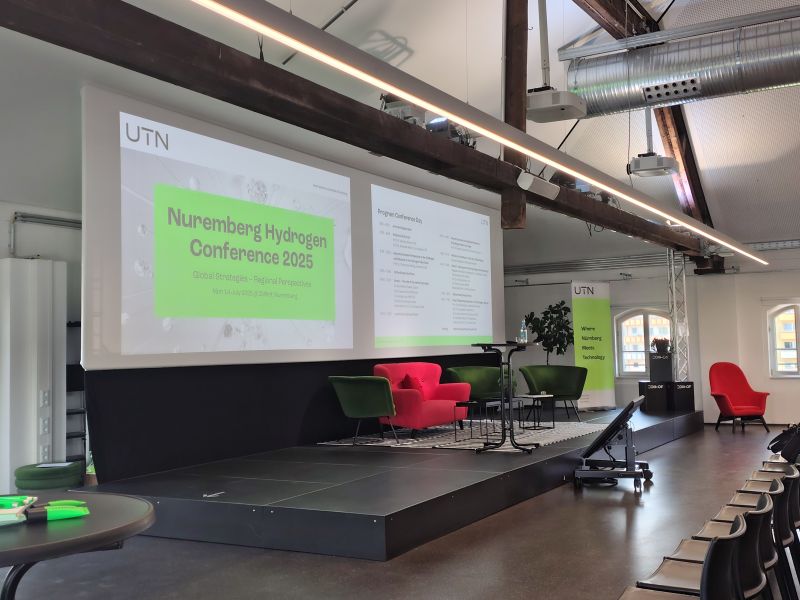
On 14 July 2025, I had the pleasure of attending the Nuremberg Hydrogen Conference, hosted by the University of Technology Nuremberg.

The event brought together leading researchers, policymakers, and industry representatives to discuss the current state and future of the hydrogen economy in Germany and beyond.

βœ… Key takeaways:

πŸ“Œ AI and clean energy:

  • The growing energy demands of AI make clean hydrogen a key enabler for a sustainable digital future.

πŸ“Œ Speed of integration:

  • While oil and gas took ~50 years and renewables ~15 years to become integral to the energy system, hydrogen should achieve this in just 5 years β€” provided the right conditions are in place.

πŸ“Œ Hydrogen production costs (2023, EU grid-mix):

  • Lowest: Finland (€4.1/kg), Sweden (€4.4/kg)
  • Highest: Cyprus (€17.4/kg), Poland (€12.4/kg)

πŸ“Œ Barriers slowing hydrogen deployment:

  • Limited willingness to pay for H2
  • Market uncertainty and lack of demand aggregation
  • Permitting delays
  • Industry is still waiting for GW-scale proof and strong public support mechanisms.

πŸ“Œ Hydrogen imports remain slow, and it is important to create competition between demand and production side.

πŸ“Œ A clear market dynamic: as hydrogen prices rise, demand drops – and vice versa.

πŸ“Œ Two-sided auctions, such as those facilitated by H2Global, are a promising tool to stimulate both supply and demand and accelerate market ramp-up.

Renewable Energy Directive (RED III) implementation in Germany

RED III implementation in Germany

The German Federal Ministry for the Environment has submitted a draft bill for the further development of the GHG reduction quota for consultation with associations. The law serves to implement the requirements of the amended Renewable Energy Directive (RED III).

βœ… The main changes:

πŸ“Œ General overview:

  • The mandatory percentage reduction in GHG emissions for fuels will be set until 2040 and will gradually increase to 53%.
  • The GHG reduction quota must be met by all fuel suppliers for all transport sectors.
  • The separate quota for RFNBO in aviation will be replaced by a general quota for all transport sectors.
  • The quota for advanced biofuels will be increased and the double counting will be abolished.
  • Renewable fuels can only be counted if on-site inspections by government inspectors are possible.

πŸ’§ The minimum shares of RFNBO for the transport sector is:

  • 0.1 % from 2026,
  • 0.5 % from 2028,
  • 1.5 % from 2030,
  • 2 % from 2032,
  • 3 % from 2034,
  • 5 % from 2035,
  • 7 % from 2037,
  • 9 % from 2039,
  • 12 % from 2040.

πŸ“Š For the calculation of the reference value against which the GHG reduction must be achieved, the energetic quantity of the RFNBO multiplied by a factor of:

  • 3 from the commitment year 2024,
  • 2.5 from the commitment year 2035,
  • 2 from the commitment year 2036,
  • 1.5 from the commitment year 2037,
  • 1 from the 2038 commitment year.

The factors shall additionally be multiplied by 1.5 if the respective fuel is used in aircraft or vessels.

✈️ Aviation:

  • Previous PtL Quotas for aircrafts (in paragraph 4a Β§ 37a) are excluded;
  • New PtL Quotas are defined under the ReFuelEU Aviation Regulation;
  • An aviation fuel supplier is defined as anyone who, on a commercial basis or within the framework of commercial enterprises pursuant to the Energy Tax Act, places on the market aviation turbine fuel under subheading 2710 19 21 of the Combined Nomenclature.
  • Penalties for non-compliance with PtL Quotas by aviation fuel suppliers:
    • for SAF – EUR 4,700 per tonne;
    • for e-SAF – EUR 17,000 per tonne.

➑️ Source: Referentenentwurf eines zweiten Gesetzes zur Weiterentwicklung der Treibhausgasminderungs-Quote

Hydrogen in Coalition Agreement

Hydrogen in Coalition Agreement

On 9 April 2025, the German political parties published their coalition agreement.

βœ… Parties of the agreement:

  • CDU/CSU – the Christian Democratic Union of Germany / Christian Social Union
  • SPD – the Social Democratic Party of Germany.

β˜‘οΈ What is a Coalition Agreement:

  • is an agreement between the parties that form a coalition government.
  • identifies the most important shared goals and objectives of a new government.
  • is legally not binding for Parliament.

➑️ The Coalition Agreement is available via this link

βœ… Hydrogen in the Coalition Agreement:

πŸ“Œ Hydrogen economy:

  • climate-friendly hydrogen from various sources.
  • the long-term goal is to transition to climate-neutral hydrogen from domestic production and imports.

πŸ“Œ Reduction of Overregulation:

  • to advocate for pragmatic national and European regulations and their rapid implementation.
  • overregulation must be reduced.

πŸ“Œ Hydrogen Production:

  • through large, system-supporting electrolysis plants; and
  • increasingly in a decentralized and nationwide manner.

πŸ“Œ Hydrogen Import:

  • to consistently expand energy partnerships and the cross-border and necessary domestic infrastructure for imports of hydrogen and its derivatives in all directions.
  • this includes connections to all German and European ports.

πŸ“Œ Hydrogen Funding:

  • to utilize national and European funding instruments, such as H2 Global, IPCEI projects, and specific programs for SMEs.

πŸ“Œ Hydrogen Infrastructure:

  • the hydrogen core network must connect industrial centers throughout Germany, including in southern and eastern Germany.
  • hydrogen storage facilities must also be taken into account.
  • the financing conditions must ensure that the core network is implemented and the distribution network is also developed in an integrated plan.